7 Strategies to Beat Writer’s Block

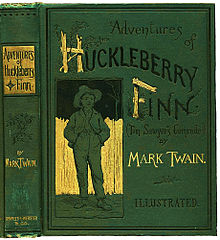
Probably the most famous bout of writer’s block infected Mark Twain, who wrote the first half of his sequel to Tom Sawyer, got stuck, and then finished The Adventures of Huckleberry Finn in a rush after about a four-year interval. Four years is a long time to have writer’s block, although in Twain’s case, it meant that he simply moved on to other things.
220px-Huckleberry_Finn_book


I have also heard that a serious strain of writer’s block attacked Sting, who wrote lots of songs with The Police, had a full solo career and then everything stopped – for years – until he learned to write songs that told stories or explored the past and characters he created and were not just about a current topic of interest. He learned to do what Mark Knopfler has been doing in music for years – don’t just report in music something that occurs to you or happens to you – create it and people the songs with your creations.

That’s the first of my practices for defeating writer’s block – Wait it out. Wait for people and things to appear. Waiting is difficult for a writer, even for a day or two. A day or two may be an average gestation period, nine months is a scary period, and four years is too long. Twain once commented that writing required an “incubation” period and trusted his subconscious to be working even when he was not. My subconscious often goes fantasy fishing instead of working on a story, but it comes around eventually. I have less control than early Greeks had over a muse, and they apparently had none.

What is one to do while waiting?

My second strategy to cure writer’s block is to write about other things. Blog, do journal entries, begin a second Great American Novel, write love letters to your enemies to confuse them, and if you’re really desperate, do crossword puzzles so you are thinking about words you almost have in mind. That searching for words is not much different than the actual work of writing. Besides, anyone who is only working on one piece at a time is probably not a writer – he or she is a journalist with an editor breathing down his or her itchy neck. Those poor unfortunates may sometimes end up doing what no self-respecting writer would ever admit – write crap on a subject they were assigned; they know it will get published but few will read it and no one will remember. They do it because they have to – until they switch jobs.

Strategy Number 3: Re-read and keep re-reading what you have written, from the beginning if necessary, so your subconscious gets so bored with it that it will be forced to come up with something worthwhile just to get you to stop breathing down its neck. If you really want to aggravate your subconscious into becoming your working partner again, re-read what you’ve been writing right before you go to bed. That way, your subconscious is primed to dream about what you’re writing instead of that strange trip to a lush isle where something or someone is rustling the bushes behind you. To a balky subconscious, re-reading what you’ve been writing is like planning for a dreamland flight through the Grand Canyon without a plane because you can fly, and then just before the take-off – wham, you’re grounded. You can cure writer’s block by nagging it unmercifully. Since your subconscious is probably a teen-ager (I believe most are), the nagging is much like getting it to clean its room. Wonderful, forgotten treasures often appear, and if not, you’ll at least get missing socks to pair with their orphan brothers.

Strategy Number 4: Take Courage. Sometimes writer’s block is simply due to fear, the kind of thing Harper Lee apparently faced after penning the magnificent To Kill a Mockingbird. She may have been writing after that, and perhaps her second book, The Watchman, may actually appear twenty years after Mockingbird, but I find it quite understandable (though not from experience) that such first success would be hard to follow. There are certainly times when a blank screen – that terrible white ghost like a vaporous Voldemort in Harry Potter – dares you to make a fool of yourself and challenge his unwritten threat. That white screen is sometimes not a playground; it is an abyss. It need not be white and blank; it may be a black hole into which all words and thoughts spiral, never to re-appear.

If that happens, first write an incantation. A prayer would be more effective, but I’m going to stick with the original metaphor. Simply write: Lexicus apparatio spirituus maximus or any Latin-sounding gibberish to the same effect. Then you say, “Take that! Voldemort, you hollow-socketed, whispering bog-wallower.” Then you can launch a courageous attack with words – power words are best – as you write an action scene using thrust, juggernaut, thunder, hurtling, stormed, defiant, stanchion, surmount, and end the paragraph with something magnificent, such as, “and so truth rises.” You will probably keep none of it, but you will be writing, and the blank screen will become your canvas, your sandbox, your whiteboard or your sky. Write courageously; write with anger, if necessary.

Courage always can defeat fear, but you have to make it so. Fear only wins when you let it. The more you practice courage, the more of it you will have until one day, you face even the palest, most vaporous white screen and say out loud, “Bring it on, you pale, sucking nothingness.”   Then you write.

When that session is over, you give yourself a medal. Mine is usually chocolate. Edible medals are the best.

Strategy Number 5: Write without Expectations. Do not judge. Just write. Do not edit. Just write. Do not expect anything good. Just write.

I have found that an interesting thing happens when you write without expectations. I will sometimes write five pages of useless drivel, and then suddenly on page 6 an amazing paragraph or two will appear, as if out of nowhere, and I wonder, “Where did that come from?” and immediately I don’t care where it came from; I just go with it, and it goes to some place wonderful. You don’t have to keep the first five pages.

If you practice shooting 200 free throws every session, no single group of 10 will be remembered, but eventually you will make 7 out of 10 and then 8 out of 10. An interesting thing happens when you practice writing like you shoot free throws. It looks like this. Miss. Miss. Miss. Miss. MAKE. Miss. Miss. Miss. MAKE. Miss. Miss. MAKE. Miss. MAKE. MAKE. MAKE. In shooting free throws, even the “makes” fade away, but in writing, you keep the “makes.”

Your “make” may not even be part of a story. Maybe it’s backstory. Maybe it’s a sketch that becomes a flashback. Maybe it will become Huckleberry Finn after you finish Tom Sawyer. You may not know what it will become for four years. Write it anyway.

Strategy Number 6: You can get unblocked by making up questions and then answering them. If a character is lost in a swamp, ask, “If something surprising appeared that would lead this character deeper into the swamp and then out of it, what would that be?” You can always ask yourself, “Why did my character do that?” You may not know in a story what comes next, but you can ask, “What can appear out of the past that makes sense?” “What matters here?” “What if …?”

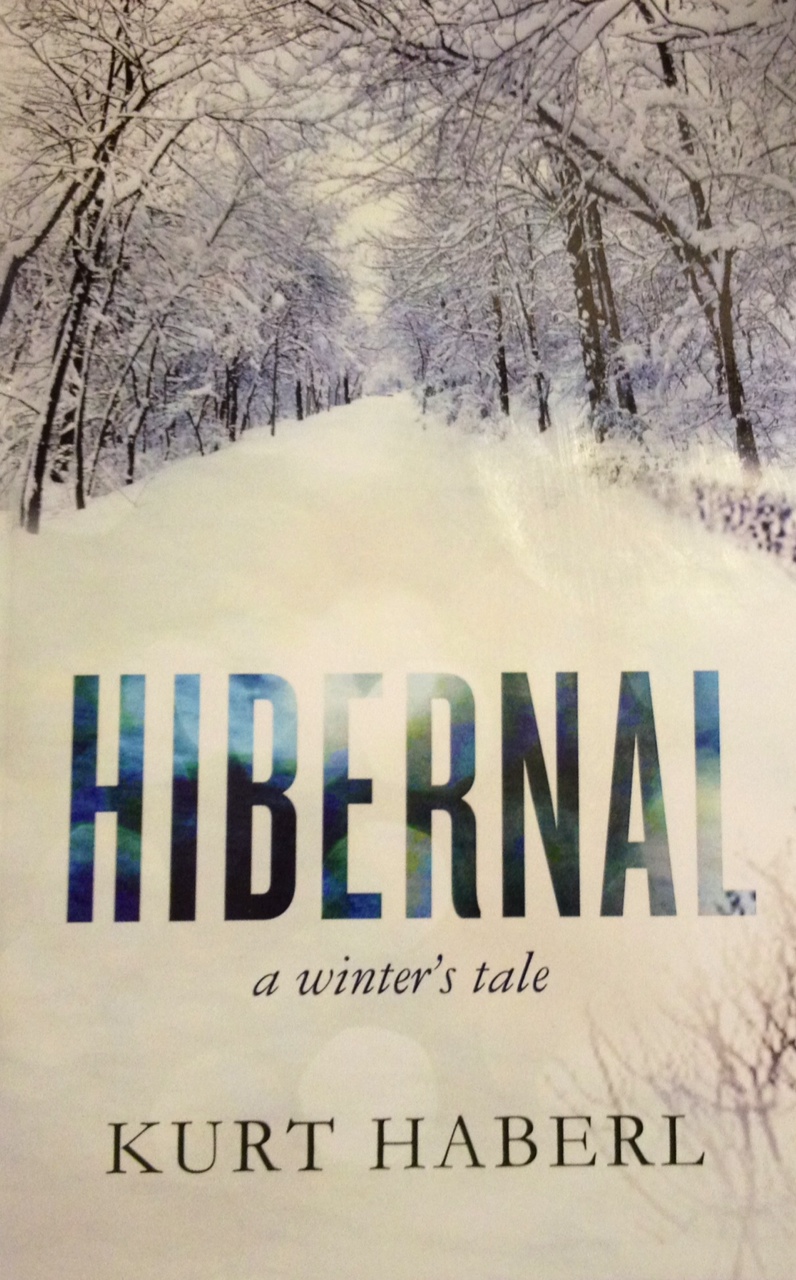
I remember a time when I was writing Hibernal when my main character had barely escaped political threats in Chicago by running away to a quite unlikely place – the Northwoods of the Upper Peninsula of Michigan, and holed up there for the winter. After you write about the Northwoods being snowy and cold, lonely and cold, what is left? I asked myself, “What matters now?” What matters now are inner demons, stories from the past that he tells himself, unspoken fears, and imagined threats that will first appear as memories and then later – aha, in the first thaw of spring – a bear, Faulkner’s bear that is more than a bear – it is the sum of his fears. From that point, the story wrote itself.

Questions are teachers, Socrates knew, and the more unanswerable the question, the better the teacher. Real life and good stories are packed with partial answers to good questions. Write them.

Strategy Number 7: What Good Writers Do. Many years ago (20 or so?) I took a class on writing at the University of Illinois and spent a lot of time doing research on creativity. One of the things I remember (a miracle in itself), was some research by Linda Flowers, a prof, I believe, at one of the Wesleyan Universities. (not the Linda Flowers who styled hair for The Hunger Games – heavens!) She worked diligently at examining protocols – the typical behaviors and thoughts of writers as they wrote. Often she would simply stop writers mid-sentence and ask what they were thinking/doing at that moment. One of the interesting things she learned is that poor writers seemed to fall into a rut in which they were stymied/stuck by minor things such as spelling or questions about punctuation, which would sometimes cause the derailment of a train of thought, or they would simply go back to re-read their last sentence and try to add on, often merely repeating their last idea in different words. They became very frustrated when she put them on machines so that only their last words were visible, and as they typed, their sentences would disappear.

Fluent writers, on the other hand, told her when they paused, they were going back to develop focus on important things: their main point or thesis, objections readers might have, who IS their audience, and the ramifications of what they were thinking. When she put fluent writers as seen by the quality of their writing on machines where only their last words were visible, the disappearance of their last sentences made no difference.

In other words, when good writers reach a pause-point, they GO BIG.

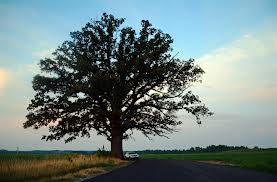
Similarly, when I write fiction, my BIG THING for any chapter is already in an outline. I may take some detours when something unexpected occurs to me, but more often than not, when I am writing, I feel like I’m in a car and I already know to turn left at the big oak in the middle of nowhere, and then begin to look for the bridge over a muddy creek. I know it’s just up ahead. In a way, writing is driving.
images


This blog entry is no exception. As I write, I see that I have come to the end of two pink Post-it notes with seven bullet points on them.

I guess I’m finished.


Things Are Getting Better

Things are Getting Better – and a Disclaimer

 In a blog dedicated to all things positive, optimistic, and humorous, it is time to catalogue what I mean by first noting that things ARE getting better, though not necessarily easier. This is especially true this week, because on December 9, 1979, smallpox was officially declared eradicated, and there have been no cases since then. I admit that what follows is a rather risky blog, but I still think it’s worth the effort. Many believe we’re not better off where convenience, fast “food,” processing speed, and expectations are the order of the day. Speed dating has become speed marriage. Books are written in weeks rather than years, and for many, the motto of the age is: “I want it all and I want it now.” I am not of that ilk, and when I have slipped and temporarily become a speeder of life or expected immediate remedies, it has not gone well for me. Stew, chili, spaghetti sauce, and life should be cooked long and slow. Almost anything worth doing is worth doing slowly. You can imagine.

My observations cover a lifetime, and it is only such distance in time that gives us a true panorama. Up close and immediate, one sees little – perhaps a tree, but no forest. I also admit and will include a sampling of the many tragedies we now face: violence in unlikely places, disease that may not be cured, and natural disasters.

Let’s begin with one great American love affair. I have a friend and long-time fishing buddy named Bob Olach, who long ago bought a burned-out hulk of a Volkswagen Beetle. Over the years, he took off every mechanical part and either reconditioned or replaced it. That included the engine, seats, suspension, door handles, and drive train. He re-did windows, gauges, the electrical system, tires, bumpers and only he knows what else. The body was restored and repainted red. It is a beautiful thing, a work of love, and probably more expensive than simply buying an original. He does not drive it in winter or in rain. It is wonderful because it is old, because it was made perfect over a long period of time, and because my friend made it a labor of love. I believe he made it better than the original.


Car 1


Bob is also a guy who greatly appreciates old things – friends, bamboo fly rods, wool trousers and waxed jackets. For full disclosure, I admit that I wrote an earlier entry simply about appreciating old things. I also believe (to quote Gwen in Hibernal), if something is true, so is its complement. I admire how my friend’s restored Volkswagen looks, and yet, when I drive anywhere, I appreciate the safety of seat belts and airbags, the efficiency of fuel injection, air conditioning, wipers that are not powered by the air pressure in the spare tire (which assumes that all storms are short), and a sound system that resonates rather than gasps at me. It has taken several generations, but the safety of warning systems and cameras, automatic traction control, and anti-lock brakes were worth the wait. As one who once drove an old panel truck down a slick hill and slid off the road on the way to class at St. Louis University after a 540-degree “turn,” I appreciate the advances. They may not make up for all bad teen-age driving, nor the effects of alcohol consumption, (well, not that I ever did that), but such safety features may come sooner rather than later.


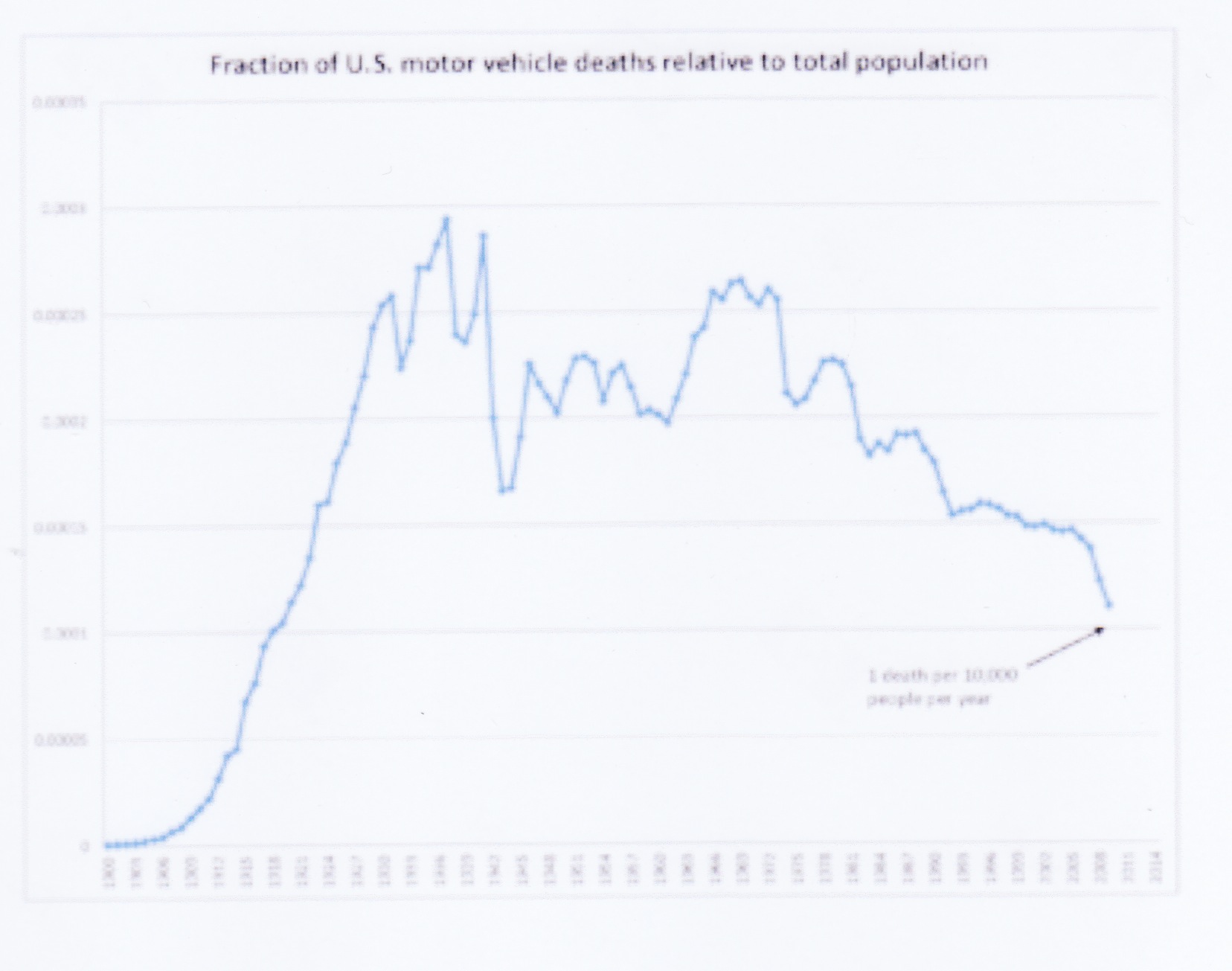
If you are not convinced, look at the following chart, which shows a decrease in traffic deaths of over 12% per year for the last 20 years. Although even one traffic death is too many, this improvement in the percentage of fatalities per capita is worth appreciating. We are now at the same level as 1918 when cars were barely able to go 30 miles per hour, roads were worse, and there were so many fewer cars to get in each others’ way.


Chart


Also, as I’ve gotten older and my memory more faulty, I appreciate the aid of a GPS that can alert me to gas stations, my favorite trout streams in the middle of nowhere, and an approximate arrival time that more than once has saved my marriage. My wife may occasionally curse such an electronic device, but when she does, she is not angry at me, and the avatar known as Allison on our GPS never takes it personally. For one who has learned that the gas station or the left turn by the big oak tree that most certainly is just over the hill, only it is NOT just over the next hill, and it is not even on this same road, the reassurance of Allison is a kindness to be appreciated. Besides, I imagine that Allison – by her voice – is a sexy, slender, long-haired, dark-eyed – well, you can imagine the rest. The British version named Emily on our first GPS may have been even more irresistible, but her occasional un-American propriety in words such as “Take the off-romp,” or “Turn wrought on Smythe Bool-vahrd” led to several dangerous misunderstandings. I had to un-friend Emily. That’s a good thing because Allison is so much better at her job than Emily was.


So many things are getting better. When I was a kid in my Huckleberry Finn little town, even the best bike had only one gear and a coaster brake. We made it better by hanging plastic tassels off the end of our handlebars and clothes-pinning baseball cards to the frame so their flapping through the spokes made the bike sound like a Vespa. As good as those improvements were, they do not compare with the wonderful preponderance of multiple gears on most bikes today, and even more important, the nearly universal use of bike helmets, which have saved the brains of many reckless boys and saved the faces and brains of many beautiful girls. These wonderful improvements took place in only one generation.


Even those among us who may be described by my daughter as “digital immigrants,” rather than “digital natives,” must appreciate the improvements in technology. Who among you remembers the days of the typewriter, White-out, backspace corrections, and the ultimate frustration of typing a research paper the night before it was due and noticing that on page seven you forgot to leave room at the bottom for two footnotes required for your quotations (found by luck amid the stacks of books and quoted on 3 by 5 index cards), and would have to type the whole page over. Do you remember the first mobile bag phones that were the size of a shoe box and worked only in metropolitan areas at a charge of about a dollar a minute?


Just last week, while we were in Marietta, Georgia for a wedding during the first mid-November blast of an Arctic Vortex (yes, it’s now an official name, so I’ve capitalized it), I wondered how bad the snow was back in Madison, Wisconsin, and with just a few clicks on my phone and access to local traffic cameras at major intersections in real time, I could see that on University Avenue, just three blocks from my house, the streets were wet but clear and there was about an inch of snow on the curbs and grass.


Do you want to know what is new and what you can do with new technology? Go to one of my favorite websites – Appsgonefree – and see a listing of a dozen or so apps free to download that day and keep forever. Many are silly games, but I’ve also downloaded guitar tuners, emoji keyboards, a dozen games for toddlers, including a favorite Trainzdriver, meditation sounds, timers, bicycle navigation, storybooks, crossword puzzles, piano keyboards for an Ipad, photo editing apps, weather sources with radar, Dropbox to share and save files, a library search engine, a PdF reader, and foreign language games. Those apps were all free. My phone is so much smarter than I am.


The betterment of the world is not just in technology, though. Populations grow because more people are surviving and having children. Children are better educated than they have ever been. (Do not believe the current fad of testing by the for-profit bean-counters. No school or student can nor should be judged on the basis of a 59-question multiple choice test like the ACT. Look at what happened to the few colleges who took the ACT as its only entrance criteria, and then found they lost entire classes of high-scoring but unsuccessful students.) Your kids not only know different things than you; they know more. Just to start, they know how to use a DVR and streaming capabilities. Give me a choice to play any game, including Trivial Pursuit, with a young person with a smart phone as a partner or a education-baiting pundit with a smart phone, and I will choose the young person every time…. and I will win. They know how to find information – useful information – when they need it, while the typical over-40 is still fumbling with fat fingers to turn on Google and then mis-type vague questions.


What else is better? You now can choose to eat organically, instead of the typical “food product” of Velveeta (read “not cheese”), Tang, (read “not orange juice”). Now we even excellent craft beers almost anywhere in the country. Doctors today know more and are better trained than those of only a generation or two ago. Cataract surgery is now done in fifteen minutes to outpatients. Buildings are safer. Clothes are more comfortable. (Do any men still wear starched shirts or women – whalebone or metal-braced corsets?) Weather prediction is more accurate (okay, I’ll admit the difference may be marginal, but you can now check your own isobars and radar to make your own predictions).


The flu, which once killed millions, can now be mostly prevented with a yearly vaccination. Now I’m back to where I started.


It’s time to take a leap, or at least to make a meaningful observation. I quit watching most news programs because their mission of providing a “story” almost always means reporting bad news, some disaster, or violence. Almost always it is mere fear-mongering. Good news is not news. Here’s my observation, and it’s risky enough, but probably true enough that I’m going to “bold” it.


In recent times, with the exception of war, most disasters are limited in scope, not pandemic, and truly affect a relatively small number of people, while improvements have been large in scope and affect millions. Even more important, nearly all disasters are temporary, while advancements like seatbelts are permanent.


I’m not denying that a global economy effects almost everyone, but even the economic meltdown of eight years ago was temporary, and now jobless reports show we’re almost back the where we were, and the stock market has advanced far above what it was. There will be regular crashes, probably for every generation, just like there will probably be more wars, one per generation, but the slow general trend upward for 20 of the 25 years per generation has continued for a long time. Humans are resourceful enough to keep that going, even as we fight localized ebola, ISIS, hurricanes, and blizzards.


Be patient, keep solving local problems; ignore fear-mongering news, and ride the wave along with me. Put on your bicycle helmet. Carry a towel if you must. We’re going up.


Be Right or Be Kind?

Hibernal cover

Special: You now can download Hibernal, my literary suspense after Shakespeare’s classic A Winter’s Tale or your Kindle or Kindle app through Amazon for only $2.99. If you like intrigue, the trials and triumphs of a good love story, humor, and fascinating characters, it’s worth a click. You can search Hibernal on Amazon or copy and paste this in your browser:

The paperback is available as well through Amazon.


I have an app that lists major events on this day throughout history. It is a rather disturbing app. There were a few good things that happened as I write today – Washington’s inauguration, the end of the persecution of Christians by Diocletian in 311, and a few things that depend on your perspective, such as the completion of the Louisiana Purchase, which doubled the size of the United States. However, that event was not good if you were a Native American and your land was sold by the French, who did not own it, to the new Americans, who would take it over and boot you out. The disturbing part of the daily record app is the list of deadly battles, executions, and disasters. Casey Jones wrecked his train and died today because he was behind schedule and sped to catch up. (I assume he was not texting his girlfriend.) Emperor Licinus defeated Maximinus. Edmund do la Pole, Yorkist pretender to the throne, was executed by Henry VIII. The Camp Grant massacre took place in Arizona in 1871. The list goes on, but you get the idea. The trail of blood is unnerving.


Even alternative histories, such as Howard Zinn’s A People’s History of the United States, which promises to avoid defining history as a successive description of wars, battles, executions, and massacres perpetrated by cities, states, nations, religions, and individuals, is mostly a depressing description of attacks on minorities, unions, and ad hoc leaders of the common people, with a very few successes noted, mostly with heavy costs exacted from marchers, organizations or the powerless. I recommend it if you can stomach depressing history. The trail of blood is unnerving.

51qcAhimiVL._SL160_PIsitb-sticker-arrow-dp,TopRight,12,-18_SH30_OU01_AA160_


As with most of my entries, I seek to improve life and be positive, if not inspirational, by changing perspectives. Sometimes that is difficult to do. To anyone who reads this, I hope you may find a change in perspective. I have no intention of rewriting history, but I want to see the present differently so that I may live differently. I seek a better life in fact.


So how can I do that? What I see in my app that lists events in history is that almost all of the deaths and disasters were preceded by judgments based on labels, most of which demonized some opponent and made it legal, if not “necessary,” to kill that person or movement. The result is another unnerving trail of blood.


Two other books are relevant here, it seems to me.


41EOlL+w6KL._SL160_PIsitb-sticker-arrow-dp,TopRight,12,-18_SH30_OU01_AA160_


Malcolm Gladwell’s Blink is a study of how we make judgments, more often than not, in the blink of an eye. Those judgments are based on minute observations, perhaps intuition, a gut feeling, or a vibration that is not logical or explainable. Usually, those judgments serve us well as we navigate life’s dangers – but not always. The issue here and the perspective I wish to change in myself is not a refusal to make such automatic judgments, but rather, to change how I act or don’t act on those labels and judgments.


For example, in our current political climate, the labels Democrat and Republican have become meaningless to me; neither represents me; neither is good or bad in themselves, and using either label as a rallying point or pejorative will not succeed in improving our country. The same can be said of Conservative and Liberal. Their inconsistencies, differences between what each says and what each does, and their alienating tendencies to create Us vs. Them will not serve our country well. For a long time, I believed in Pogo’s ironic statement “We have met the enemy and he is us,” but I have come to believe that making anyone an enemy, including ourselves, will doom us to failure. If we remain a house divided, we will not stand, at least not much longer. As a first step, I commit myself as a citizen and writer to quit using labels that might alienate those whose cooperation I need. I need people to disagree with me so that I may see differently. I must disagree or agree with ideas; I do harm by attacking the person. I do harm by labeling, even in applying a label to myself.


I may be most wrong in the things about which I am most certain, and history, the real history and not the editorilizing written in books, will most likely show me how wrong I am. That lesson may take years. History is VERY slow, often not becoming evident until another generation comes along. Absolute righteousness leads to disaster, as if did for the perpetrators of the Inquisition, the “missionaries” to Native Americans, anti-communists in Viet Nam, the WMD apologists in Iraq, the British rulers in India, and more recently, fracking oil companies in North America. The fact that they are/were so certain of their capabilities and rightness sends up red flags to me.


This does not mean that I must be kind to everyone, everywhere. Psychopaths, who have proven their danger like Osama Bin Laden, are not to be greeted with a friendly hello; they must be stopped. The same is true of child molesters, drunk drivers, and abusers. In daily life, I don’t meet many psychopaths, those so without empathy that the pain of others is irrelevant to them, so I try to be kind to almost everyone.


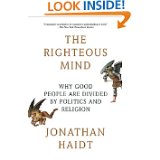
The second book that I recommend as relevant here is Jonathan Haidt’s The Righteous Mind.


41h9b+YMawL._SL160_PIsitb-sticker-arrow-dp,TopRight,12,-18_SH30_OU01_AA160_


It is an analysis of quite a few psychological studies of how people make judgments or take positions. Its thesis, which I have come to observe in my own behavior and dealings with others, is that people generally decide on issues based on preconceived notions, intuition, loyalty to a group, or the instantaneous leaning Gladwell wrote about in Blink. Reason is most often used later to justify a position we have already taken. Facts, examples, and statistics that contradict us only make us more entrenched in the position we hold. Again, it takes time for a lot of people, myself included, to admit they are wrong. The irony is that the more certain someone is that he is right, the more likely that he is wrong, and the longer it will take for that person to realize it. For the interim, be kind. For the times I am wrong, kindness will ensure that I don’t make things worse. If I am right, kindness will convince my friends that I am right long before facts, data, examples of statistics will. In fact, kindness is most often like jeans, best worn almost anywhere. On the few occasions where I can’t wear jeans, I defer to my wife or daughter, whose fashion sense is far more insightful than my own. I need them to disagree with me. The times when I insisted on my own right fashion sense – well, embarrassment is not always a beautiful thing.


Another irony here is that those who most necessarily ought to be kind – powerful and rich individuals, churches, families, schools, hospitals, and governments – are not that kind to people. I will know when we are making progress after I see that an app listing great acts of kindness for any day in history shows up in AppsGoneFree. I will know we have become enlightened when I see corporations and institutions practicing kindness as its standard operating procedure. Can you imagine what a day that would be? I might even go back to shopping at Walmart, the psychopath of corporations. Oops, that’s not very kind. I’m going to rewrite that sentence and then delete it, and instead write something nice.

Here it is – Walmart is a very efficient corporation that offers low prices to those who cannot afford better.


I still won’t shop there if I can avoid it. I care more about local stores and health care for struggling workers. They deserve my kindness more than the Wall billionaires.


When you read this blog, please remember with empathy that my purpose is to stimulate thought and be positive. If you leave a comment, whether you are right or not, be kind.