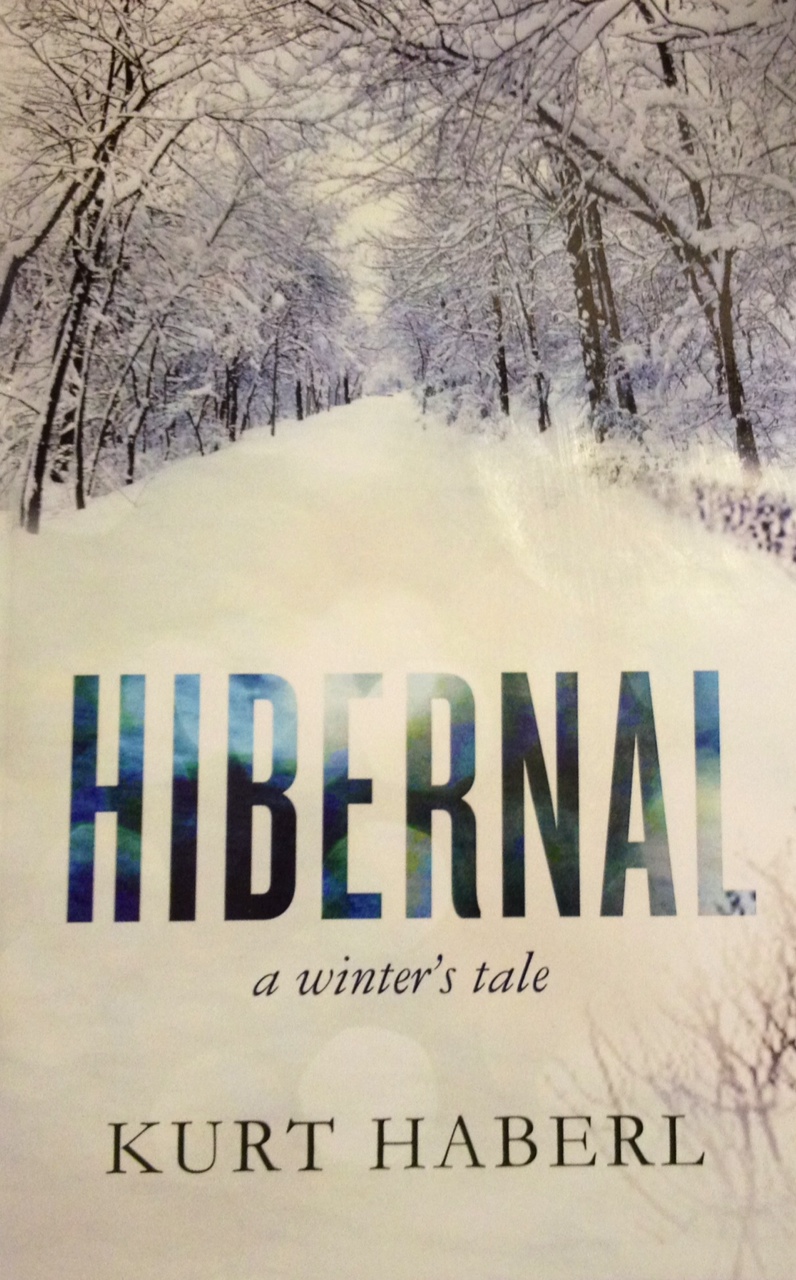
Special: You now can download Hibernal, my literary suspense after Shakespeare’s classic A Winter’s Tale or your Kindle or Kindle app through Amazon for only $2.99. If you like intrigue, the trials and triumphs of a good love story, humor, and fascinating characters, it’s worth a click. You can search Hibernal on Amazon or copy and paste this in your browser:
The paperback is available as well through Amazon.
I have an app that lists major events on this day throughout history. It is a rather disturbing app. There were a few good things that happened as I write today – Washington’s inauguration, the end of the persecution of Christians by Diocletian in 311, and a few things that depend on your perspective, such as the completion of the Louisiana Purchase, which doubled the size of the United States. However, that event was not good if you were a Native American and your land was sold by the French, who did not own it, to the new Americans, who would take it over and boot you out. The disturbing part of the daily record app is the list of deadly battles, executions, and disasters. Casey Jones wrecked his train and died today because he was behind schedule and sped to catch up. (I assume he was not texting his girlfriend.) Emperor Licinus defeated Maximinus. Edmund do la Pole, Yorkist pretender to the throne, was executed by Henry VIII. The Camp Grant massacre took place in Arizona in 1871. The list goes on, but you get the idea. The trail of blood is unnerving.
Even alternative histories, such as Howard Zinn’s A People’s History of the United States, which promises to avoid defining history as a successive description of wars, battles, executions, and massacres perpetrated by cities, states, nations, religions, and individuals, is mostly a depressing description of attacks on minorities, unions, and ad hoc leaders of the common people, with a very few successes noted, mostly with heavy costs exacted from marchers, organizations or the powerless. I recommend it if you can stomach depressing history. The trail of blood is unnerving.
As with most of my entries, I seek to improve life and be positive, if not inspirational, by changing perspectives. Sometimes that is difficult to do. To anyone who reads this, I hope you may find a change in perspective. I have no intention of rewriting history, but I want to see the present differently so that I may live differently. I seek a better life in fact.
So how can I do that? What I see in my app that lists events in history is that almost all of the deaths and disasters were preceded by judgments based on labels, most of which demonized some opponent and made it legal, if not “necessary,” to kill that person or movement. The result is another unnerving trail of blood.
Two other books are relevant here, it seems to me.
Malcolm Gladwell’s Blink is a study of how we make judgments, more often than not, in the blink of an eye. Those judgments are based on minute observations, perhaps intuition, a gut feeling, or a vibration that is not logical or explainable. Usually, those judgments serve us well as we navigate life’s dangers – but not always. The issue here and the perspective I wish to change in myself is not a refusal to make such automatic judgments, but rather, to change how I act or don’t act on those labels and judgments.
For example, in our current political climate, the labels Democrat and Republican have become meaningless to me; neither represents me; neither is good or bad in themselves, and using either label as a rallying point or pejorative will not succeed in improving our country. The same can be said of Conservative and Liberal. Their inconsistencies, differences between what each says and what each does, and their alienating tendencies to create Us vs. Them will not serve our country well. For a long time, I believed in Pogo’s ironic statement “We have met the enemy and he is us,” but I have come to believe that making anyone an enemy, including ourselves, will doom us to failure. If we remain a house divided, we will not stand, at least not much longer. As a first step, I commit myself as a citizen and writer to quit using labels that might alienate those whose cooperation I need. I need people to disagree with me so that I may see differently. I must disagree or agree with ideas; I do harm by attacking the person. I do harm by labeling, even in applying a label to myself.
I may be most wrong in the things about which I am most certain, and history, the real history and not the editorilizing written in books, will most likely show me how wrong I am. That lesson may take years. History is VERY slow, often not becoming evident until another generation comes along. Absolute righteousness leads to disaster, as if did for the perpetrators of the Inquisition, the “missionaries” to Native Americans, anti-communists in Viet Nam, the WMD apologists in Iraq, the British rulers in India, and more recently, fracking oil companies in North America. The fact that they are/were so certain of their capabilities and rightness sends up red flags to me.
This does not mean that I must be kind to everyone, everywhere. Psychopaths, who have proven their danger like Osama Bin Laden, are not to be greeted with a friendly hello; they must be stopped. The same is true of child molesters, drunk drivers, and abusers. In daily life, I don’t meet many psychopaths, those so without empathy that the pain of others is irrelevant to them, so I try to be kind to almost everyone.
The second book that I recommend as relevant here is Jonathan Haidt’s The Righteous Mind.
It is an analysis of quite a few psychological studies of how people make judgments or take positions. Its thesis, which I have come to observe in my own behavior and dealings with others, is that people generally decide on issues based on preconceived notions, intuition, loyalty to a group, or the instantaneous leaning Gladwell wrote about in Blink. Reason is most often used later to justify a position we have already taken. Facts, examples, and statistics that contradict us only make us more entrenched in the position we hold. Again, it takes time for a lot of people, myself included, to admit they are wrong. The irony is that the more certain someone is that he is right, the more likely that he is wrong, and the longer it will take for that person to realize it. For the interim, be kind. For the times I am wrong, kindness will ensure that I don’t make things worse. If I am right, kindness will convince my friends that I am right long before facts, data, examples of statistics will. In fact, kindness is most often like jeans, best worn almost anywhere. On the few occasions where I can’t wear jeans, I defer to my wife or daughter, whose fashion sense is far more insightful than my own. I need them to disagree with me. The times when I insisted on my own right fashion sense – well, embarrassment is not always a beautiful thing.
Another irony here is that those who most necessarily ought to be kind – powerful and rich individuals, churches, families, schools, hospitals, and governments – are not that kind to people. I will know when we are making progress after I see that an app listing great acts of kindness for any day in history shows up in AppsGoneFree. I will know we have become enlightened when I see corporations and institutions practicing kindness as its standard operating procedure. Can you imagine what a day that would be? I might even go back to shopping at Walmart, the psychopath of corporations. Oops, that’s not very kind. I’m going to rewrite that sentence and then delete it, and instead write something nice.
Here it is – Walmart is a very efficient corporation that offers low prices to those who cannot afford better.
I still won’t shop there if I can avoid it. I care more about local stores and health care for struggling workers. They deserve my kindness more than the Wall billionaires.
When you read this blog, please remember with empathy that my purpose is to stimulate thought and be positive. If you leave a comment, whether you are right or not, be kind.
 kurthaberl