We’ve all been there, that place where hope becomes expectation and then slides into wreckage. The kite crashes to the ground and is no longer a kite but only torn paper and two sticks. The blog we’ve written to inspire or at least amuse others has instead offended or worse yet, angered. The blog we decided to write every week or two slipped away into a six month hiatus while we worked at Epic culinary, celebrated various holidays, and visited relatives. A proposal for almost anything – a vacation, a job, a date, is met with – what’s that new thing called – the “resting bitch face.” Then there is the failure of having worked for years on a book and other years on a Master’s degree in writing, only to receive dozens of rejection letters from agents and publishers of your genre who are not interested. No readers is a failure. Eventually one loses count. I was about to add the ultimate failure, the marriage proposal, but Pride and Prejudice notwithstanding, few today take the Darcy-esque risk with Elizabeth Bennett. Most often the couple has talked about marriage, and the guy already knows she will probably say “Yes.” (Often with an exclamation mark or two)
The interesting thing is that failure is often accidental or circumstantial rather than a disaster we caused. We don’t consciously choose to wreck our cars, break windows, or hammer thumbs. We knew those things were possibilities, but certainly, such an unlikely – ouch! Damn! (Followed by other automatic responses.)
What I’m mostly talking about today are the ones we ourselves cause and afterwards think, “How could I be so dumb?” I’ve experienced quite a few, and I think I’ve learned from them.
A whole class of failures are the ones witnessed by a spouse. A few years after we were married, we bought our first house, a small L-shaped ranch with a big back yard enclosed by a chain link fence. Trying to chase two birds with one stone, I hoped to please Ann by cutting out 200 square feet of sod, which I would use to cover the ugly sore of a new sewer line we needed the first month in our house, and fence in a garden for her where the sod had been. It would have been a beautiful gift. After fencing in the garden, I found the dirt below the sod was mostly clay, perfect for planting rocks or a tennis court, but not so good for a garden. In phase two I bought several bags of topsoil and rented a tiller, thinking that I could break up the clay, and she might at least be able to plant cacti. In her version of this failure from looking out a triple window in our kitchen – the only accurate version I might add – everything was going fine until I got too close to the chain link fence. One tine of the tiller caught the fence and started to climb it. To make matters worse, the climbing tilted the opposite tines, one of which caught our two foot high rabbit fence. As the tiller churned and I tried uselessly to pull it away (a six-horsepower engine really is stronger than one dummy), it wrapped the rabbit fence around itself until the blades locked; the engine backfired once, and then died. Ann figured we had just bought a tiller we could not afford in addition to a sewer line, and we needed the sewer line more. She said her eye roll turned to laughter when she saw me in typical English teacher fashion, take a step back, put my chin in my hand, and just examine the mess. Three hours and a lot of snipping later, the only real loss was the rabbit fence. The tiller was returned to the garden store in working condition. I did not charge the store for sharpening the tines on our wire rabbit fence. It was a magnificent failure. I learned that sometimes the universe kindly forgives stupidity, but even more meaningful is wifely kindness.
Sometimes failure can be funny, especially if it is shared. Before I was a teenager and started failing magnificently on my own, I remember a Saturday morning on a beautiful fall day when my father planned to cut down a rotting, very old cherry tree in our back yard before the branches broke off and landed on our porch. It was a tall tree, at least 50 feet high, and my father borrowed a chain saw and a lot of rope for this project. Because he was young then, and I was not even a teenager, he climbed the tree, roped himself to the trunk for safety, and attached pull lines so my grandfather and the three oldest boys could pull branches down into the yard as he cut them. The first three or four were successful, but when he got to the largest branch, he told us we’d better move the picnic table he had built out of two by fours.
“It will be fine,” my grandfather said, looking up at my father and eyeballing the falling trajectory of the branch.
My dad cut, the branch groaned, then fell free, sliding off a lower branch. We pulled the rope, and the branch crashed down on the middle of the picnic table, now a folded picnic table. Grandpa John, in a clear case of a master kicking the dog, looked at me, aged 10, Chris aged 8, and Ken aged 7, and said, “I TOLD you to pull. Why didn’t you pull?”
Dad started laughing hard enough that I thought he’d fall out of the tree. It was a magnificent failure. The lessons I learned from that one were so obvious and wonderful, I don’t really feel I need to state them here.
I will add the story of one of Ann’s brothers, but to protect his identify, I will not name the particular brother – he knows who he is, as does his other brother, Ann, and most of his other relatives. It happened on a beautiful fall Saturday when all the men on the block were in their back yards raking leaves. My brother-in-law is known to be slightly impatient, and in those days, at least in Indiana, piles of leaves were burned rather than scooped up by city machines and mulched. His piles were too damp to do much except smoke, so he decided in true manly fashion to help them along. Since lawnmower season was over and he had plenty of leftover gasoline, he began to squirt his piles until they simply had to burn. In a matter of seconds, one of his piles caught fire and the flame followed his stream of gasoline back into the gas can he was holding. He had a moment to think, “Uh oh, this is not good,” and then threw the can as far as he could. According to him, it did not explode, it IMPLODED in mid air, ruptured and spewed a shower of burning gas over most of his back yard. He raced around the yard, stomping out dozens of small fires before they could unite into one big fire and burn down the neighborhood. When it was over, he noticed that all the men in the neighborhood had been watching in shocked silence. Then, in unison, they began to applaud. Well done, man. Literally, his yard was well-done. It was a magnificent failure. You can imagine what it was like if you recall any one of the commercials by Allstate Insurance, featuring the burning, cut-up guy who calls himself “Mayhem.” I’m not sure what my brother-in-law learned, if anything.
As a short aside in tribute to Pride and Prejudice, I will quote Mr. Bennet, who said after one of his family’s magnificent faux-pas, “For what do we live, but to make sport for our neighbors, and laugh at them in our turn?” Ah, truth.
What prompted this blog was not so much a desire to air my secret lapses or to prepare myself and those around me for future, more eye-rolling achievements, but rather, it began with an evening of Tchaikovsky.
More specifically, we went to the Madison Symphony Orchestra concert at the Overture Center in Madison last Friday to hear Beethoven, Ravell, and Tchaikovsky. I was struck by one of the program notes for the magnificent and beautiful Overture to Romeo and Juliet. Allow me to quote from the program. “In 1868, (Tchaikovsky) dedicated an overture titled Fate to his friend Balakirev. While Fate was a complete flop – Tchaikovsky later destroyed the score – it was the beginning of a close friendship, and Balakirev encouraged him to take Romeo and Juliet as a subject…. The first performance in 1870 was unsuccessful, and Tchaikovsky revised the work, incorporating several of Balakiren’s suggestions. He revised it once more a decade later – the version that is familiar today – in particular working the dramatic ending. (Program notes by J. Michael Allsen)
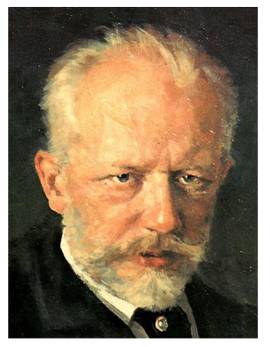
Ah, Peter Ilyich Tchaikovsky, a genius and double failure. Only the third try ten years later was a
success. I am reminded of other failures.
Beethoven had several, including his insistence to be onstage for the premier of his magnificent 9th symphony. Here is one eyewitness report.

Jumping Around Like a Madman
By 1824, Beethoven was almost entirely deaf, but still wanted to be part of the performance and was on stage while the piece was performed to indicate the tempos. Yet, Beethoven could not resist “helping” the musicians on stage by showing them the style and dynamics that he wanted, even though he was nearly deaf.
The great composer’s actions were animated to say the least. One musician wrote, “He stood in front of the conductor’s stand and threw himself back and forth like a madman. At one moment he stretched to his full height, at the next he crouched down to the floor. He flailed about with his hands and feet as though he wanted to play all the instruments and sing all the chorus parts.” It was a good thing that the conductor had already instructed the musicians not to pay attention to the composer!
In another account…
The premiere of Ludwig van Beethoven’s Symphony No. 9 was nearly a complete disaster.
Beethoven’s first on-stage appearance in 12 years in Vienna on May 7, 1824 didn’t go as planned for the premier of the Ninth. It was the largest orchestra that he had ever assembled. It’s known that some of Vienna’s most elite performers were in attendance. Beethoven even had two famous singers sing the soprano and alto parts. Though the composition itself is beautiful, the performance itself was somewhat disappointing.
Many spoke out that they thought it was under-rehearsed and “scrappy” in its execution. It’s said that while the audience applauded at the end, Beethoven was actually off by several measures and was still conducting. A member of his orchestra, Caroline Unger, had to walk over and turn the musical mastermind around to accept the audience’s cheers and applause. But violinist Joseph Böhm stepped forward afterward to praise Beethoven and explain that he was not to blame for the choppy experience.
“Beethoven directed the piece himself; that is, he stood before the lectern and gesticulated furiously. At times he rose, at other times he shrank to the ground, he moved as if he wanted to play all the instruments himself and sing for the whole chorus. All the musicians minded his rhythm alone while playing.”
This failure didn’t hit Beethoven too hard. The audience gave him five standing ovations.
Even in failure we may succeed.
So far, this catalogue of failures merely documents what most of us already know. As the actor Jim Carrey once remarked, “Those who succeed are the ones who just keep going.”
There is another aspect of failure, however, that I believe is more important than seeing failure as merely a step, a pause on the way to success. Failure is important, and I’m convinced it is actually a blessing because what it does to us as humans. Success ruins us. The quicker it comes, the more it ruins us. The easier the success, the more damning the ruin. The greater the immediate success, the more complete the ruin.
How can this be?
Failure enlarges us. Failure in love makes us kinder, deeper, and more able to love greatly. Why? Because now we know its importance, its worth, its cost. We may temporarily become discouraged, angry, perhaps even despondent along with every feeling in between. Even those painful things make us more human. We become truly great by rising out of ashes. Suffering enlarges our capacity. What we often find is that the success we so desperately sought is not really the success we need. The game we are in is bigger than the game we think we are playing.
A child who falls in learning to ride a bike may have temporarily failed, but what that child is actually learning is how to overcome adversity. It’s greater than learning to ride a bike, which that child will learn to do eventually anyway. Which is the greater success – learning to ride a bike or learning to overcome adversity and skinned knees?
History is a catalogue of wonderful failures: Gandhi, Martin Luther King, Michael Jordan, J.K. Rowling, Thomas Edison, Abraham Lincoln, Ben Franklin, Galileo, Vera Wang, Vincent Van Gogh, Emily Dickinson.

Jesus!
To those who fail utterly or die in the struggle, even death cannot prevent their greatness, their legacy, their accomplishment, their bequest to the rest of us.
Take heart. When you fail, it is usually temporary; it is a blessed teacher; it increases your capacity and your potential. When you fail, your perspective changes. When you fail, you now have rubble with which to build a fortress instead of a tower. The stone rejected becomes the cornerstone.
I don’t deny the pain. When you fail, I recommend that you do it “big” and try not to die in the process. Then I think it helps to take a step back, put your chin in your hand, study the twisted wreckage for as long as it takes, and then tell yourself, “Wow, that was magnificent. That was one of my best failures e-vah.”
 kurthaberl
Okay, you take blogging to a new level, Kurt. Perhaps a book of your essay’s? For you ARE a true writing, and not just some hack blogger like me, eh? In your own words, never give up, eh?
Beautiful and thought provoking work. Hope you got my comment on your post.
Dan
On Tue, Feb 23, 2016 at 5:00 PM, kurthaberl wrote:
> kurthaberl posted: “We’ve all been there, that place where hope becomes > expectation and then slides into wreckage. The kite crashes to the ground > and is no longer a kite but only torn paper and two sticks. The blog we’ve > written to inspire or at least amuse others has instea” >