On Procrastination

Hibernal cover

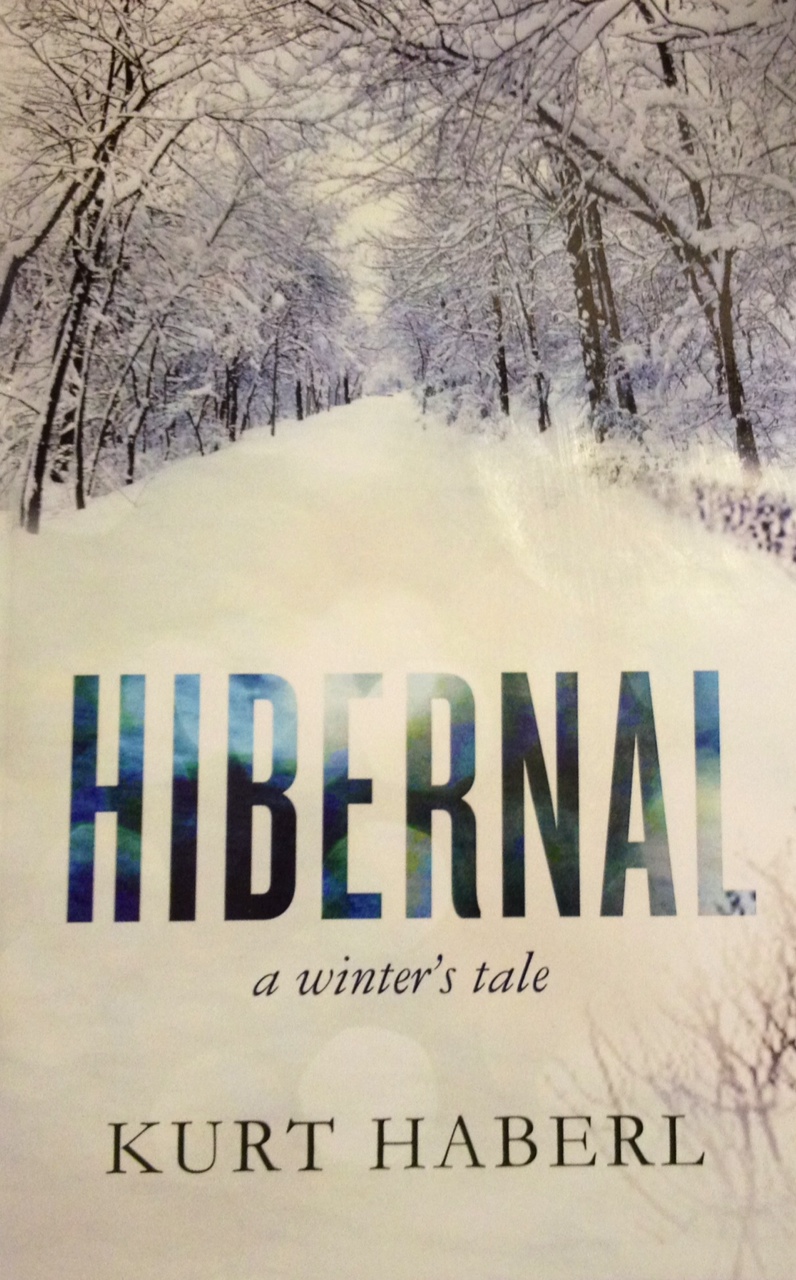
 My last literary suspense novel is now available through Amazon for $4.61 paperback or $2.99 for Kindle download. 


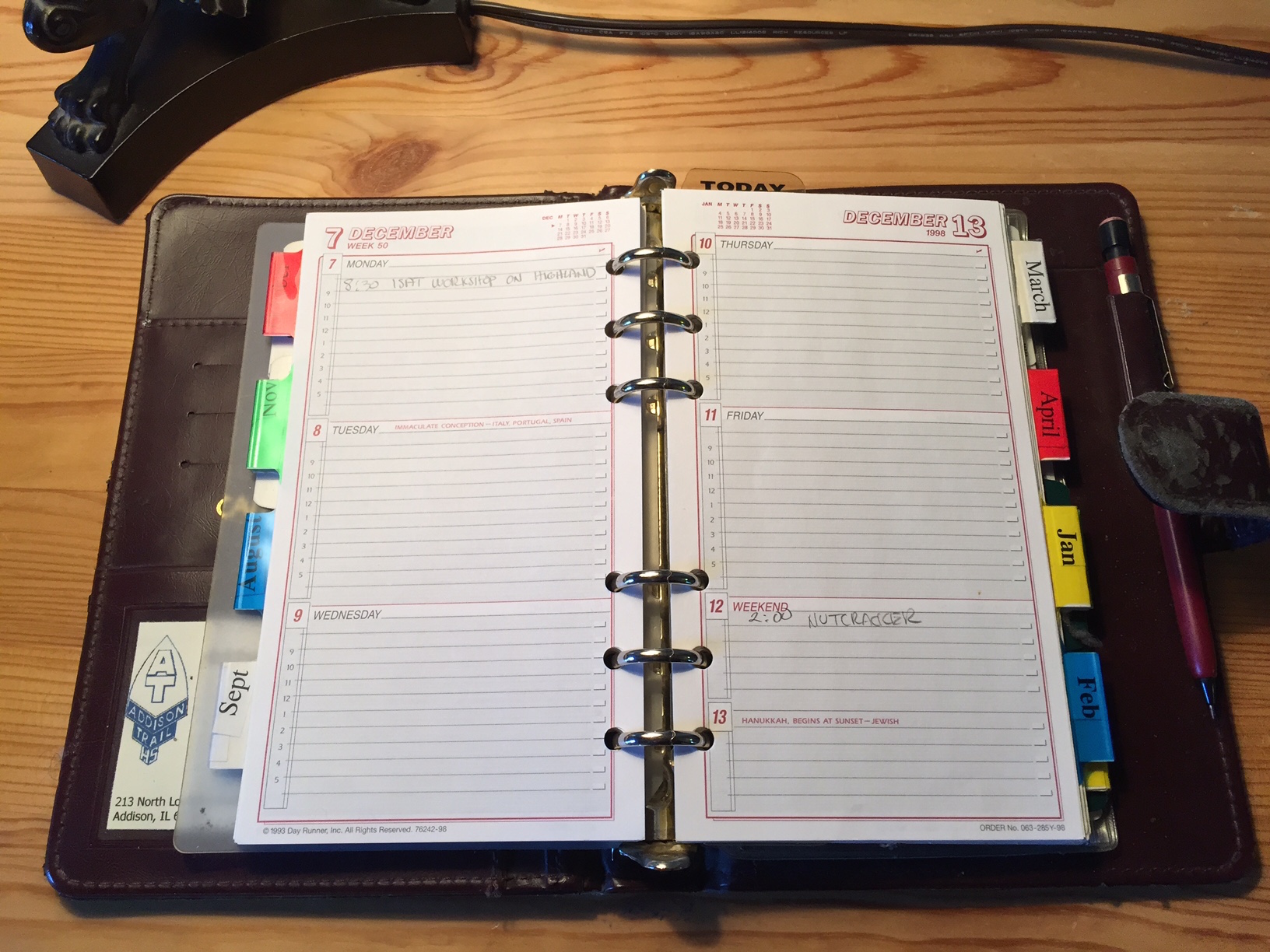
When I was teaching high school, I realized eventually (I say “eventually” because I am a slow learner and I think slow learners make the best teachers – not really, but it’s what I told myself) – that one of a teacher’s best tools was a Dayrunner. For those of you under 60, a Dayrunner was a calendar book, a daily planner with sections for birthdays, notes, phone numbers and addresses, and they were usually bound in fake leather with a flap that snapped. Each daily page was sectioned in 15 minute intervals, which was about ten minutes beyond my attention and mid-term memory span. Today your mobile phone and calendar app take its place, and if you’re sentimental about having a Dayrunner, you can still get a case for your phone in fake leather with a flap and snap. I know this for certain.
 

IMG_1582


Since teachers make hundreds of decisions and plan, plan, plan, my Dayrunner was filled with things like: “See Joey about his paper. Sign out two class sets of To Kill a Mockingbird. Reserve the video player for Tuesday. Call Mrs. Jennings about her junior high spelling bee. Call Tech to see why my grading program won’t record attendance. Grade 100 essays.” You get the idea. One of the interesting things about most teachers is that they are eternal optimists, mostly because they think at the speed of light, and imagine that time is so elastic that they can grade 100 essays in only an hour and a half. Those papers will be so wonderfully written that all a teacher will need to do is put stars by insightful passages, circle one comma splice, slap on an “A,” and write, “Paulette, this is the best piece you’ve ever written.”

On bad days, a Dayrunner was a frustrating record of how things can go wrong. Once entries on other people’s Dayrunners come into play, and they start calling YOU at 10:15 as scheduled by them for help with THEIR problem, your morning schedule is pushed off till the afternoon and then the next day, and inevitably, the next week. Eventually, everything important gets done, but often that means the 100 essays are started at 10:00 P.M. on a Sunday night after everyone else had gone to bed. All teachers know what this is like, and it is why they celebrate snow days, not so they can put on cross-country skis to admire Nature, but to deal with the Dayrunner and do papers. A Dayrunner is sort of a Sword of Damocles hanging over a teacher’s head.

Teachers suffer a typical kind of procrastination. They don’t really procrastinate as a general rule; they procrastinate something they dread, like the enormity of 100 essays, for something else that must be done that is less distasteful, like planning a unit that will excite students and make them wonder about Rites of Passage, justice, and the importance of parental example, in other words, To Kill a Mockingbird.

It took me an entire career to learn how to use a Dayrunner effectively, and now no one uses one, so I’m asking you to transfer anything useful that you read here to your calendar app, sticky note, or – worst case scenario – inked on the palm of your hand if you’re a high school girl who had her phone taken away first period because you were cartoon-izing your teacher and her bad hair.

Anti-Procrastination Performance Strategy 1: DO NOT WRITE “GRADE 100 ESSAYS” ANYWHERE IN YOUR DAYRUNNER. Instead, write “Grade 5 essays” in your Dayrunner. I have regularly preached the rewards of reading Anne Lamott’s book on writing called Bird by Bird, the story of how her brother broke down at their family’s summer cabin when he had not started a report to get into a special program and needed it in two days. Anne’s father, to his credit, helped his son do one page on one bird, and then taught him a life lesson: That’s how anything gets done, a project, a book, an education, a life – bird by bird

Is cleaning your house a daunting task? Clean one room every weekday. Want to write a book? Write one page every weekday, and in a year, you’ll have a book, actually too much of a book and you’ll have to cut 75 pages. Is it too daunting to save a million dollars for retirement? (Admittedly, if you’re 60, it’s too late). The pros say the greatest advantage young workers have, which is more important than a lot of money, is time and compounding. How to do it? Put 100 bucks a month into a big, total-market investment like a no-load index fund, and have more put in automatically, so you don’t even know you had it. The next year, put 150 bucks away. If you don’t have an actual career, put 10% of whatever you DO have away until you actually find a career that will pay you more than a hundred bucks a month.

Do you want to build a successful marriage? Do something little for your wife – unasked – first thing every morning (coffee in bed? a shoulder massage?). It’s better than money in the bank. You get the idea. Procrastination is often a result of feeling daunted – the job is too big; there’s not enough time; there isn’t $100,000 to invest, I have over 100 essays to grade. The solution is to forget about the end result, and just take the smallest first step possible.

Last month I shocked a Schwab account guy when I told him I wanted to open a Wilshire 5000 total market investment with 200 bucks a month automatic deposit, using the advantages of time and dollar cost averaging, and he said, “But you’re retired now. You should be taking money OUT of an account.” I told him, “You don’t understand. We’re getting by okay. This investment is for 20 years from now when we will need assisted living care. It’s money I won’t even remember I have. I will put more in by automatic transfer, a little more each year, and my wife or my kids will take it out when I can’t remember my name.” I love small steps because I can do them.

A.P.P.S. 2: DO NOT SCHEDULE EVERY MINUTE OF EVERY DAY. Teachers, especially, are too optimistic about how little time any one task may take. If you are semi-retired like me, I find it works if I limit myself to two things I want to get done in the morning, three things in the afternoon, and two at night. If you’re working full-time, it would only work to put one thing on your list for the morning, two in the afternoon, and one in the evening. If you’re taking your grandson to a water park, as I’m doing today to counter a month of sub-freezing temperatures, all Dayrunner plans are off. Anything else that gets done is just a bonus.

A.P.P.S. 3: PLAN REWARDS AND NEVER, EVER BEAT UP ON YOURSELF FOR A DISTRACTED DAY. We’re all kids at heart. Earned rewards are always more effective than punishments. M and M’s are great for grading papers. Sometimes I tell myself, “If I just finish cleaning the bathroom I’ll reward myself with Downton Abbey,” but for me chocolate works better than anything else to get myself to take that first step.

Sometimes the best thing I can do after a distracted day is to tell myself, “Well, that didn’t go so well.” It’s far better than telling myself, “I’m so stupid, so lazy, so …” There’s a big difference between noting the reality that something didn’t go well and telling yourself you are bad, crazy or worse. Shame is evil.

A.P.P.S. 4: As I’ve reported often, I learn a lot from reading. One of my recent adventures is a very useful book by Charles Duhigg called The Power of Habit. I highly recommend this book. “Power” is the right word in his title. What I have found is that it is possible to take a little thing, make it a habit, and then it no longer needs to be on your Dayrunner list. For me, it is now automatic to get up, stretch for 20 minutes, and then get on our treadmill at a good pace while watching TED talks or some documentary on my iPad for half an hour. I don’t procrastinate because I don’t decide to do it or not do it. I do it almost without thinking, and then, psychologically for me, my Dayrunner morning actually begins after the treadmill. If something interferes, if I am sick or away for a while, it takes me a week or two to re-establish the habit, but that’s not too bad. When I’ve been camping or visiting relatives for a while, often as long as a week, I actually look forward to the feeling of getting back to a routine and some habits that I feel good about. It’s probably chemical, something in my brain. Dopamine, Oxytocin, Serotonin, or Endorphins, one or more of those. If I get a daily D.O.S.E., I’m good for the day. Magically, they come from stretching and walking on a treadmill. Go figure.

Anyway, A.P.P.S. 4 is simply: MAKE A GOOD THING IN YOUR LIFE A HABIT.

A.P.P.S. 5: MEDITATE. I have found that meditation is a game-changer. Procrastination often appears in my head as a clash of bumper cars or the experience being in a room with three TV’s on different channels and two stereos on at full blast at the same time. T.M.I. or too much everything, including worries, a Dayrunner list, next week’s trip, something stupid someone said to me, something stupid I said to someone else, where are my keys, phone, wallet, glasses, or FitBit? I can tell when this bumper car experience is about to happen when I go downstairs to set up a recording of a Turner Classic Movie and don’t even get to the TV because I’m sidetracked by a dirty T-shirt that somehow launched itself to the floor, then a coffee mug perched precariously on the edge of a counter, a coffee pot that is empty but still on, a phone left off its charger that is now blinking at me, the beeping of a finished dryer cycle, a window left slightly open and it might rain – I’m not sure, so I’d better check my weather app – a hiking shoe left in the doorway and where is its mate, and finally why did I come downstairs? It had something to do with the TV, I think. You get the picture.


I don’t think it matters how a person meditates. In the Middle Ages, the monks called in Contemplative Prayer. Sometimes I count breaths and just focus on slowing down. Sometimes I put on headphones and listen to sounds of nature or soothing music. Sometimes I name all the people in my life, beginning with Ann and radiating out as far as I can go and simply bless them. Sometimes I go on an imagined happy journey to a campsite or trout stream. Sometimes I pretend to fly and go on wonderful flights through clouds and over meadows and mountains. (This happens after watching The Sound of Music.) Sometimes I have a conversation with God and tell my Beloved Spirit how I’m feeling, and ask questions and listen. Sometimes I pray a rosary, soon soothed by my own droning repetition as I finger a bead and name a person I intend to bless with that bead. I don’t know if it does anything for them, but it does wonders for me. Sometimes I reach the point where I’m just staring at a blank wall, or maybe I’ll stare at one of Ann’s landscapes, not thinking of much of anything until a brilliant idea comes to me from the depths, or a stupid idea, or no idea at all. It doesn’t matter. I always come out of the trance better off than when I went in. The most important things happen in silence.

Maud painting 4b


From the trance, from the place where the bumper cars and the noise of competing TV’s in my head have shut down, I find I can actually focus, and with no competing voice, I can write a blog I was thinking about or maybe one I was not thinking about. Sometimes after meditation, a blog writes itself.

The 6 Mistakes We Keep Making through the Centuries

Following a Trail

(Alert: this is probably one of the more important things I’ve written.)

It’s fun when you start on one journey in reading, and that path leads to unexpected places. That’s what happened last week while I was reading a book by Mark Nepo called Finding Inner Courage. In passing, he mentioned a quotation of Cicero, usually tagged, “Six mistakes mankind keeps making century after century.” It resonated with me, and I thought it deserved to be resurrected and examined more than just in passing.

Unknown-1


Marcus Tullius Cicero was born in 106 B.C.E., and was killed by forces in league with Mark Antony in 43 B.C.E., having been named an enemy of the State for writing diatribes against the Second Triumverate in favor of a return to a republic. He was a politician, but his most lasting reputation was that of an orator who affected writers after him for hundreds of years, most notably Petrarch. Others who trod his path were Hume, Locke, Montesque, and probably Thomas Jefferson. One historian wrote that the Renaissance was actually a revival of Cicero, and through him, classical antiquity. We could certainly use him today.

Our first recurring mistake according to Cicero: Believing that personal gain is made by crushing others.

The backstory to this error is the pie theory – if you get a bigger piece of pie, mine will be smaller. The error in this picture is its assumption that the pie doesn’t get bigger, that a Gross National Product never increases, that production doesn’t improve, that new products aren’t developed and greater efficiency never happens. In short, this mistake assumes there is never enough of anything – food, capital, knowledge, stuff. Even with recessions every 25 years or so, data and Warren Buffet contradict this view. Ten years ago we suffered through one of our worst recessions ever, but now the market is up to over 18,000, unemployment is down, and we’re producing more of everything from cars to cell phones. We’re almost back to where we were, and in some ways, we’re better off than then.

There is a corollary mistake, it seems to me. I don’t care how many assets the top 1% of our wealthy accumulate. Each one can have ten mansions and 43 Rolls Royces for all I care. What does bother me are two related things. When they use their money and its power through governments to crush or take advantage of others, I have a problem. Don’t tell me it isn’t happening. It doesn’t bother me if people rise to the top on a level playing field, but that’s not what we have.

The second thing is that all humans, I truly believe, deserve a minimum of safety, housing, food, and health care. We can afford that and don’t need to take away anyone’s mansion. We can’t accept starvation and needless death, especially of innocent children. How we treat our weakest, our infirm, our mentally challenged, and our veterans suffering from PTSD for our sake, is a greater test of who we are than how much affluence is evident in our society. I want some enlightened capitalism. For example, I saw an article in a local Madison paper last week with the headline: More Than Minimum. It noted that one of the independently-owned Culver’s fast food restaurants in Madison paid workers four to eight dollars over the minimum wage per hour, included health care, dental insurance, two weeks of vacation and a contribution to a 401 K account. The owner, Susan Bulgrin, said it was worth it to keep employees working together in an experienced crew rather than re-training temps every two weeks. Besides, she said “It was just the right thing to do.” I don’t eat much fast food, but the next time I do, I know where I’m going. Bulgrin has it right. Hers is now the top performing Culver’s in Wisconsin. It’s on Todd Drive, just off the Beltline near Park Street and Badger Road in Madison.


Seattle understood the same thing when they figured out if they required a higher minimum wage, those workers would spend more money in the community, and it would help everyone in the long run. The pie grows bigger, including a bigger piece for restaurant owners. Pay workers less and an owner might make more money in the short run, perhaps more than he can spend in the community, but the pie grows smaller and more stores will close, including eventually, that owner’s store. Detroit is a good example. If executives keep their high-paying jobs even in mis-managed companies with bad design decisions based on short-term profit, while the workers’ pay is reduced or their jobs cut, the community will fail.


Our second recurring mistake according to Cicero: Worrying about things that cannot be changed or corrected. This worry does not include the first recurring mistake. We don’t need to crush others. There really isn’t that much that fits into this category. There are some health issues, stage 4 cancer for example, that cannot be immediately be corrected. In the long term, I believe everything can be changed. We’ve already found treatments for cancer that add years, if not a lifetime, to diseases that were short-term death sentences 50 years ago. Do you know anyone with polio? Me neither. Everything else can be corrected or changed. (More on that next time). Even when our education system is under attack, is it better than the one-room schoolhouse of two generations ago? Yes. Is it better than the abuse I and my classmates suffered at the hands of a damaged nun in first grade? Yes. We can start by avoiding another fallacy – speaking of education in the U.S. as if it is one terrible monolithic institution. We have great schools and we have terrible schools. Most of the terrible ones are in ghettos or economically depressed areas. We should ignore the test scores, which are mis-interpreted at best and useless at worst. Here’s a better place to start – look at a recent TED talk about new and more human ways to run a business or a school.


http://www.ted.com/talks/ricardo_semler_radical_wisdom_for_a_company_a_school_a_life.html??utm_medium=social&source=email&utm_source=email&utm_campaign=ios-share

Cicero’s advice here makes much more sense on the personal level. I can’t change the people around me beyond requesting something irksome or offensive be stopped. They may not, and then I may choose to leave. There are things we can change. That’s the basis of the “Serenity Prayer” of AA penned by Reinhold Niebuhr and his daughter –

“God, Give us the grace to accept with serenity

the things that cannot be changed, Courage

to change the things which should be changed,

And the wisdom to distinguish the one from the other.”


This leads me to a subject of another blog at a later time, the fallacy of the “all or nothing” attitude. The short version is that I don’t believe we can solve most of our problems today. What we can do is make things better; keep making them better over the span of months and years, and then the problems go away. It’s the idea for most things we face. Infrastructure – fix one bridge and road at a time. Schools – improve one at a time. Healthcare, hospitals, dangerous mines, unwanted pregnancies, terrorist plots, unsafe neighborhoods? The only way they can be improved (and probably perfectly fixed) is one at a time. It’s the central idea of another thread, a book by Anne Lamott on how to be successful at writing a book on birds (or anything) by writing bird by bird.

The point of what Cicero said is the futility of worry about things we can’t change. We worry about society, politics, children, traffic, and the weather. One irony here is that some of the people I know who worry the most (or are angry – and anger is worry in action) are very religious people. You’d think their faith would give them reassurance that a higher power is in control, but that doesn’t seem to be happening for them. Deep spirituality matters a lot, but adherence to any one particular religious institution – not so much. We all ought to carry a card that we’d pass on to anyone we meet. It would read: I am a human being with spiritual traits. I am currently on Earth – just along for the ride. It’s an interesting vehicle – this little blue planet. I pick up my own trash. Tell me your story. In The Hitchhiker’s Guide to the Universe, it is recommended that we all travel with a towel and don’t panic. I agree.

I also believe and will soon write about the idea that if something is true, its complement is also true. Cicero says this in his next major human mistake: Insisting that a thing is impossible because we cannot accomplish it. History is full of examples of this fallacy.

If you are the politician, engineer, governor, or county road commissioner who believes he can fix every road and bridge in his district – go for it. When I look around, I don’t see it happening. We have had some major surprises, though. People do the seemingly impossible. Ending polio. Sending astronauts to the moon. Dental implants. 3D printers. Smartphones. Solar-powered buildings. Cars that warn of dangers and will soon drive themselves. Sometimes I think the greatest impetus to achieving something remarkable is being told it couldn’t be done. So I’m saying it. I dare anyone out there to prove me wrong. Ha. A cure for pancreatic cancer? Let’s see it. Cicero says you can do it, even though he couldn’t.

Even geniuses could be surprised. If you told Leonardo da Vinci how much a jumbo jet weighed and then said it was about to fly, he would not believe you. Einstein had a hard time believing that over 60% of the energy in the cosmos was in the form of “dark matter” that could not be seen and may perhaps exist only in another dimension that we could not study. He understood the math, but not the enigma. Mere milkmaids cured smallpox, although Edward Jenner got the credit. The “un-doable” is a long list: pyramids, heart surgery, detached retina surgery, memorizing the Bible, Fitbits, GPS devices that can find small trout streams in the middle of Wisconsin coulee country, bionic replacement parts, and even this “olde” iPad and Bluetooth keyboard on which I blog. If I write this blog again a year from now, who knows what could be added to the list in that short time. Cicero is right – we advance technologically and keep making the same six philosophical mistakes over and over again.


IMG_1558 2


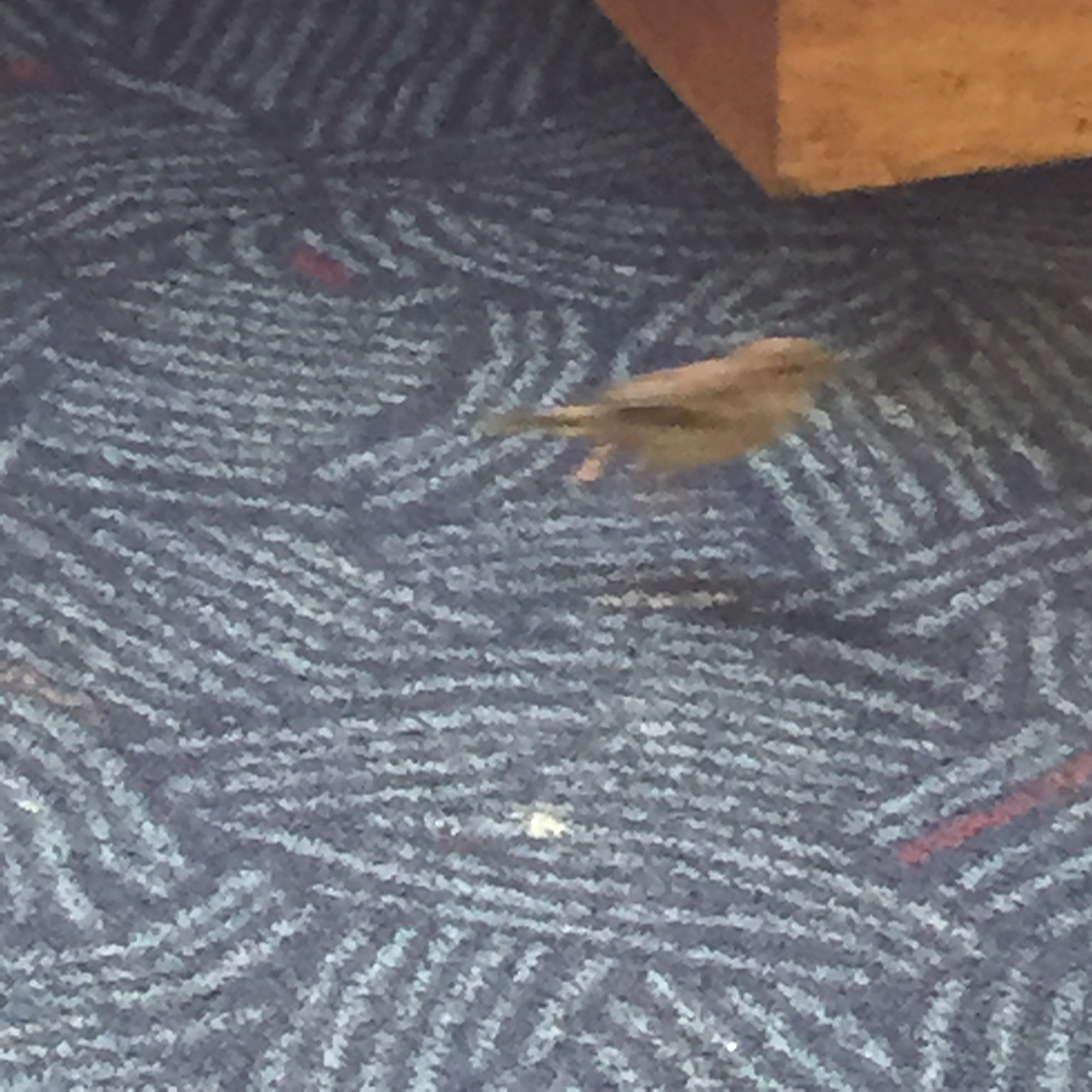
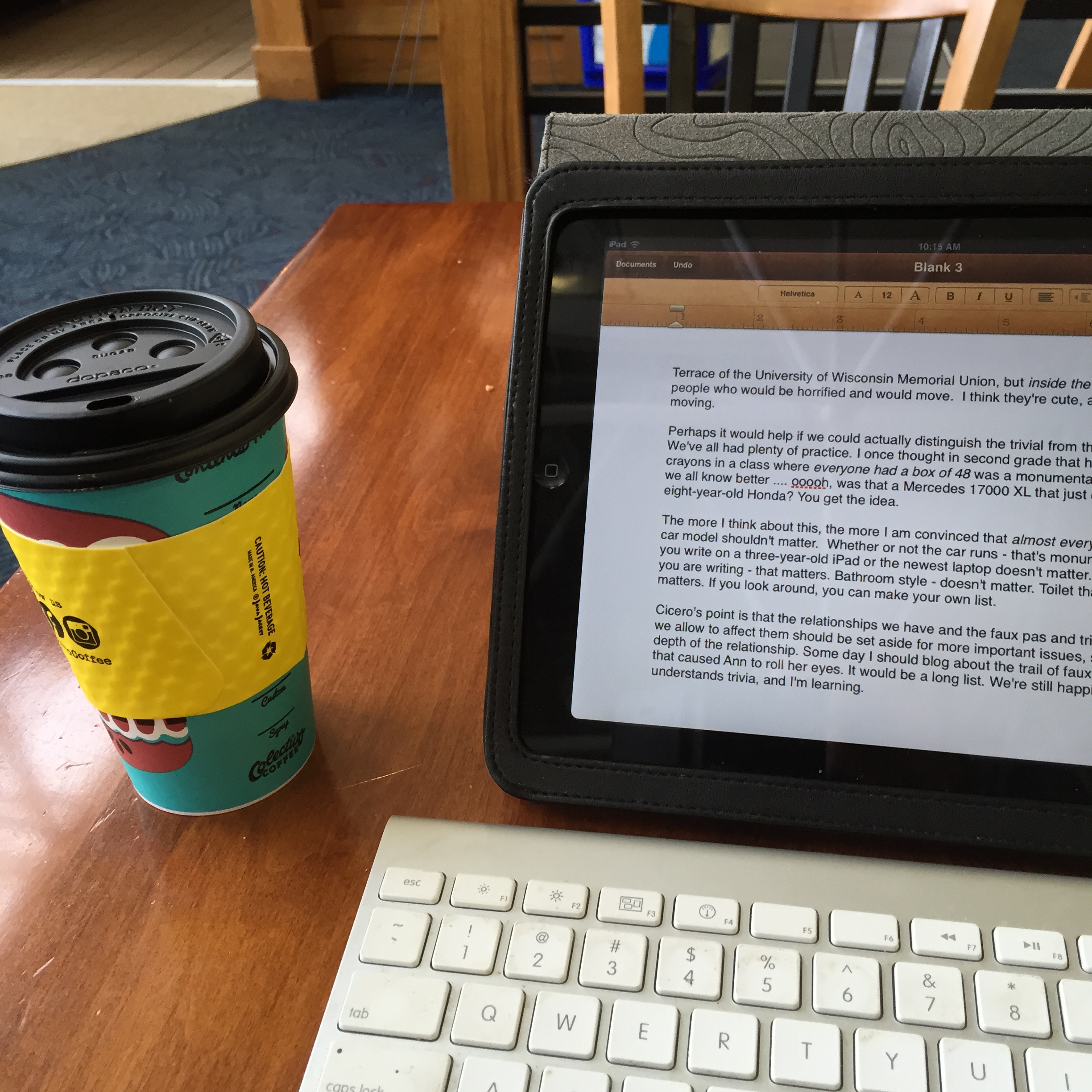
Mistake number 4: Refusing to set aside trivial preferences. We all have experienced family feuds, perhaps not the deadly ones between families, but the ones inside a family – Aunt Tillie won’t be in the same room with Uncle Marco because he made some disparaging, not-funny joke about her potato salad in 1987. Okay here’s one… I’m writing this inside the terminal of the Milwaukee airport (that’s another story) at a table next to a wonderful Colectivo Coffee lounge, and three sparrows just hopped by on the carpeting next to me looking for crumbs from my table. I’m used to this at the Terrace of the University of Wisconsin Memorial Union, but inside the terminal? I know people who would be horrified and would move. I think they’re cute, and I don’t plan on moving. Here’s one of my friends on the carpeting next to me.


IMG_1571


Perhaps it would help if we could actually distinguish the trivial from the monumental. We’ve all had plenty of practice. I once thought in second grade that having a box of 24 crayons in a class where everyone had a box of 48 was a monumental disaster. Now we all know better …. ooooh, was that a Mercedes 17000 XL that just drove by my eight-year-old Honda? You get the idea.

The more I think about this, the more I am convinced that almost everything is trivial. A car model shouldn’t matter. Whether or not the car runs – that’s at least important. If you live downtown in a city with good public transportation, a car may not matter at all. Whether you write on a three-year-old iPad or the newest laptop doesn’t matter. Whether or not you are writing – that matters. Bathroom style – doesn’t matter. Toilet that flushes – that matters. If you look around, you can make your own list.

Cicero’s point is that the relationships we have and the faux pas and trivial events that we allow to affect them should be set aside for more important issues, such as the depth of the relationship. Some day I should blog about the trail of faux pax I have made that caused Ann to roll her eyes. It would be a long list. We’re still happily married. She understands trivia, and I’m learning.

Human Mistake Number 5 – Neglecting development and refinement of the mind. Face it, we live inside our minds, and our bodies are smaller than our minds. I’ve listened to some people whose minds seem to be unweeded gardens. I don’t listen to them for long. I’ve listened to other people whose minds seem to fill the room. Their positive energy, love of life, interest in people and ideas, knowledge of history, and wide experiences make it worthwhile to be with them – along for the ride on this little blue planet.

I’m working on developing myself and recommend it. During any given week, I’m reading some classic that has stood the test of time (currently Antony and Cleopatra), some non-fiction (currently Nepo’s Finding Inner Courage), daily Bible chapters and something else spiritual (currently re-reading Joel Goldsmith’s The Infinite Way), my hobby (currently Ernest Schweibert’s book on stream nymphs – um, of the insect variety), and something modern (currently Donna Leon’s mystery series set in Venice).

I quit watching the news on TV when I concluded it was mostly bad, mostly about incidents of violence, and according to recent studies – mostly untrue. I’m talking about a range of 45% to 83% untrue, depending on the network. I look at headlines online and avoid reading any articles that are negative, attacks on individuals, or sensational. I know next to nothing about current Hollywood and network stars, and I’m almost proud of it. Katy who? There are a few thoughtful writers I trust but do not always agree with. I will read almost anything by Malcolm Gladwell, David Brooks, Paul Krugman, Anne Lamott, John Nichols, Maureen Dowd, Daniel Pink, or Ray Kurzweil. I watch TED talks online while I walk on a treadmill every weekday. I realized that I was terrible at reading music, so I bought a series of instructional DVD’s on learning the piano, so now I’m studying it, not just playing it.


I challenge you to do likewise, whatever developing yourself means to you. I recommend avoiding anything on TV, the net, or papers that induces fear in you, or worse – anger. Anger is poison. The Hunger Games, Game of War, and 50 Shades of Grey are infections. Read Cicero instead. Play chess. Play with your kids and grandkids. It’s amazing what you can learn from them.


Cicero’s Last Continuing Mistake – and Probably the Most Important – Attempting to convince others to believe and live as we do.


I recently read an eye-opening book by Parker Palmer called Healing the Heart of America. He cites studies in which people show a marked tendency to watch only programs that already fit their world political view, and when confronted with facts or events that contradict that view, they only become more set in that view and look for support elsewhere. Facts become meaningless if they do not support their view. This closed-mindedness is often coupled with a fruitless propensity to try to change everyone else’s point of view. I believe his studies are true. The implication for me is a resolve to avoid pointless arguments on politics, religion, or science, especially on Facebook. Instead, I only want to comment in the interest of truth with “That’s not true. Here’s a reliable source.” I may post something surprising without comment in the interest of truth, but even there, I’ve had to follow up with a modification or correction when I learned something additional. I’ve not had any total retractions that I can remember. I am shocked at how easily people repost the most outrageous, scandalous charges without looking anywhere to see if any of it was true. Then I realize there was a time when I was that guy. I don’t go there anymore. It’s like stepping into a tar pit. Tar pits are full of dead dinosaurs, so unable to understand anything different that they got stuck where they were and died. Don’t die in a tar pit. Go along for the ride with me on this little blue planet. Bring a towel and don’t panic. Oh, look, there’s a trout stream in a meadow. You don’t need to find a better universe next door; it’s right here. Let’s go.


Husbands, Listen to Your Wives

This is a blog about awareness, one of the steps along the path to Enlightenment, which I don’t understand, and it’s probably not a path anyway, and if you have to write or think about it, you don’t have it, just like trying to explain jazz to someone who’s not a musician. You get the idea. Anyway, I think awareness must eventually come from lessons learned. Sometimes I think the concept of reincarnation was invented to encourage people like me who learn in fits and starts. A “start” is equivalent to one year, and a “fit” takes 50 years – minimum.


A few days ago, I went to Whole Foods, a fine organic local market, which our daughter jokingly refers to as “Whole Paycheck,” only it’s not really a joke, and I got behind a woman about my age who was using her shorty cart like a walker, and she was in the middle of the doorway to pick up and examine a heart-shaped box of holiday chocolates or mints or something which she had no intention of buying. I started singing “Dum, de, dum,” jazz style in frustration. I probably should have prayed or done some kind of mini-meditation – slow breath, one, two, focus, ahh, inner peace, yes, I am so aware of what’s around me and – Geez, is that woman going to look at those chocolates all morning? I need some lettuce and a pomegranate for my wife – come on, Lady. Then I realized this was just another classic demonstration of the differences between men and women. Shopping to her means gathering information, picking up and examining everything that might be of remote interest, today or in five years – before choosing things on her list and a few other things of some inexplicable appeal. I am the hunter – go to the produce section to get organic lettuce, onions, and a pomegranate for my wife and get on with my life, which this week includes a lot of college basketball and looking at where future football stars will go to college after national signing day. Come on, Lady.

Stay with me; this is still a blog about awareness. After I got the lettuce and pomegranate, I dodged two tackles, juked a linebacker, spun through the clutches of a safety, and made it to the goal line. I spiked the lettuce, some onions, a pomegranate, and tub of organic cottage cheese on the rolling counter to check out. A young woman with a ring in her nose (apparently a requirement for working at Whole Foods in Madison) started to check my things, and then paused.

“Um, I’m sorry, sir, but one of these onions you chose has some mush or rot or something on the bottom. Do you want to get another one?”

Bam. Awareness. Wow, she noticed that rot through the plastic bag I put them in. Why didn’t I check out all of the onions I picked up like the lady in front of me?

“No,” I said, “Just give me the other two.”

“Okay.” She started over, but another pause came.

“I’m sorry,” she said with great patience, almost pity for me, “This cottage cheese has been opened by someone. Look. Both the lid and the foil seal have been opened. Who knows how long ago. Do you want to get another one?”

“Yes,” I said and rushed off through more linebackers and safeties to get a sealed tub, for once acting like careful woman more aware than I. Lesson learned. Hunters have no business in grocery stores. They belong in woods and trout streams unless they can learn to listen and be a little more observant.

Now, about listening to one’s wife….

Because my wife spent several weeks on the couch with her foot up on pillows after some surgery to remove a bone spur from her foot, I’ve been running more errands than usual. I’ve learned to take two lists, one list of the things we need, and one list of womanly instructions. Here’s what they look like, side by side.

“Freezer bags – Don’t get the cheap ones. They have only one seal and are so thin they rip easily. Because the brand-named ones are more expensive, they’re at eye-level before you get to paper goods.

Lemons – The “Dirty Dozen” list says these need to be organic.

Onions – The “Dirty Dozen” list says these don’t need to be organic. Get the sweet ones, not the red or or little spuddy ones. Vidalias aren’t worth it, because most of those labeled as Vidalia onions aren’t really from Vidalia. I read all about it.

Apples – These must be organic, preferably Honeycrisp, but not if they’re $3.99 a pound. Gala apples are okay if they’re $2.99 a pound. They’re on the other side of the display bins towards the broccoli. Use your own judgment. (Men: this is a trap. Do not use your own judgment when buying apples. Buy the Honeycrisp and tell her they were on sale for $2.99 a pound. Then rip up or lose the receipt. She’ll excuse your being a man and losing the receipt, but not buying Honeycrisp apples at $3.99 a pound, even though that’s what she really wants and paying an extra $.25 an apple is no big deal to a man.)

Rotisserie chicken – Because it’s Tuesday, they’re $2.00 off. There is grease on the bottom, so put the plastic container inside a plastic bag that you can get at the end of the aisle near the frozen fish. Don’t spill the grease on anything else. Ask to have it bagged separately. I want to make soup broth out of the carcass.”

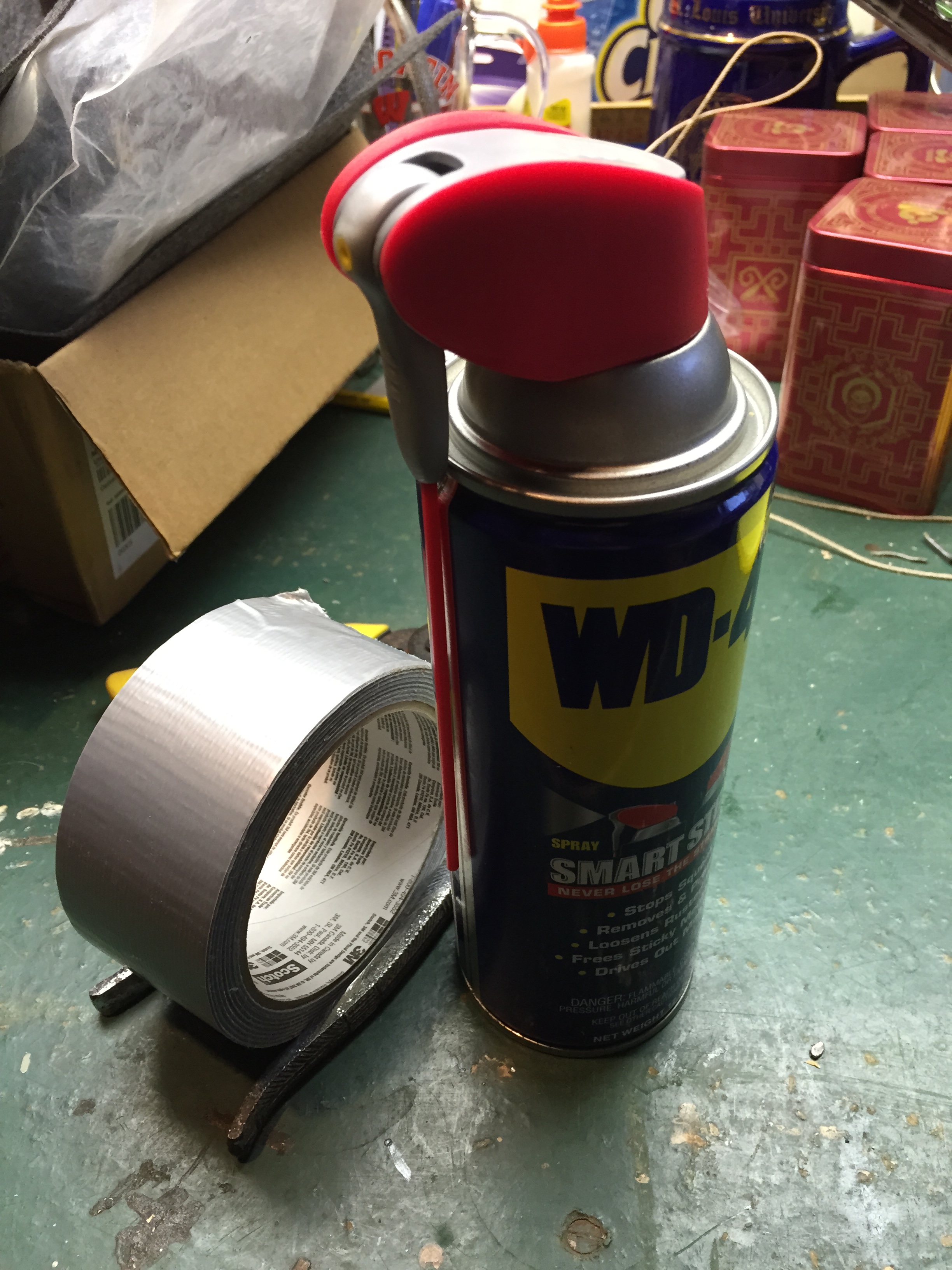
And so it goes. There is a place in a woman’s brain where she remembers stuff like this. That place in a man’s brain is filled with motor oil and WD-40.

In case any readers are women with brains like my wife, here’s what WD-40 looks like. It fixes everything that should move or pivot without squeaking. For everything that should not move, there is duct tape. Do not be fooled by the brand “Duck Tape,” which is marketed to fool women who don’t also know about WD-40 and men who are CEO’s and don’t know about either duct tape or WD-40.

IMG_1557


While the girl was checking out the onions and rotisserie chicken, I got a text from my wife, which read: When we re-packed the Christmas stuff in boxes, I noticed that many were popping open. We need more duct tape, not the mailing tape you used that ripped the boxes and then dried out.

Another lesson learned. Marry a woman who knows what duct tape is.

Shopping is one place where a woman’s expertise intersects with a man’s ignorance. A final case in point. Several months ago we bought a Wisconsin Badgers watch on sale as a Christmas present for our son, a UW grad. “It’s pretty big for a watch,” my wife said. “He likes watches, but his other ones are not that big. Save the receipt.” Fast forward to Christmas morning when I noticed the look on my son’s face when he opened the box with the watch. Later I went through a file of hundreds of receipts and could not find the one for the watch. The occasion prompted my reciting the three most important words in the English language….

“Right again, Ann.”

Men, listen to your wives when you’re shopping. However, it’s not all bad, being a man. I now have a Wisconsin Badgers watch, which I have convinced myself that I like a lot.

Things Are Getting Better

Things are Getting Better – and a Disclaimer

 In a blog dedicated to all things positive, optimistic, and humorous, it is time to catalogue what I mean by first noting that things ARE getting better, though not necessarily easier. This is especially true this week, because on December 9, 1979, smallpox was officially declared eradicated, and there have been no cases since then. I admit that what follows is a rather risky blog, but I still think it’s worth the effort. Many believe we’re not better off where convenience, fast “food,” processing speed, and expectations are the order of the day. Speed dating has become speed marriage. Books are written in weeks rather than years, and for many, the motto of the age is: “I want it all and I want it now.” I am not of that ilk, and when I have slipped and temporarily become a speeder of life or expected immediate remedies, it has not gone well for me. Stew, chili, spaghetti sauce, and life should be cooked long and slow. Almost anything worth doing is worth doing slowly. You can imagine.

My observations cover a lifetime, and it is only such distance in time that gives us a true panorama. Up close and immediate, one sees little – perhaps a tree, but no forest. I also admit and will include a sampling of the many tragedies we now face: violence in unlikely places, disease that may not be cured, and natural disasters.

Let’s begin with one great American love affair. I have a friend and long-time fishing buddy named Bob Olach, who long ago bought a burned-out hulk of a Volkswagen Beetle. Over the years, he took off every mechanical part and either reconditioned or replaced it. That included the engine, seats, suspension, door handles, and drive train. He re-did windows, gauges, the electrical system, tires, bumpers and only he knows what else. The body was restored and repainted red. It is a beautiful thing, a work of love, and probably more expensive than simply buying an original. He does not drive it in winter or in rain. It is wonderful because it is old, because it was made perfect over a long period of time, and because my friend made it a labor of love. I believe he made it better than the original.


Car 1


Bob is also a guy who greatly appreciates old things – friends, bamboo fly rods, wool trousers and waxed jackets. For full disclosure, I admit that I wrote an earlier entry simply about appreciating old things. I also believe (to quote Gwen in Hibernal), if something is true, so is its complement. I admire how my friend’s restored Volkswagen looks, and yet, when I drive anywhere, I appreciate the safety of seat belts and airbags, the efficiency of fuel injection, air conditioning, wipers that are not powered by the air pressure in the spare tire (which assumes that all storms are short), and a sound system that resonates rather than gasps at me. It has taken several generations, but the safety of warning systems and cameras, automatic traction control, and anti-lock brakes were worth the wait. As one who once drove an old panel truck down a slick hill and slid off the road on the way to class at St. Louis University after a 540-degree “turn,” I appreciate the advances. They may not make up for all bad teen-age driving, nor the effects of alcohol consumption, (well, not that I ever did that), but such safety features may come sooner rather than later.


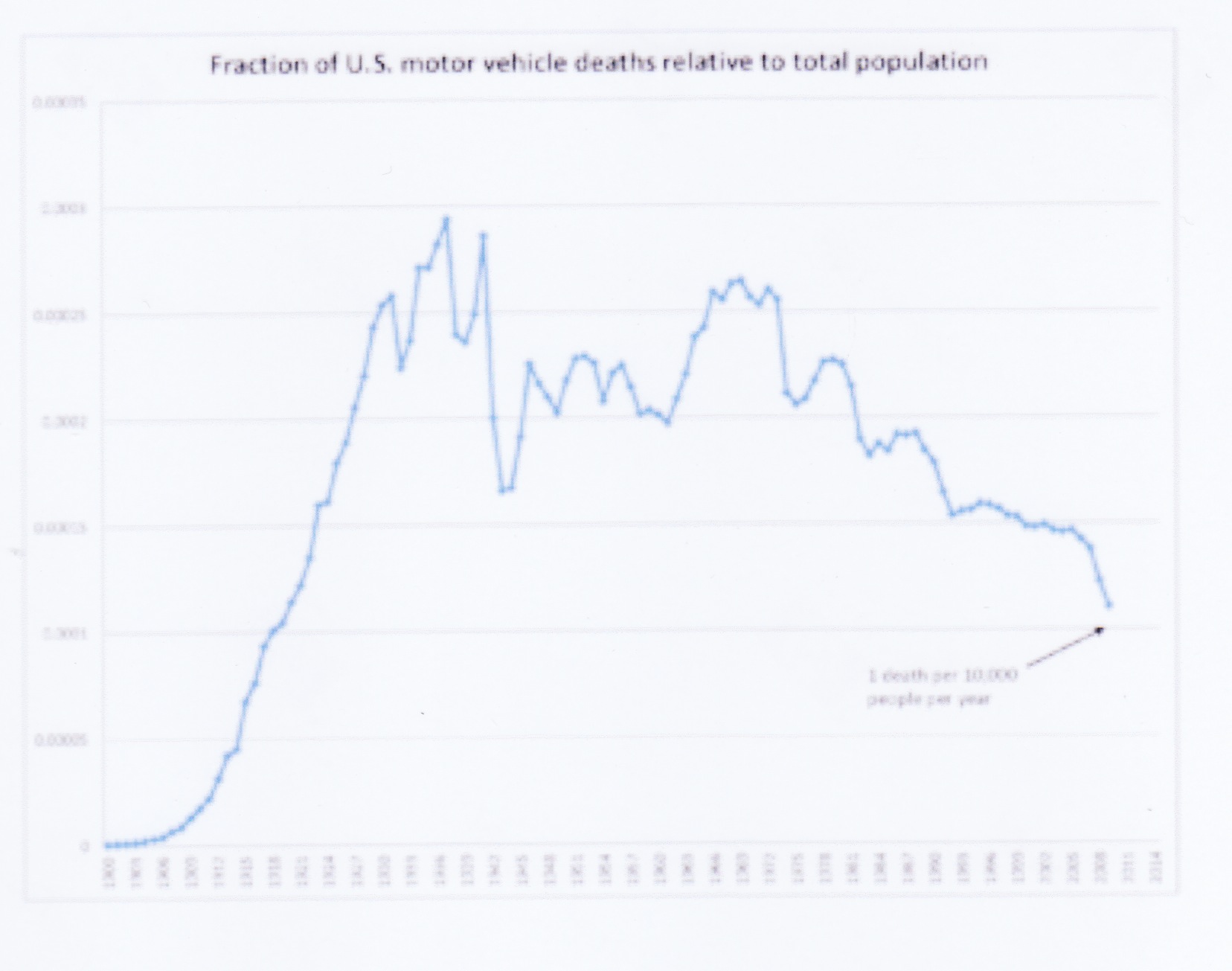
If you are not convinced, look at the following chart, which shows a decrease in traffic deaths of over 12% per year for the last 20 years. Although even one traffic death is too many, this improvement in the percentage of fatalities per capita is worth appreciating. We are now at the same level as 1918 when cars were barely able to go 30 miles per hour, roads were worse, and there were so many fewer cars to get in each others’ way.


Chart


Also, as I’ve gotten older and my memory more faulty, I appreciate the aid of a GPS that can alert me to gas stations, my favorite trout streams in the middle of nowhere, and an approximate arrival time that more than once has saved my marriage. My wife may occasionally curse such an electronic device, but when she does, she is not angry at me, and the avatar known as Allison on our GPS never takes it personally. For one who has learned that the gas station or the left turn by the big oak tree that most certainly is just over the hill, only it is NOT just over the next hill, and it is not even on this same road, the reassurance of Allison is a kindness to be appreciated. Besides, I imagine that Allison – by her voice – is a sexy, slender, long-haired, dark-eyed – well, you can imagine the rest. The British version named Emily on our first GPS may have been even more irresistible, but her occasional un-American propriety in words such as “Take the off-romp,” or “Turn wrought on Smythe Bool-vahrd” led to several dangerous misunderstandings. I had to un-friend Emily. That’s a good thing because Allison is so much better at her job than Emily was.


So many things are getting better. When I was a kid in my Huckleberry Finn little town, even the best bike had only one gear and a coaster brake. We made it better by hanging plastic tassels off the end of our handlebars and clothes-pinning baseball cards to the frame so their flapping through the spokes made the bike sound like a Vespa. As good as those improvements were, they do not compare with the wonderful preponderance of multiple gears on most bikes today, and even more important, the nearly universal use of bike helmets, which have saved the brains of many reckless boys and saved the faces and brains of many beautiful girls. These wonderful improvements took place in only one generation.


Even those among us who may be described by my daughter as “digital immigrants,” rather than “digital natives,” must appreciate the improvements in technology. Who among you remembers the days of the typewriter, White-out, backspace corrections, and the ultimate frustration of typing a research paper the night before it was due and noticing that on page seven you forgot to leave room at the bottom for two footnotes required for your quotations (found by luck amid the stacks of books and quoted on 3 by 5 index cards), and would have to type the whole page over. Do you remember the first mobile bag phones that were the size of a shoe box and worked only in metropolitan areas at a charge of about a dollar a minute?


Just last week, while we were in Marietta, Georgia for a wedding during the first mid-November blast of an Arctic Vortex (yes, it’s now an official name, so I’ve capitalized it), I wondered how bad the snow was back in Madison, Wisconsin, and with just a few clicks on my phone and access to local traffic cameras at major intersections in real time, I could see that on University Avenue, just three blocks from my house, the streets were wet but clear and there was about an inch of snow on the curbs and grass.


Do you want to know what is new and what you can do with new technology? Go to one of my favorite websites – Appsgonefree – and see a listing of a dozen or so apps free to download that day and keep forever. Many are silly games, but I’ve also downloaded guitar tuners, emoji keyboards, a dozen games for toddlers, including a favorite Trainzdriver, meditation sounds, timers, bicycle navigation, storybooks, crossword puzzles, piano keyboards for an Ipad, photo editing apps, weather sources with radar, Dropbox to share and save files, a library search engine, a PdF reader, and foreign language games. Those apps were all free. My phone is so much smarter than I am.


The betterment of the world is not just in technology, though. Populations grow because more people are surviving and having children. Children are better educated than they have ever been. (Do not believe the current fad of testing by the for-profit bean-counters. No school or student can nor should be judged on the basis of a 59-question multiple choice test like the ACT. Look at what happened to the few colleges who took the ACT as its only entrance criteria, and then found they lost entire classes of high-scoring but unsuccessful students.) Your kids not only know different things than you; they know more. Just to start, they know how to use a DVR and streaming capabilities. Give me a choice to play any game, including Trivial Pursuit, with a young person with a smart phone as a partner or a education-baiting pundit with a smart phone, and I will choose the young person every time…. and I will win. They know how to find information – useful information – when they need it, while the typical over-40 is still fumbling with fat fingers to turn on Google and then mis-type vague questions.


What else is better? You now can choose to eat organically, instead of the typical “food product” of Velveeta (read “not cheese”), Tang, (read “not orange juice”). Now we even excellent craft beers almost anywhere in the country. Doctors today know more and are better trained than those of only a generation or two ago. Cataract surgery is now done in fifteen minutes to outpatients. Buildings are safer. Clothes are more comfortable. (Do any men still wear starched shirts or women – whalebone or metal-braced corsets?) Weather prediction is more accurate (okay, I’ll admit the difference may be marginal, but you can now check your own isobars and radar to make your own predictions).


The flu, which once killed millions, can now be mostly prevented with a yearly vaccination. Now I’m back to where I started.


It’s time to take a leap, or at least to make a meaningful observation. I quit watching most news programs because their mission of providing a “story” almost always means reporting bad news, some disaster, or violence. Almost always it is mere fear-mongering. Good news is not news. Here’s my observation, and it’s risky enough, but probably true enough that I’m going to “bold” it.


In recent times, with the exception of war, most disasters are limited in scope, not pandemic, and truly affect a relatively small number of people, while improvements have been large in scope and affect millions. Even more important, nearly all disasters are temporary, while advancements like seatbelts are permanent.


I’m not denying that a global economy effects almost everyone, but even the economic meltdown of eight years ago was temporary, and now jobless reports show we’re almost back the where we were, and the stock market has advanced far above what it was. There will be regular crashes, probably for every generation, just like there will probably be more wars, one per generation, but the slow general trend upward for 20 of the 25 years per generation has continued for a long time. Humans are resourceful enough to keep that going, even as we fight localized ebola, ISIS, hurricanes, and blizzards.


Be patient, keep solving local problems; ignore fear-mongering news, and ride the wave along with me. Put on your bicycle helmet. Carry a towel if you must. We’re going up.


Be Right or Be Kind?

Hibernal cover

Special: You now can download Hibernal, my literary suspense after Shakespeare’s classic A Winter’s Tale or your Kindle or Kindle app through Amazon for only $2.99. If you like intrigue, the trials and triumphs of a good love story, humor, and fascinating characters, it’s worth a click. You can search Hibernal on Amazon or copy and paste this in your browser:

The paperback is available as well through Amazon.


I have an app that lists major events on this day throughout history. It is a rather disturbing app. There were a few good things that happened as I write today – Washington’s inauguration, the end of the persecution of Christians by Diocletian in 311, and a few things that depend on your perspective, such as the completion of the Louisiana Purchase, which doubled the size of the United States. However, that event was not good if you were a Native American and your land was sold by the French, who did not own it, to the new Americans, who would take it over and boot you out. The disturbing part of the daily record app is the list of deadly battles, executions, and disasters. Casey Jones wrecked his train and died today because he was behind schedule and sped to catch up. (I assume he was not texting his girlfriend.) Emperor Licinus defeated Maximinus. Edmund do la Pole, Yorkist pretender to the throne, was executed by Henry VIII. The Camp Grant massacre took place in Arizona in 1871. The list goes on, but you get the idea. The trail of blood is unnerving.


Even alternative histories, such as Howard Zinn’s A People’s History of the United States, which promises to avoid defining history as a successive description of wars, battles, executions, and massacres perpetrated by cities, states, nations, religions, and individuals, is mostly a depressing description of attacks on minorities, unions, and ad hoc leaders of the common people, with a very few successes noted, mostly with heavy costs exacted from marchers, organizations or the powerless. I recommend it if you can stomach depressing history. The trail of blood is unnerving.

51qcAhimiVL._SL160_PIsitb-sticker-arrow-dp,TopRight,12,-18_SH30_OU01_AA160_


As with most of my entries, I seek to improve life and be positive, if not inspirational, by changing perspectives. Sometimes that is difficult to do. To anyone who reads this, I hope you may find a change in perspective. I have no intention of rewriting history, but I want to see the present differently so that I may live differently. I seek a better life in fact.


So how can I do that? What I see in my app that lists events in history is that almost all of the deaths and disasters were preceded by judgments based on labels, most of which demonized some opponent and made it legal, if not “necessary,” to kill that person or movement. The result is another unnerving trail of blood.


Two other books are relevant here, it seems to me.


41EOlL+w6KL._SL160_PIsitb-sticker-arrow-dp,TopRight,12,-18_SH30_OU01_AA160_


Malcolm Gladwell’s Blink is a study of how we make judgments, more often than not, in the blink of an eye. Those judgments are based on minute observations, perhaps intuition, a gut feeling, or a vibration that is not logical or explainable. Usually, those judgments serve us well as we navigate life’s dangers – but not always. The issue here and the perspective I wish to change in myself is not a refusal to make such automatic judgments, but rather, to change how I act or don’t act on those labels and judgments.


For example, in our current political climate, the labels Democrat and Republican have become meaningless to me; neither represents me; neither is good or bad in themselves, and using either label as a rallying point or pejorative will not succeed in improving our country. The same can be said of Conservative and Liberal. Their inconsistencies, differences between what each says and what each does, and their alienating tendencies to create Us vs. Them will not serve our country well. For a long time, I believed in Pogo’s ironic statement “We have met the enemy and he is us,” but I have come to believe that making anyone an enemy, including ourselves, will doom us to failure. If we remain a house divided, we will not stand, at least not much longer. As a first step, I commit myself as a citizen and writer to quit using labels that might alienate those whose cooperation I need. I need people to disagree with me so that I may see differently. I must disagree or agree with ideas; I do harm by attacking the person. I do harm by labeling, even in applying a label to myself.


I may be most wrong in the things about which I am most certain, and history, the real history and not the editorilizing written in books, will most likely show me how wrong I am. That lesson may take years. History is VERY slow, often not becoming evident until another generation comes along. Absolute righteousness leads to disaster, as if did for the perpetrators of the Inquisition, the “missionaries” to Native Americans, anti-communists in Viet Nam, the WMD apologists in Iraq, the British rulers in India, and more recently, fracking oil companies in North America. The fact that they are/were so certain of their capabilities and rightness sends up red flags to me.


This does not mean that I must be kind to everyone, everywhere. Psychopaths, who have proven their danger like Osama Bin Laden, are not to be greeted with a friendly hello; they must be stopped. The same is true of child molesters, drunk drivers, and abusers. In daily life, I don’t meet many psychopaths, those so without empathy that the pain of others is irrelevant to them, so I try to be kind to almost everyone.


The second book that I recommend as relevant here is Jonathan Haidt’s The Righteous Mind.


41h9b+YMawL._SL160_PIsitb-sticker-arrow-dp,TopRight,12,-18_SH30_OU01_AA160_


It is an analysis of quite a few psychological studies of how people make judgments or take positions. Its thesis, which I have come to observe in my own behavior and dealings with others, is that people generally decide on issues based on preconceived notions, intuition, loyalty to a group, or the instantaneous leaning Gladwell wrote about in Blink. Reason is most often used later to justify a position we have already taken. Facts, examples, and statistics that contradict us only make us more entrenched in the position we hold. Again, it takes time for a lot of people, myself included, to admit they are wrong. The irony is that the more certain someone is that he is right, the more likely that he is wrong, and the longer it will take for that person to realize it. For the interim, be kind. For the times I am wrong, kindness will ensure that I don’t make things worse. If I am right, kindness will convince my friends that I am right long before facts, data, examples of statistics will. In fact, kindness is most often like jeans, best worn almost anywhere. On the few occasions where I can’t wear jeans, I defer to my wife or daughter, whose fashion sense is far more insightful than my own. I need them to disagree with me. The times when I insisted on my own right fashion sense – well, embarrassment is not always a beautiful thing.


Another irony here is that those who most necessarily ought to be kind – powerful and rich individuals, churches, families, schools, hospitals, and governments – are not that kind to people. I will know when we are making progress after I see that an app listing great acts of kindness for any day in history shows up in AppsGoneFree. I will know we have become enlightened when I see corporations and institutions practicing kindness as its standard operating procedure. Can you imagine what a day that would be? I might even go back to shopping at Walmart, the psychopath of corporations. Oops, that’s not very kind. I’m going to rewrite that sentence and then delete it, and instead write something nice.

Here it is – Walmart is a very efficient corporation that offers low prices to those who cannot afford better.


I still won’t shop there if I can avoid it. I care more about local stores and health care for struggling workers. They deserve my kindness more than the Wall billionaires.


When you read this blog, please remember with empathy that my purpose is to stimulate thought and be positive. If you leave a comment, whether you are right or not, be kind.

On Being Late and an Indictment of Spring

I know that time is just a construct, a made up system of seconds, minutes, and moments (In Old English, a moment was officially 1.5 seconds, or the time allowed for a husband to tell his wife she looks beautiful in that wimple), but I really don’t like being late. I think it stems from the time when I was an awkward sophomore who missed the team bus for a basketball game and got there only by the kindness of parents of a GIRL in my class (Ewww!) who waited for me and drove me there.  It was a very long ride in which each moment was a minute and a half long, and after that, not a good game.


The issue of lateness is complicated by the number of young children you have so that your lateness grows geometrically by the number of toddlers you are trying to get ready. One child equals one half hour late. My parents had six children, and I don’t know how they got anywhere.


Over the years, I’ve learned something important. Lateness is not a problem; it is an opportunity.  A case in point….

photo 2-1

Plenty of time!

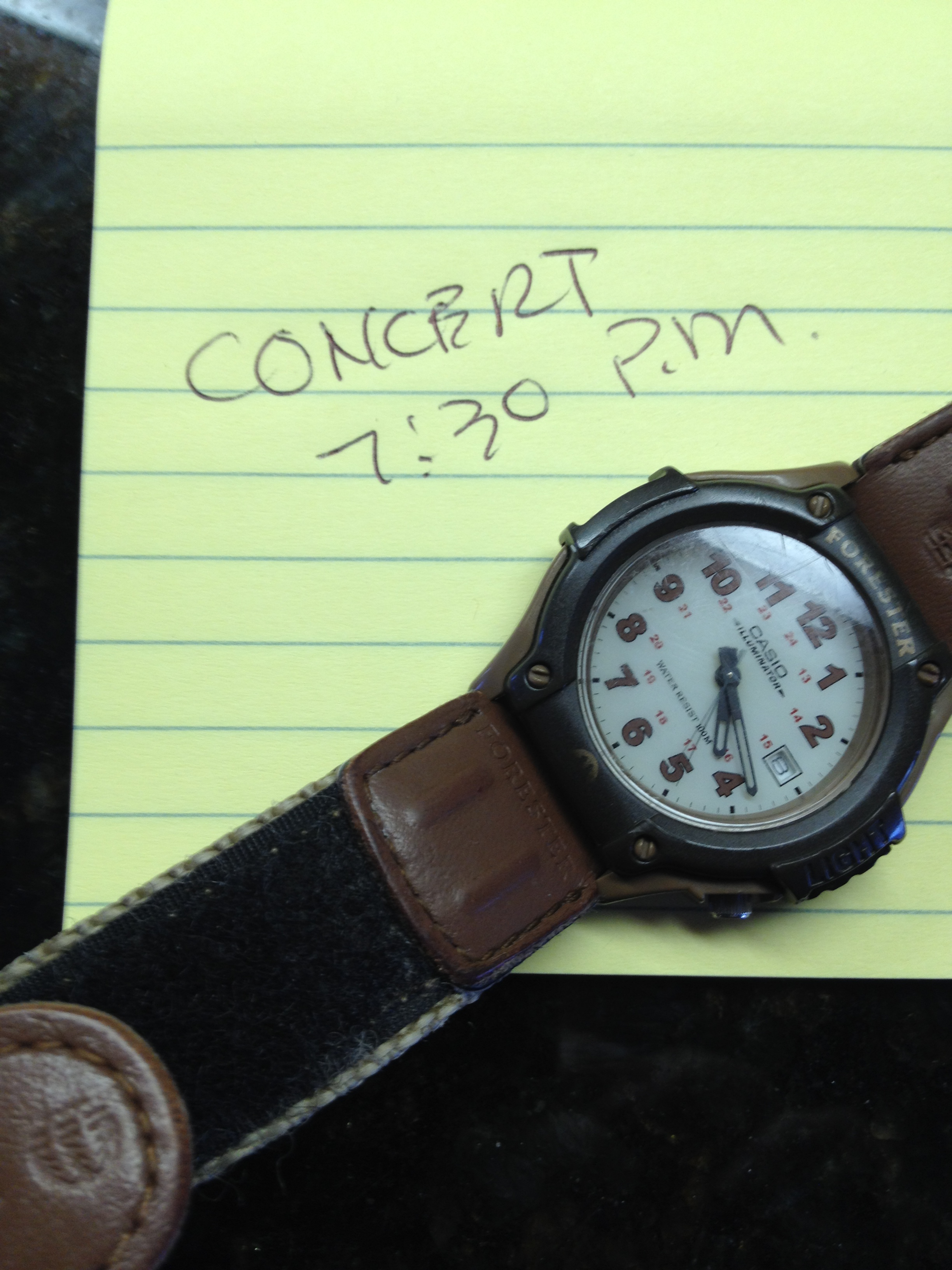
Friday night we had tickets with friends to a Madison Symphony Orchestra concert at the Overture Center with an entirely Beethoven program, including two piano concertos. We invited our friends to crock pot chili before the concert, and had such a good time that we left for the concert only twenty minutes before the start. Ordinarily we might have made it, but this time we crawled through traffic caused by two other events in or near the Overture Center, a lane closure, and construction.  By the time we reached the balcony seating, the doors were closed, and we were forced to stand and watch all four movements of Beethoven’s first symphony on a monitor in a lobby outside the hall. In my foolish younger days, I would have fussed and fumed, said something sarcastic to my wife, stressed out my friends, and made missing Beethoven’s first symphony an issue.  Such a reaction would have been bad for our friends, my wife, and me. We hurt ourselves and others far too often.


Instead, I listened to the music, watched the maestro on the monitor, and read the program notes. Ludwig’s first symphony was written while still under the strong influence and form taught to him and Mozart by their mentor, “Papa Haydn.” Now I am more interested in Haydn and I want to listen to Mozart’s early symphonies and compare them to Beethoven’s. We were admitted after the first symphony and got to enjoy both piano concertos with Yefim Bronfman as the pianist and later, Beethoven’s Prometheus. It is interesting that most often when we are on time, I don’t have time to read the program notes before the house lights dim and the Concertmaster walks onstage. How ironic it is that being very early or very late can both be advantageous.


I would like to apply this same lesson to the weather and the late arrival of spring after a nasty winter that began November first, sank to near zero temperatures every night with two snowfalls every week and no January thaw to give us a break. I cannot.  This winter makes me fuss and fume, say sarcastic things to my wife, grump at my friends, and generally wear my depression like a scratchy wool scarf around my own neck. Mother Nature is not Beethoven and her lateness is simply intolerable.  Besides, there are no program notes to read, and if spring doesn’t get here soon so I can get out on a trout stream, I may do something really radical like write a blog about the weather.  Last night I read a joke about God telling St. Peter that He thought it was a good idea to give Wisconsin amazingly beautiful lakes and streams, forests, rolling hills, fertile fields, and bounteous flora and fauna. St. Peter said, “Wouldn’t other parts of the world get jealous?” God answered, “Wait till you see the winters I give them.”

photo 2

Yes, the drifts are still three feet high.

Unfortunately, I have friends who can easily remind me of the Facebook postings I made last summer sitting on the Terrace at the Student Union looking over the sailboats and beautiful sunset on the lake and eating Babcock Hall ice cream. I can hear them mumbling that I’m getting my just deserts. (That was an accidental pun, so I’m not claiming any points.)


There is a point here. The weather is not about the weather. Being late to a concert is not about the concert, nor about being late. It is about – everything is about – how we react to whatever we experience. It reminds me of a Robert Frost poem I sometimes memorized with my classes…


Tree at my window, window tree,

My sash is lowered when night comes on;

But let there never be curtain drawn

Between you and me.


Vague dream-head lifted out of the ground,

And thing next most diffuse to cloud,

Not all your light tongues talking aloud

Could be profound.


But tree, I have seen you taken and tossed,

And if you have seen me when I slept,

You have seen me when I was taken and swept

And all but lost.


That day she put our heads together,

Fate had her imagination about her,

Your head so much concerned with outer,

Mine with inner, weather.


Yes, your head so much concerned with outer, mine with inner weather. There is truth there, the importance of our inner weather. We create our own low pressure, our own ice storms, our own lakeside sunsets with a scoop of Babcock Hall ice cream. Mine is butter pecan. You choose your own.


Fear of Flying and Why I Like It

Ann hates to fly.  I don’t mind it, except for the cramped seats where we travelers don’t just rub elbows, we exchange lint, and our auras become Venn diagrams. I really don’t mind it except for the ear popping on takeoffs and landings, and except for the instructions on how to use a seat belt, a seat cushion, and an oxygen mask. If anything really serious would happen, would any of those matter?  I don’t worry because flying is sort of like a Mexican standoff with fate. If the pilot really messes up and is going to kill us, then he’s going first.  Flying brings into focus for me the only use of math I can tolerate, the reassurance that thousands of flights take place every day and all the planes I see overhead are actually flying, and I’m safer in a plane than in a car, and I’m not afraid of driving, so why should I be afraid of flying? Besides both pilots up there are more experienced and better trained in their jobs than I am at driving a car. The math is on my side, for once.

When I get upset about flying, it’s usually about other things.  Two examples: A few years ago I flew with my brother to Corpus Christi (a rather ominous name if you’re afraid of flying) with a stopover in Denver. When the TSA agent checked my carry-on in St. Louis, she asked me to step aside for a moment, and I wondered if my brother had planted something in my luggage to get back at me for the time I broke his new arrows when I was ten, and he couldn’t shoot his bow.  The agent was staring at her X-ray screen, and said to me, “Please explain to me what that thing is. It looks mechanical or electronic.” I looked over her shoulder at the screen, and said, “That is a spinning reel – for fishing – I’m going to Corpus Christi to go fishing with my brother and my uncle.” She said, “It doesn’t look like a reel to me,” and in a moment five other agents crowded around her screen and they began to argue about its strange spidery shape, loose wire, and should they unpack my bag and see if the wires were connected, and I thought, “God, help me,” and then He did. An old guy who had worked for the TSA on the first Wright Brothers flight shuffled over and said, “That’s a spinning reel – for fishing – hm, it’s not the standard Garcia Mitchell 308; it’s probably a Shimano with a trigger bail and 200 yards of monofilament on it, so let him on the plane.” He was one smart guy, that old TSA agent.

Image

Here’s one my daughter experienced.  On a flight from St. Louis back to Boulder where she is attending grad school, she was also pulled aside by a TSA agent, probably the same one who pulled me aside years ago. “What is that?” the agent said, pointing to a long, dark roll in my daughter’s carryon. “That?” my daughter said.  “It’s a summer sausage that my uncle gave me (the same one who flew with me to Corpus Christi, so there’s a pattern here), actually a homemade venison sausage.  He hunts deer.”  “With a gun?” the agent asked.  “Yes, and a bow and arrow.”  “It looks like plastic explosives,” the agent said.  They unpacked my daughter’s bag, cut off a slice of her summer sausage, and put some kind of chemical on it to see if it contained any flammables, TNT, glycerin, or propellant.”  The test was negative. It seems like the TSA agent thought my brother might be hunting deer with plastic explosives, or if he owned a gun AND a bow and arrow, he could be one of those survivalist, bomb-shelter nuts out to blow up people, including his own niece.

These are true stories. I’m glad the TSA is being suspicious for our own safety, but someone should train them in fishing reels and summer sausage.  I mean, everyone should know about fishing reels and summer sausage. The only question here is: “Why doesn’t my brother ever get stopped?”  The next time I fly with him, I’m going to sneak a little bottle into his luggage of the gel we used in grade school to get back at our friends by putting some of it in a kid’s jock.  It was supposed to cure athlete’s foot and it stung like hell and it was called “Atomic Bomb.”  I wonder what that TSA agent in St. Louis would think when she pulled a one-and-one-half ounce plastic bottle out of my brother’s luggage that was labeled “Atomic Bomb.”  Even the shuffling, old TSA guy couldn’t save my brother, I think.  Not that I would really do it. Thinking of doing it makes me laugh enough so that I don’t have to go through with it.

This brings to mind another story which I believe is true because a Catholic priest told it to us during a sermon about ten years ago.  I forget the sermon, but I remember this story.  (Let that be a lesson to priests everywhere.) The priest was in line at O’Hare Field along with a lot of other frustrated holiday travelers. Behind him came some overweight, blustery guy in a suit who was cursing at everyone and everything.  He ignored the line, wheeled his overstuffed baggage right up to the front of the line and said to the agent, “I’m in the Admiral’s Club; here’s my ticket.  I’m checking this bag, and I want a boarding pass – now!”

She said, “I’m sorry, sir, but even Admirals have to get in line and take a turn.  It’s only fair.”  The big jerk argued with her, then cussed at her, wrote down her name so he could complain, and stared down the rest of us as if to say, “Don’t you all know who I am?”  The ticket agent was polite, no matter what foul things he said to her, but she would not budge and eventually he got in line.

In a few minutes the priest got his boarding pass, but since he had plenty of time, he went back to the agent after the line went down and after the big jerk went to the Admiral’s Club to drink some more.  “I’m going to write to the airline about how well you handled that insulting passenger a few minutes ago. I was very impressed,” the priest told her.

“Thank you,” the agent said sweetly, “but that’s not necessary.”

“Why not?”

“We’ve been trained in ways to stay calm with such passengers,” she said, even more sweetly.

“What do you mean?”

“That man is going to New York – eventually.”

“Eventually?”

“Yes, eventually, and his baggage is going to Tokyo.”

Man, I love flying.

Special: You can now download my literary suspense novel Hibernal for your Kindle or the Kindle app on iPad or iPhone for $2.99 through Amazon.  Just log on to Amazon books and type in Hibernal or Kurt Haberl.  Also, the video trailer is still there.

Hibernal cover

Technology and Me, a Horror Saga

2005-01-12 11.51.37


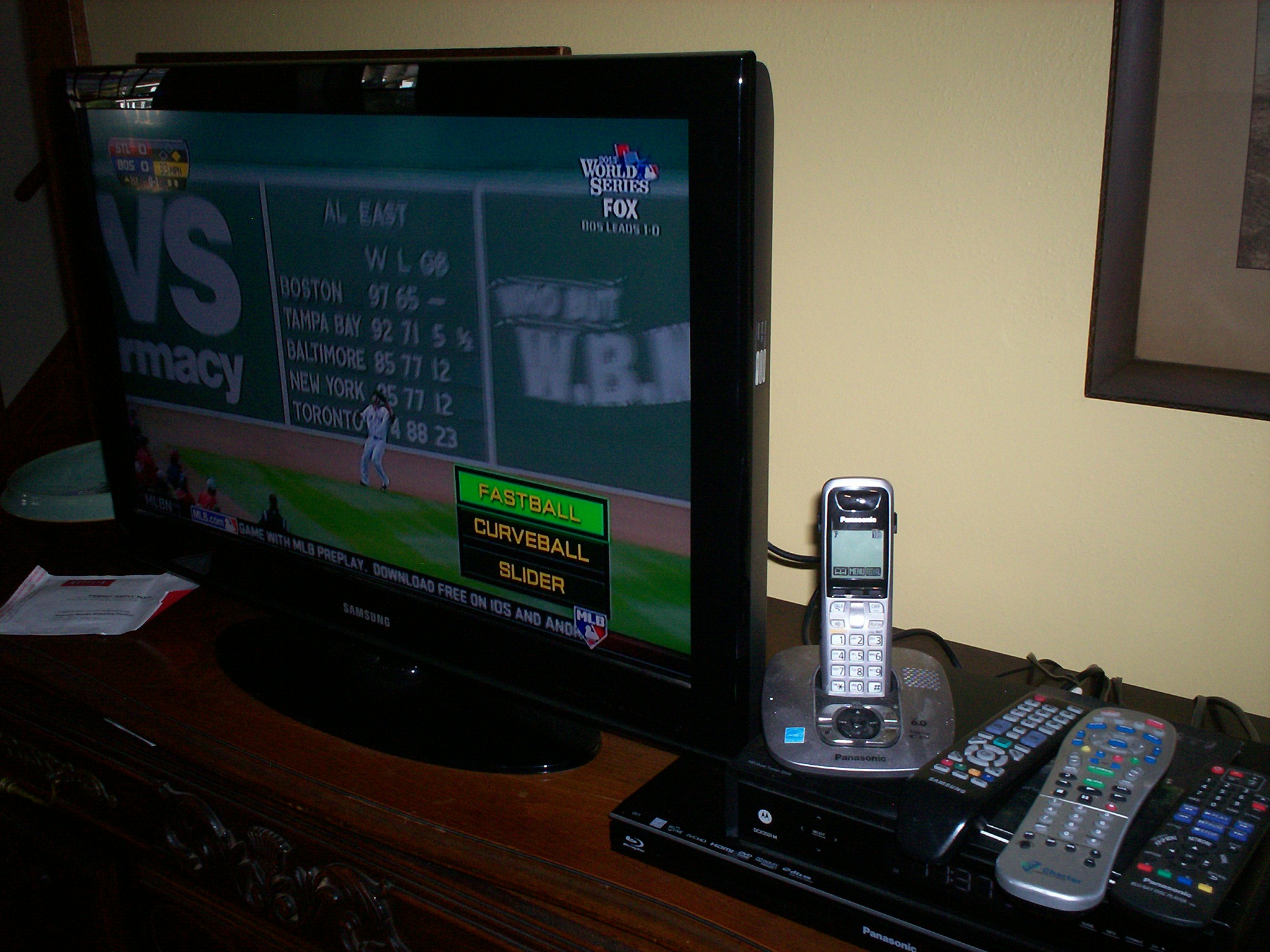
Man, I love technology, especially the sleek way it looks and the cool things you can do with it. I love everything from smartphones to guitar tuners that work by neck vibrations, from my GPS that marks trout streams in the middle of nowhere, to the DVR that tapes The Daily Show and Downton Abbey, from a flatscreen HDTV that shows the seam spin on an Adam Wainwright curveball, to the Ipad I’m using in The Froth House to write this.

However, when things go bad, it’s not like changing the flapper on our toilet upstairs that trickled water all night. It’s not like gurgle, gurgle, detach the corroded rubber gasket inside the toilet tank, run to the hardware store, find one that looks the same except for the corrosion, run home, pop it on the fill valve, flush the toilet, yep, it works. Two points.

Technology is not like that.

Here’s my latest saga. When we moved into our house in Madison over three years ago, our first service hookup was a bundle for internet, cable TV, and phone. I thought we had everything, a re-wired house, wi-fi, high speed internet for streaming videos, and even the company’s virus protection. Then the internet went out. The cable guy, whom I’m sure I had seen before on Star Trek, came to our house, scuttled around our basement, and said, “Your splitters are in the wrong order. Internet is more demanding than your TV. I fixed it.”  The next week, our cable TV went out.  The cable guy who came this time, a guy I’m sure I saw on the ads for Duck Dynasty, scuttled around our basement and said, “Your splitters are in the wrong order. Cable TV is more demanding that your phone. I fixed it.”  The next week, our phone went out. This time I complained loudly to four people and two computers that answered the help number, and the cable guy who came out was Darth Vader himself, a guy all in black, including his eyebrows and deep eyes. He had the look of a man who had just emerged from two weeks of hacking China’s Central Committee computers from somewhere underground.

“The last guys who crawled around our basement-” I said, but he interrupted – “I don’t need to crawl around your basement. Your return signal is so weak that it is telling our system that everything is turned off.”

“But our signal splitters-” I said, and he merely raised a hand at me. “I hate splitters. I’m installing three separate power supplies to your lines, so your phone, TV, and internet lines will have the same power we use for a business of 100 offices. I’m plugging in the transformers where the line comes into the house. Don’t unplug them. Don’t put your ear next to them, even though they emit a pleasant hum. Do you wear a pacemaker?”

“Not yet,” I said.   “Good,” he said and then disappeared into a foul-smelling mist.

photo

That was three years ago, and everything worked until….

You can stop reading here if you think it’s normal for a cable bill to double and double again to the price of a car payment every month, which wouldn’t be so bad if I had high-powered cable and the car I was paying for, but in this case, there was no car, only the car payment every month.

So I tried to log on to the “contact us” screen using my high-powered, Chernobyl cable system, but it wouldn’t let me access my account because either my username, my password, or my security question based on my favorite sports team was wrong – and it wouldn’t tell me which. I tried every possible combination, with caps, without caps, using the names of teams I liked and some I only sort of liked. I even looked at my hidden file of three pages of passwords and usernames, beginning with AARP and ending with University of Wisconsin. No luck.

I picked up the phone on my separately powered transformer and called the company, using the number on my car payment bill without the actual car, just the bill. The first machine that answered was a pleasant-sounding voice that told me to simply state my concern, such as “I want to install new services,” or “I need to upgrade my TV package.”

“Shit,” I said, and the line immediately went dead. Apparently, the computer was not amused and was also programmed to shut down after expletives.

I waited a few minutes to calm down and called again.  A different computer voice answered, but it said the same thing. I said, “My bill is more than the cost of the pacemaker I can’t wear because of the power transformers in my basement.”

Either the computer did not understand metaphoric comparisons or it was not programmed for bill questions.  I heard three clicks and the whir of something like The Wheel of Fortune. A real woman’s voice came next, who said, “Hi, my name is Shelly.  How can I help you, Mr. Haberl.”

“You know my name?”

“It’s attached to your phone number and account. Would you verify your address and favorite sports team, please?”

“Don’t you already have that information?”

“Yes, but I need to make sure YOU do. What if you’re a hacker for the Central Committee in China or some African sweepstakes winner?  We wouldn’t want that, would we?”

“But I’m calling you from my home phone which popped up on your screen. Why would a Chinese hacker or an African sweepstakes winner break into my house just to use my phone and call the cable company?”

She apparently looked down her list of proper responses, couldn’t find anything, and then went with the most general script.

“Um, um, Mr. uh, Haberl, I’m excited about being able to help you today.”

After I convinced her I was not a hacker, she listened to me explain that I could not log on to my account, no matter what sports teams I named, and my monthly bill was approaching the level of a drone-fired hellfire missile, which I was thinking of using on their cable system as soon as I could find one.

Shelly gave a nervous laugh, which I took as a good sign.

“Okay,” she said, “You’d like to lower your bill and you can’t log on, is that correct?”

“Yes.”

“Okay, well, I only arrange for new services and upgrades, and you don’t want either of those, so I’m going to transfer you to a specialist who does service removals. Please hold.”

They have a specialist for service removals?

A moment later, a voice said, “Good morning, Mr. Haberl, my name is Becky, and I’m excited to help you today.”  It was the voice of a sixteen-year-old cheerleader who just got a prom date, no it was worse than that – it was the voice of a cheerleader whose team was already losing 64 to nothing and she believed everything depended on her cheeriness. I sighed.

“Okay, Becky, my total bill is way too high and I need to know what is the lowest cable package available.  I’m also thinking about discontinuing our phone service since we mostly use our smartphones, and I want the slowest internet money can buy.”

“I’m so excited to help you. Here’s what I can do – let’s see – I can reduce your phone cost by over half because of our new You-Deserve-It-All package, and we’ll pay the tax, so your phone service will be $19.95, and you were already on the slowest, cheapest internet service, but we’ve installed new routers in our Faster-Than-the-Speed-of-Light package, so I can double your speed for the same price you were paying and your modem is still the fastest one we have in homes, so let me push that button, and – there – done – and I see that the cable package you have is based mostly on sports. I can give you a lower package but your wife might not be happy.”

“Why not?”

“She won’t be able to watch Oprah or one of her soap operas.”

“She doesn’t watch Oprah any more, and her soap opera went off the air two years ago.”

“Okay, so let me push this button, and – there – you now have our “Husband-Gets-Sports-and-Wife-Gets-Romantic-Comedies package, and, let’s see, I’ve reduced your bill by over $60.00 per month. Does that help?”

“Yes, but-”

“And you need to re-do your login. That’s a different specialist, so hold please.”

I was still in shock. All she did was push two buttons, which could have been done any time in the last three years, and my monthly bill would have gone from a car payment to a new bicycle every month.

“Good morning, Mr. Haberl, my name is (because of his talking speed and accent, which could have been Indian, Swahili, or Polish, I think his name was either Antwan or Yeshblinka, and I couldn’t tell which), and I am so excited to help you today.”

“Um,” I said.

“I see that you tried to log on to your account eleven times this morning, and you were locked out four times because of too many failed attempts.  What was the problem?”

“Um, either my username, my password, or my favorite sports team security question was wrong, and I couldn’t tell which.”

“You know there is a help screen to download answers to the most frequently asked questions.  There’s a blue button in the top right corner.”

“But don’t I have to be logged on to my account to get to the help screen?”

“Of course, how silly, I’m so excited to help you today. Let’s see, do you still like the Cardinals?”

“Yes.”

“And is your username ‘Flyfish?'”

“Yes.  So what was my password?”

“That is blocked out on my screen.  You wouldn’t want me or hackers from China to-”

“But-”

“I am happy to announce to you today that all is not lost. I cannot quote your password to you today, but I can help you reset your password to a new one, and you can get in that way.”

“Isn’t that what hackers do?”

“Yes, some do that, but I assure you, I am not a hacker and I am not in China or Africa.”

“But wouldn’t I be hacking into my own account?”

“Not exactly.  What you will be doing is authorized hacking. You authorize yourself with your new password to go into your account.  It’s like a side door. It works every time. So, what would you like your new password to be?”

I gave him a new password and on the fourth try we agreed on one was long enough, had at least one capital letter, a number, and a symbol.

He told me to write it down very carefully and read it back to him.  After that, he said, “And do you want any upgrade or new services today?”

“No,” I said, “I’m trying to reduce my bill and -”

“Oh, I am so sorry. I am not a reduction in services specialist. I must transfer you.”

“No, please,” I said, but I was too late.

A fourteen-year-old cheerleader whose team had just lost 75 to nothing came on and said, “Hello, Mr. Haberl, I am so excited to help you today. You say you want to reduce your bill, is that correct?”

“Yes,” I said.

“Well, I see that you have our old Husband-Gets-Sports-and-Wife-Gets-Romantic-Comedies package. I can give you a new lineup in which you get all the sports you have been watching but I will cut out competitive bungee jumping, the World Series of Gardening, and the Moving Sponge Obstacle Course.”

“But I kind of like obstacle courses. I mean, this phone call alone-”

“But you haven’t watched it for three years.”

“Yes, you’re right.  What about my wife?”

“Our new package will reduce your bill by eleven dollars and twenty-three cents, and your wife will get the Oprah network and some new soap operas. Is that agreeable?”

“Um,”

“Okay, I just push this button here – and – you’re all set.”

“What’s this new package called?”

“Um,” he paused and I heard some papers shuffling. “Um, it’s so new, it’s, uh, it’s, called the ‘You-Deserve-It-All’ package. I am so excited to help you today. Please hold for a short survey and entry ticket into our sweepstakes.”

“No, please-” I said, but I was too late.  Sometimes I really don’t like talking to people.  Just give me a machine and three choices. That’s what I got.

It was another overly cheerful voice that asked me to hold for a brief survey to improve their service, but this one had a slightly metallic ring to it, like the woman who recorded it was in a spaceship, which would explain where my cable company got its technical support guys who made house calls. It went through the usual loaded questions, such as “Was the technical support person cheerful? Say ‘one’ for very cheerful, ‘two’ for moderately cheerful, or ‘three’ for not very cheerful.”

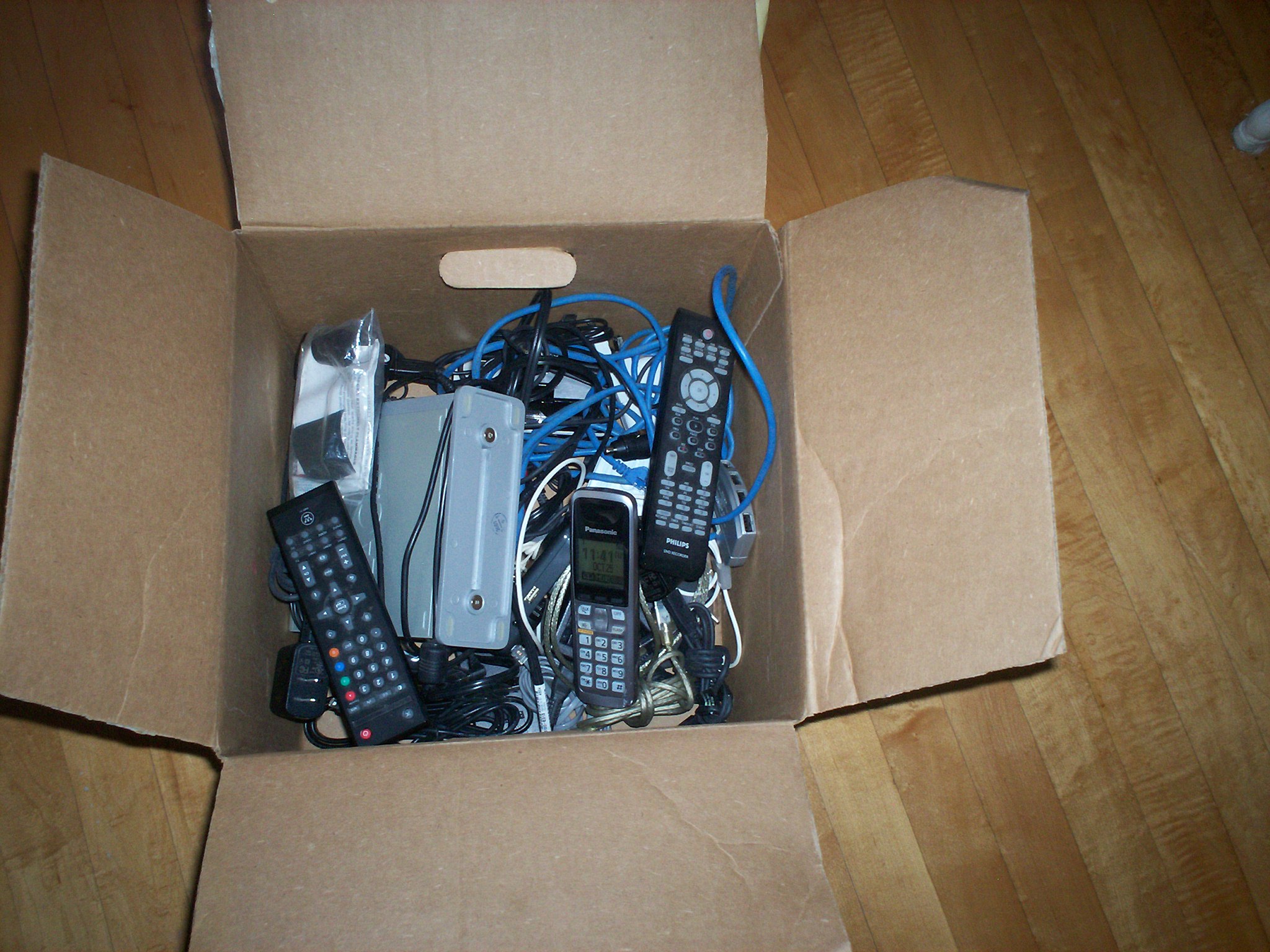
“Which support person?” I answered, and the alien in her UFO said, “That is not a valid answer. Please say ‘one’ for…” and so on.  After fifteen minutes of trying to get through six easy questions, I’d had enough, said good-bye, and ended the call. I wouldn’t have won the sweepstakes anyway. The survey was probably taken by 10,000 people that day alone. Man, I hate technology. I want to put it all in a box, take it out to a field, and beat all the components with a baseball bat. I have a good memory of some guys doing that.

2005-01-12 11.54.43

I know robots will eventually solve our problems. We won’t fight wars anymore; we’ll just send our robots against the enemy’s robots in some forsaken place like Afghanistan, and then watch the whole thing from drones. The winner will get all of the loser’s assets, which will merely be numbers in some IMF account. It’s not like we’re going to advance enough to end war; we’ll just change how we fight it.

When we realize that football has become too dangerous because of players who are too big, too fast, and too well-trained to follow piddling rules like “It’s a fifteen-yard penalty to hit a defenseless receiver in the chest or back with your helmet,” we will have robot football, and actual heads will fly off, or at least pop up like those toy red and blue boxers used to do after a direct shot to the chin.  I think those football players will look like the droid on the Fox Sports leads, you know, the one with the logo on a shield that appears out of the robot’s shoulder. That will be football, our latest substitute for war. Timeouts will exist only to retrieve shrapnel, run a Zamboni over the gridiron to scoop up arms, replace batteries, and allow viewers to get more popcorn, pizza, or whatever new combination of salt, sugar, and fat the latest corporations hawk to us.

Please excuse me while I look for my baseball bat.

TMI

Hibernal coverYou can download Hibernal, my recent literary suspense novel after Shakespeare’s classic A Winter’s Tale, for your Kindle for $2.99. If you like intrigue, the trials and triumphs of love, humor, and fascinating characters, it’s worth a click at the Kindle store.

 Go to:  http://www.amazon.com/Hibernal-ebook/dp/B006VZ175U/ref=sr_1_1?s=digital-text&ie=UTF8&qid=1377633229&sr=1-1&keywords=kurt+haberl

The paperback is available as well through Amazon. 


TMI – This is a problem/solution entry; one I think is part a growing pandemic. Picture this. There is a character in Great Expectations named Matthew Pocket, an educated and kindly father completely incapable of dealing with the little household crises that arise in his family, and his usual reaction is one of overwhelming desperation in which he grabs his own hair and lifts himself six inches out of his chair. It’s a wonderful image that catches a character with remarkable accuracy.

photo-1

We are all Matthew Pocket. If you haven’t felt overwhelmed lately, either by news (nearly all bad), economic forecasts (nearly all inaccurate), or advertising (buy this new scented shampoo, better yet, buy this “must read” book), just Google “cold remedies” and see what happens. Yes, the result you see in the upper left hand corner is correct – 19,100,000 hits. All of them certainly are accurate because they’re published on the internet, right? The Google staff removes all inaccurate posts, right? I might be sensitive about this topic of Too Much Information because of the amount of paper coming into our house (The Capital Times, New Yorker, New York Times, two Waterloo hometown papers, not to mention AARP, fishing magazines, The Isthmus, and my favorite The Onion). We have stacks of books (currently The Pickwick Papers, You are a Badass, a good self-help book for artists, Montaigne’s Essays – the never ending collection of essays, actually – Rachel Maddow’s Drift, my worn Jerusalem Bible) and whatever else our teacher/professor neighbors send over. When driving to Evanston to play with our grandson, I listen to a 75 CD series on the history of Western Literature (not for everyone), Harry Potter, more self-help readings, and anything else Ann brings home from the library. Self-induced TMI overdose. I’m not a TV addict because most of the weekly shows are worse than junk food, but I do watch Masterpiece Theater (currently airing Poirot mysteries) and whatever sports season is in.

You get the idea.

I, and I suspect everyone, is drowning in information, entertainment, viewing choices, and an onslaught of advertising, “Look at This!” OMG, breaking news, the market is up, the market is down, can you believe what that politician just said/did/questioned/voted for/voted against? TOO MUCH INFORMATION If you have a full-time job, and after retiring from teaching, I don’t, you might be helped a little by the limits on your time not at work, but even then, if you’re ever on vacation or sick for a day, it’s surprising how much email can pile up, and that’s assuming you have a decent spam filter. What can a thinking, reading, semi-informed person do?

I have seven suggestions. They have preserved the little sanity I still possessed when I left home.

1. My friends are my Angie’s List. I highly recommend Goodreads, the site much like a Facebook for readers. It’s a link to my friends’ recommendations and it allows me to rate books as well. With the bothersome exception of political emails friends pass on without checking them at all (and there are some emails from friends and relatives I simply delete without opening), I read/buy/watch/listen to very little that does not have a friend’s recommendation. Whether it’s Youtube, TED talks, music, books, concerts, or audiotapes, I waste my time on almost nothing unless it comes with a recommendation. I don’t surf the web much anymore; I fish. If you have the good sense or luck to marry someone who reads a lot, gathers friends like lint, and will watch anything that moves on TV, you have your own Angie”s List available every day. In return, I make the best hot, buttered popcorn in Madison and have learned to concoct a really good carbonated water and lemonade drink to go with it. I follow the Mafia rule: We don’t let in nobody wit’ out nobody’s recommendation.

2. Watch TV consciously. I focus on what I know will be good. My wife accuses me of watching only “happy TV,” and that is mostly true. I’ve seen enough cars and buildings blowing up and innocent people killed to last a lifetime, so most adventure/killer/action/suspense films and the news in general are usually like sour milk to me. Even some movies and shows that have won awards I may watch for ten minutes and then leave the room, saying only, “I don’t like any of these people.” How do I fish? I will watch almost any Turner Classic Movie, almost any romantic comedy (a weakness, I know), and anything with Meryl Streep, Cary Grant, Woody Allen, or Matt Damon. It’s not because they are the best actors; it’s because they are the best readers, and what they do is interesting. Your list will certainly be different but what matters is that you have a list. Anything by Bill Murray is reliably goofy. Steve Martin is both funny and poignant. Jane Austen knows emotions. The point is to know what you like.

3. Take breaks from all input. A bike ride, a canoe ride, trout fishing in a stream, daily meditation, are all silence breaks that halt the assault on my psyche and wallet. A crossword puzzle is a break from TMI because it forces me to focus, think, and search my little grey brain cells that haven’t been searched in a long time. Will Shortz, who edits the NY Times puzzles, may have done more to stave off Alzheimers than anyone or anything.

4. If I have a question about a movie, I check out the site by a former student who knows more about movies than anyone else I know: Brian Welk. He’s at brianwelk.com. I highly recommend adding him to your “Angie’s List.”

5. I avoid anything with “Dumb,” “Fail,” “Redneck,” or “America’s Funniest” in the title. I avoid Jennifer Aniston, with the exception of the cult classic Office Space. I avoid murder and violence unless it is offstage, usually the case with Poirot, Miss Marple, and Hitchcock. I avoid drug movies, fast cars, crashing cars, flying cars, burning cars and exploding cars. I no longer watch war films, hostage films, or genocide films. To me, the Age of Glorious War is over, and probably never was. And finally, I avoid any contest that is not really a sport, including dancing, survival, obstacle courses made out of sponges, and who gets fired this week by the insufferable Donald Trump. I don’t recommend you do what I do on this one; do what works for you.

6. Take a reality check. Most of the information thrown at you is not true. Since I’ve been involved in publishing, I’ve learned that the space in the surviving bookstores is rented, and the tables by the entrance with stacks of books and a giant cutout of some vampire/movie star/politician/waif or mockingjay are prime real estate rented in a bookstore at a very high price. Pay no attention to advertising that sounds too good to be true or includes the words “Save, for a limited time only, you don’t want to miss, you gotta’ have,” or “Blowout Sale.” I try to follow my own rules: Here’s my book; here’s what it’s about; here’s what it costs; here’s what readers say about it; here’s where you can get it.

photo

7. Use every mute button available. My car radio has six well-used preset buttons. The “mute” letters on our TV clicker is worn off. Better yet, tape or DVR Jon Stewart and fast-forward through the commercials. I really like the 30-second jump ahead button on some controllers that means I can hit the skip button six times and automatically go the the next part of the program. I’ve learned to digest newspapers by reading every headline and then one or two articles.  For my own peace of mind and for the greater good of my country, I now avoid all “attack” programs which have shown themselves to be mostly inflammatory rather than accurate.

Eventually, I believe we will all figure out this “internets” thing and will vote with our computers, attention, and dollars. Something that goes viral will be a good thing.

A Dangerous Coffee House

A coffee house is a dangerous place, at least for a writer. The two women at the table next to me are talking about their husbands. Both of their men are apparently evil, and that fact is not changed by the occasional “But he cuts the grass.” One of the brutes is addicted to sports and has no interest in romantic comedies, the current fashionable length of men’s shorts, or stars dancing.  The other woman’s orc likes movies but only the action ones where cars explode, guns blaze, women wear torn shirts and jeans, and men say things like, “Here’s a present for you” and then toss a hand grenade. This Neanderthal only wants to take her to movies that have a number in the title like “Death Wish 6,” and will not trade time with her for An Affair to Remember.  The wives’ conversation epitomizes one of the dangerous truths of a coffee house: Life is a struggle between the brutes and the civilized.

photo-2

Two men sitting at separate tables have the first requirement for entrance to a coffee house in Madison, a laptop, but both screens have only spreadsheets on them.  These men are not brutes; they are zombies, and their occasional pecking at the keyboard shows a shallow fascination with numbers amounting to nothing.  For a moment I thought of the possibility of describing them as T-shirted moguls moving millions of dollars with the flick of a finger and creating or gutting corporations based on the digital cell on an Excel file.  No, I can’t go there. They are boring serfs.

A young man with long blond hair and a bad beard just walked in wearing a black T-shirt that says “KNERD.” His thick, dark-framed glasses confirm his T-shirt. He orders two breakfast sandwiches, obviously not caring about his dietal health, and shares one with a young woman who joins him, her thick-rimmed glasses tagging her as another knerd. They may simply believe that the world will not last long enough for their dietary choices to matter. They are plotting a conspiracy, perhaps something that started years ago by downloading pirated music, but now has expanded to hacking NSA files and creating avatars to protect their own privacy while they expose national secrets, even though there are no national secrets anymore. Their current conspiracy is the result of a chance meeting with a fellow knerd, a biologist, who realized and now can prove that the demise of the honey bee population is not due to mites or weed killers as popularly thought, but rather is the result of recruitment of millions of bees by the CIA. These real killer bees are now equipped with tiny surveillance cameras and mini hypodermics.  They are training in a secret location near Death Valley where escape for them is impossible until their “orientation” is complete. The bees work in trios, two camera bees (stereo vision for depth perception back in Death Valley) that fly in formation with one hypodermic bee. Code: Ciel Team 3.

A young man with Knerd genes somewhere in his background is at a table about ten feet away.  He sits alone, but he is not alone.  On his table are an energy drink, a laptop, an iphone, a mini-tablet, and a portable hard drive. The mini-tablet has a Google view of Fort Knox on it.  He is obviously playing some kind of web-based game. Boring.

Oh no, the two women married to brutes just left, their smiles belying the fact that they are going back to lives of quiet desperation and the never-ending battle to raise the consciousness of the world’s lower life forms. Their smiles are enigmatic, as if just talking about their husbands’ shortcomings has made them feel better. I don’t understand. Now they are laughing. Their efforts are heroic.

In the corner is a bearded, middle-aged man whose eyes have the haunted look of a fugitive.  He is typing furiously, either because his UW dissertation is due tomorrow or because he is writing the Great American Novel.  I’m going to go with the Great American Novel. It is the story of (spoiler alert) Lee, a young man born into abject poverty in Tupelo, a lost child his father nicknamed “Hound” before leaving his mother. Hound left Tupelo and failed in several business ventures involving bees – no, involving suede shoes – until he was drafted into the army. Upon his discharge he became an American icon in the entertainment business, really the only business the United States now has, and then, well, his life ends tragically. Yes, it will be the Great American Novel.  His story is our story, minus the private aircraft, sexual encounters, and drugs. I wish this fellow writer well. If nothing else, he types with amazing speed and dexterity.

photo-1

Sitting near the window is another middle-aged man who has managed to sneak into the coffee house without a laptop. He has an old-fashioned book before him and a legal pad. He writes with a 1960’s Bic pen. His eyes hold the far-away look of a visionary, but one who has seen it all, and it is all bad.  No, he has seen it all, and he knows that it all passes, and the passing is good. He is writing a memoir, a single copy that cannot be emailed or e-booked, and he wants it in a form that reflects his character. His pad will become a manuscript, his handwriting a reflection of his personality and story.  How unique. It is the story of an observer, one who has lived through and studied four ages, the Age of Mass Production, the Age of Mass Media, the Age of Acceleration, and the Age of Everything Apple. He writes on a pad so that his identity/manuscript/ideas may not be stolen. He divides his pages into three piles, one kept in a bank safety deposit box, one kept under his mattress, and one kept in a backpack that goes with him everywhere. Every third page is kept in each safe place. What he sees is … oh no, he is looking at me, and he realizes I am a writer.  This is terrible.  I cannot bear such scrutiny. The observer cannot be observed or he is no longer the observer.   How can I make things up if…. I’m meltinggggggggggggg…….

A coffee house is a dangerous place.