Husbands/ Book Club

So three male friends and I decided to start a Husbands’ Book Club. (I capitalized it to legitimize the concept, even though we’re not really a book club or not exactly a book club. Actually, not one at all.) It happened by accident. My wife is in two book clubs made up entirely of women, and in both cases, when the meetings rotate to various houses, husbands are not welcome. If you write a book and the women decide to read it, you get to attend that one meeting to answer questions about stuff in your book you never thought about and you’re not even sure was in your book, but that’s the only meeting you can attend. I could hang out upstairs and watch sports, I suppose, but when I talked to one of the other husbands, he said, “Let’s start our own book club.” He got two other husbands interested, and then said, “You know, Kurt, the women don’t just discuss books, they have a fancy meal.”
img_1981

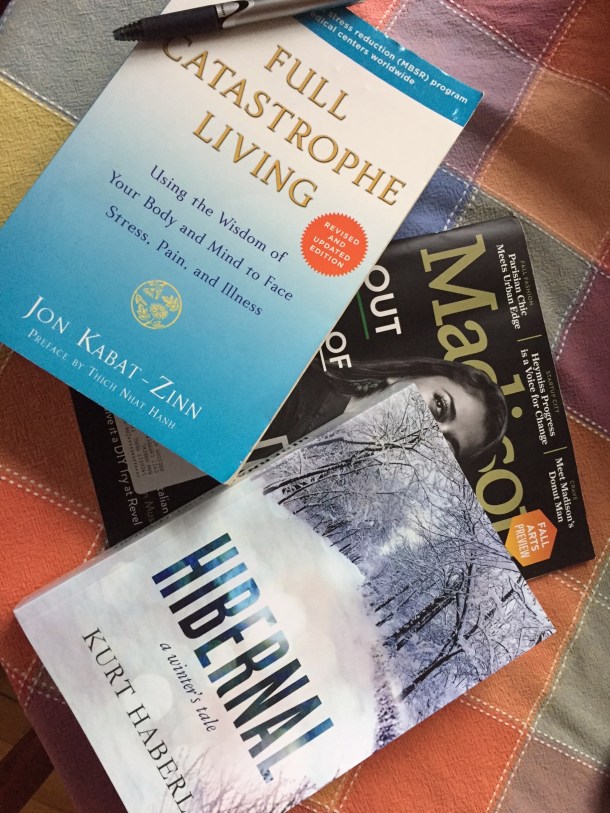
We decided to rotate to all the best restaurants in Madison to discuss books, drink, and eat. It would be a financially reasonable night because our wives were not invited. On the first meeting we couldn’t decide on a book, and then thought it was too much work to read a book for a stupid meeting when we’d rather talk about cars, traveling, hunting, fishing, sports, and the general state of the world going to hell in a donkey cart. Someone suggested we become a magazine club, but even then, it sounded like too much work. To pick a magazine every month and read it, when all we really wanted to do was have a meeting to drink, eat, and tell stories – seemed like such a waste of time. We decided we were much more interesting and funny than any magazine anyway. It’s true.

One member is a retired history of science professor from the University of Wisconsin who knows tons of stuff about Galileo, the Vatican library, and lots of scientists I’ve never heard of. He does original research in Latin and speaks French, Italian, German, and passable Greek. I tried to read one of his books on science, but it had math in it, so that was the end of that. The second guy is a former engineer, inventor, and businessman who sold two of his businesses and now is a semi-retired professional photographer. He did some design of an optical machine used to test eyes and refraction, but when he explained it to me, his explanation had math in it, so that was the end of that. I can’t really tell you what he invented. The third member is a naturalist who worked forever for the Wisconsin DNR, fought for years to save Wisconsin’s beautiful ecology, and just retired. He fought a good fight, although now the greedy bastards who want to bottle spring water in headwaters where trout spawn, gouge open-pit lead mines, dig sand pits and supply frackers with whatever they want – have the upper hand. He’s sad and needed a book club like ours.

Then there’s me. In my career I read half of the classics I should have, but since I was an English teacher, I can just make stuff up, so I get to be part of the conversation. Besides, I came from Waterloo, Illinois, which in my youth had maybe 3,000 people in it, so I have stories about stuff that Faulkner turned into novels. We have a great time, even before we finish a single beer or glass of wine. We laugh uproariously, but so far have not been kicked out of any restaurant.

We suggested to our wives that they should do two books a month, but they said it would be too much for them to handle. Women can be such slackers sometimes.

Here’s what it’s like to be at one of our book club meetings. It’s deer season up here in Wisconsin, so last week, that was our first topic. Our science professor told about his experience last weekend when a deer came out of the woods about 30 yards from him, turned broadside and stood there waiting to be shot. He lined up his sights even though such a point-blank shot made the deer look like the proverbial broad side of a barn, then he pulled the trigger. The deer bounded off, and my friend spent the next three hours looking for blood or some sign to track the deer before he finally had to admit he had missed. All his knowledge about trajectories, vectors, the history of science, and ohmygod – math – did not help him, and somehow he missed the broad side of a barn. Even his expert Latin and passable Greek did not help. The other three of us were sympathetically dumbfounded, which led us to a discussion of refraction, gravity, astrology, horoscope signs, Nostradamus, and the effects of eclipses on primitive societies which caused the unthinkable to happen.

Next up was our ecologist who worked for the DNR. That same weekend, he had finished cleaning his rifle and drove with his wife out to the friend’s farm to hunt for at least a couple of hours before the light faded. As soon as he got out of the car, he saw a very large buck heading very slowly along a hedgerow. As quickly as he could, he lugged his gun case along a fence to intercept the deer and make the perfect shot. When he got to his spot, he got out his ammo, took his rifle out of its case, and with a sigh that can only result from a catastrophe, looked at his clean, oiled rifle, and realized he had left the bolt on the table back home. There was no way to load a shell, nor did he have a firing pin to shoot it. He looked at the enormous buck through his scope mounted on the top of his rifle, and pretended to shoot it four times. This led to another discussion of what a rifle actually needs to fire a shell, astrology, horoscope signs, the unthinkable, etc.

Quite naturally, this led to a discussion of cars we owned, and what parts were actually necessary for any car to run. This was a discussion in which the essentials are quite different for men and women, and since this was a men’s book club meeting, I didn’t have to re-tell my story about the time my wife and I were driving through the Chicago suburbs to see a Shakespeare play on Navy Pier, and the day was so hot that our old car overheated, but I managed to keep it going until we got to the parking garage by opening all the windows and turning the heater on full-blast to lower the engine temperature. It worked fine. I would have been in the clear, except that when we got out of the car, my wife noticed that the unbearable heat had melted the glue which kept her soles attached to the bottom of her shoes and she was now walking like a clown to see Hamlet. Flop, flop. You get the idea.

I had told this story at a previous book club meeting and received the most reasonable understanding from the other husbands, who voiced the proper response, which was, “You did exactly the right thing. That’s how cars work. Why did your wife buy such cheap shoes?”

If you are a husband and you travel somewhere near Madison, Wisconsin, the last week of any month, you might want to check with me about the time and place for our next Husbands’ Book Club meeting. If you appreciate good food and know some stories about Galileo, hunting, fishing, cars, sports, astrology, refraction, ecology, Latin, or traveling, you would be welcome. If you don’t know about those things but you majored in English, you could just make stuff up, and it would be okay.
What I Learned from Downton Abbey

1280x720_downtonabbey_s4_cast


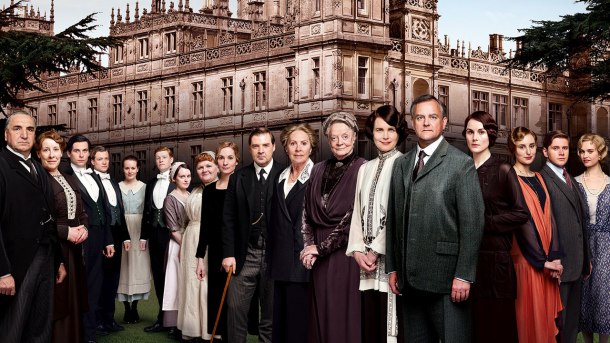
Six years is a good run. It’s also an investment in fictional lives, a milieu, and the often unnamed things that matter. Botch the story, send the characters off into self-absorbed whining, or worse, bore your audience, and they quit watching. Keep viewers who watch until the end and then look at each other with an expression of, “I-wish-there-were-more,” and you have done well as a writer. Downton Abbey, I believed passed the ultimate test of literature – a presentation close enough to life without actually mirroring it so that it speaks to us. A private world is created and we are allowed to live in it. We learn. We take something with us after the experience. This blog is about that something.

Lesson one: More than money, social position, or even the possession of near absolute power that can raise up the lowly or cause the downfall of the unfortunate – Kindness rules. (Take that, you politicians today who practice various scorched earth policies.) Kindness is the ultimate currency that buys life and influence; it is the power that eventually beats all others. It is in a lady’s concern for the progress of a village hospital. It is in a lord’s concern for the quality of housing built on an estate to help fund the Abbey. It is in a daughter’s willingness to swallow her triumphant pride and call back her sister’s estranged lover because it is best for her sister. It is in the pat of the hand of a dowager who tells the lady who has taken over her position as president of the hospital that she is doing a wonderful job. Kindness marks the lives of servants who worry about each other, save their own from suicide, risk their own positions to testify in court, keep secrets or not depending on what they think is best for the other person. It marks the generosity of an earl’s American wife and later, a newly-married husband who put their entire fortunes at the disposal of the family and the estate.

The greatest kindness is the vein that opens even in the prick of meanness. Because of it, the dog-stealer, the rebel, the scandalous, war’s wounded, and the petty autocrats are redeemed. Kindness heals; it makes the broken whole; it makes the savage human and the unsophisticated better than the aristocrat. When in doubt – be kind – always. At this point I am led to a greater passage – Portia’s speech on mercy from The Merchant of Venice, which many of us had to memorize (with good reading). “The quality of mercy is not strained. It droppeth as the gentle rain from heaven on the place beneath. It is twice blessed. It blesseth him that gives and him that takes….” Part of the lesson from Downton Abbey is that when the people are not kind, things do not go well, not for their rivals or themselves. The story of the under-butler Barrows is the best illustration. He almost died because of his own meanness and was saved only by the last-moment concern of a lady’s maid.

Lesson two: Nothing lasts. One would think that a house, an estate, a title chiseled into a culture and layers of traditions over many generations would ensure the continuance of those things, but it is not so. One of the interesting things is that Americans, we title-less, disorganized, anything-goes Colonials could be so fascinated by a class system we do not want, barely understand, and would certainly resent if it were imposed in the States. After all, we’ve developed our own class system based on money, which anyone can join if he or she has enough, no matter how that wealth was amassed. The Kennedys, the Rockefellers, the Gettys, and even the Walton family come to mind. What many did to get their fortunes may or may not have been legal; much certainly was unethical, but they did not get caught, or if caught, they found an oily way out. Fortunes are lost, not always by blunders, theft, or revolution. A fortune is lost because it is almost inevitable. It may take several generations, but it may also happen because a comma, a minuscule serif, is inserted in a piece of otherwise well-meaning legislation. Big Oil is a recent example, but there are others. Do you still own Sears stock? Enron? Bell Telephone? American Motors? Zenith Electronics? Even those that still exist are poor step-children today, sometimes the scullery maids who must get up first to clean out ashes and stoke the fires for others. Some ruined their own prospects; some fell to changing economic conditions, and some were simply swallowed up by predators.

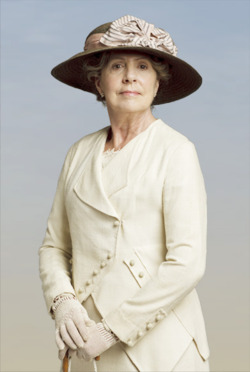
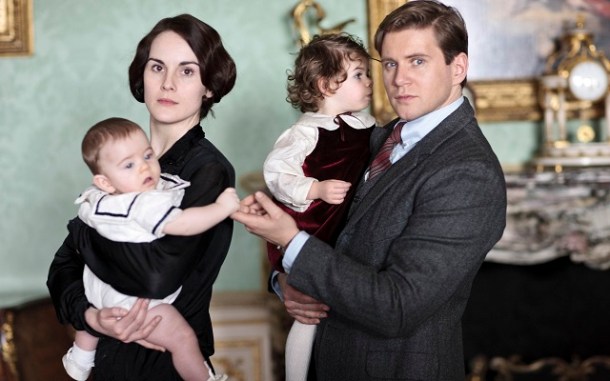
FIRST LOOK DOWNTON ABBEY SEREIS 4. Lady Mary played by Michelle Dockery with Baby George and Tom Branson played by Allen Leech with baby Sybbie COPYRIGHT: CARNIVAL/ITV

Even love may not last. It is interrupted by death, trouble, self-centeredness, pride, and faithless behavior. Love is a choice, and it must be re-chosen every day. We must tell our spouses. I choose you. I choose you. I choose you. Someone else may temporarily seem to be a better deal, but I choose you for the long term. Counselors tell us marriage is killed by disdain and the repeated eye roll. That means it is important we tell each other as often as possible: I choose you again. Designing maids may seduce lords. Ladies may be overly-appreciated by art historians. A visiting Turkish diplomat may die in a lady’s room. A chauffeur may marry a titled lady. We choose, and when we choose for the long term, things almost last. At least they last for long enough. At least they may last for a lifetime. What more could we ask?


Lesson three: No matter what our position, power, or personal integrity – we all just muddle though. In one of the most prescient titles of all time, Achebe’s novel Things Fall Apart reminds us all that Plan A is never enough. As Bobby Burns put it, “The best-laid schemes of mice an’ men gang aft a-gley.” In Downton Abbey we see the repeated near-bankruptcy of a privileged estate, a witness to other estates that failed, decayed, and became the mere ornament for the ultra-materialistic nouveaux-riches. Even the terms used to describe them are hyphenated.


images


In Downton Abbey, ovens break down the night of an extended family banquet; an old letter tossed into a fire nearly burns down the house; the joyful birth of a son is overshadowed by the death of the husband in a car crash, the same kind of accident that eventually sends Mary another husband. A child is born before Edith’s true love can marry her. An outsider, even worse, an Irish activist and mere chauffeur becomes the common-sense savior of the family estate. A bright, but naive daughter inherits a publishing company. A mere footman becomes an admired teacher who knows more than many graduates of Cambridge. All of this muddling, like struggles in any life, may seem impossible, but the older one gets, the more one has seen the impossible. A poor, black boy with an absent father becomes president. The presumptuously-named God-particle is found. A tiny wave in the time-space continuum is detected. Cancer cells may be “tagged” so one’s own immune system sees them as invaders and attack. Curiouser and curiouser. No one stays clean all the time. We rust. We sag. Our eyesight fades. Our memory gets more selective. It’s true of me, of you, of the famous, of the powerful, of the simple, of professors, of mothers who would give almost anything for a full night’s sleep, of fathers who don’t know where the next job will be, or the father who would give almost anything for a full night’s sleep, or the mother who doesn’t know where the next job will be. It’s all the same. We muddle through. We Muggle through. Magic may happen, but we have no wands.

The muddling makes us grow, and if it does not kill us, it makes us stronger. That is how LadyMary learns to run an estate; Lady Edith learns to edit a magazine; Molesley learns how to be a teacher, and Robert learns how to let go, possibly the most difficult lesson of all

Lesson four: No one succeeds alone. It was fascinating to watch the Abbey work on a daily basis like a finely-calibrated watch. Not always, but usually. The clearly defined roles and coordination were amazing. Even more powerful was the handling of a crisis. A dead body was moved. Farms were run; sick pigs nursed; fires put out; deaths mourned; banquets prepared. It was done by people thrown together by circumstance, by choice, and sometimes by necessity. Even when some said, “No,” others stepped forward to offer support. If you want to help, but there is really nothing you can do, give empathy. Empathy heals as well or better than kindness and often better than misguided intention. The fast friendship of Lady Violet and Matthew’s mother Isobel Crawley was not cemented by kindred spirit or even similar interests. It was firmed and confirmed by empathy. Sometimes they merely sat with each other, listened, and “felt.”

tumblr_lolef1fsM71qaendxo4_250


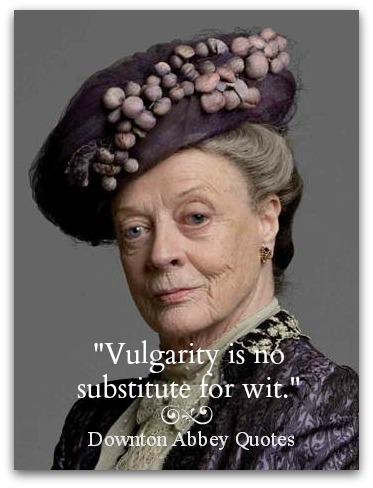
Lesson 5: Wit is always fun. My favorite character had to be Violet. At least she had the best lines, including several classics. “Weekend? What is a weekend?” About her friend Isobel in a tussle over the hospital. “Fight? Of course she’s allowed to fight. She’s just not allowed to win.” Even in her backhanded slaps, the harm is not so great from one somewhat physically feeble, someone still mentally sharp, and someone wearing a velvet glove. Comic relief is always important. I tried very hard to put it in my book, Hibernal, in the scenes with Porkchop andTrailer. It seems that some readers remember only that about the book. If they laughed out loud, as many readers reported, I am satisfied.

lady-violet-downton-abbey-quotes


All good things must end. Years ago I wrote a blog making fun of Downton Abbey, its excess, its confusing multiplicity of characters and emotional highs and lows. Somewhere along the line, I was won over, quite possibly because the reasonableness of its excesses, its interesting multiplicity of characters, and its emotional highs and lows. My disbelief certainly was suspended. If you win over a skeptic like me, you’ve done something, Julian Fellowes.


On Failure

We’ve all been there, that place where hope becomes expectation and then slides into wreckage. The kite crashes to the ground and is no longer a kite but only torn paper and two sticks. The blog we’ve written to inspire or at least amuse others has instead offended or worse yet, angered. The blog we decided to write every week or two slipped away into a six month hiatus while we worked at Epic culinary, celebrated various holidays, and visited relatives. A proposal for almost anything – a vacation, a job, a date, is met with – what’s that new thing called – the “resting bitch face.” Then there is the failure of having worked for years on a book and other years on a Master’s degree in writing, only to receive  dozens of rejection letters from agents and publishers of your genre who are not interested. No readers is a failure. Eventually one loses count. I was about to add the ultimate failure, the marriage proposal, but Pride and Prejudice notwithstanding, few today take the Darcy-esque risk with Elizabeth Bennett. Most often the couple has talked about marriage, and the guy already knows she will probably say “Yes.” (Often with an exclamation mark or two)

The interesting thing is that failure is often accidental or circumstantial rather than a disaster we caused. We don’t consciously choose to wreck our cars, break windows, or hammer thumbs. We knew those things were possibilities, but certainly, such an unlikely – ouch! Damn! (Followed by other automatic responses.)

What I’m mostly talking about today are the ones we ourselves cause and afterwards think, “How could I be so dumb?” I’ve experienced quite a few, and I think I’ve learned from them.

A whole class of failures are the ones witnessed by a spouse. A few years after we were married, we bought our first house, a small L-shaped ranch with a big back yard enclosed by a chain link fence. Trying to chase two birds with one stone, I hoped to please Ann by cutting out 200 square feet of sod, which I would use to cover the ugly sore of a new sewer line we needed the first month in our house, and fence in a garden for her where the sod had been. It would have been a beautiful gift. After fencing in the garden, I found the dirt below the sod was mostly clay, perfect for planting rocks or a tennis court, but not so good for a garden. In phase two I bought several bags of topsoil and rented a tiller, thinking that I could break up the clay, and she might at least be able to plant cacti. In her version of this failure from looking out a triple window in our kitchen – the only accurate version I might add – everything was going fine until I got too close to the chain link fence. One tine of the tiller caught the fence and started to climb it. To make matters worse, the climbing tilted the opposite tines, one of which caught our two foot high rabbit fence. As the tiller churned and I tried uselessly to pull it away (a six-horsepower engine really is stronger than one dummy), it wrapped the rabbit fence around itself until the blades locked; the engine backfired once, and then died. Ann figured we had just bought a tiller we could not afford in addition to a sewer line, and we needed the sewer line more. She said her eye roll turned to laughter when she saw me in typical English teacher fashion, take a step back, put my chin in my hand, and just examine the mess. Three hours and a lot of snipping later, the only real loss was the rabbit fence. The tiller was returned to the garden store in working condition. I did not charge the store for sharpening the tines on our wire rabbit fence. It was a magnificent failure. I learned that sometimes the universe kindly forgives stupidity, but even more meaningful is wifely kindness.

Sometimes failure can be funny, especially if it is shared. Before I was a teenager and started failing magnificently on my own, I remember a Saturday morning on a beautiful fall day when my father planned to cut down a rotting, very old cherry tree in our back yard before the branches broke off and landed on our porch. It was a tall tree, at least 50 feet high, and my father borrowed a chain saw and a lot of rope for this project. Because he was young then, and I was not even a teenager, he climbed the tree, roped himself to the trunk for safety, and attached pull lines so my grandfather and the three oldest boys could pull branches down into the yard as he cut them. The first three or four were successful, but when he got to the largest branch, he told us we’d better move the picnic table he had built out of two by fours.

“It will be fine,” my grandfather said, looking up at my father and eyeballing the falling trajectory of the branch.

My dad cut, the branch groaned, then fell free, sliding off a lower branch. We pulled the rope, and the branch crashed down on the middle of the picnic table, now a folded picnic table. Grandpa John, in a clear case of a master kicking the dog, looked at me, aged 10, Chris aged 8, and Ken aged 7, and said, “I TOLD you to pull. Why didn’t you pull?”

Dad started laughing hard enough that I thought he’d fall out of the tree. It was a magnificent failure. The lessons I learned from that one were so obvious and wonderful, I don’t really feel I need to state them here.

I will add the story of one of Ann’s brothers, but to protect his identify, I will not name the particular brother – he knows who he is, as does his other brother, Ann, and most of his other relatives. It happened on a beautiful fall Saturday when all the men on the block were in their back yards raking leaves. My brother-in-law is known to be slightly impatient, and in those days, at least in Indiana, piles of leaves were burned rather than scooped up by city machines and mulched. His piles were too damp to do much except smoke, so he decided in true manly fashion to help them along. Since lawnmower season was over and he had plenty of leftover gasoline, he began to squirt his piles until they simply had to burn. In a matter of seconds, one of his piles caught fire and the flame followed his stream of gasoline back into the gas can he was holding. He had a moment to think, “Uh oh, this is not good,” and then threw the can as far as he could. According to him, it did not explode, it IMPLODED in mid air, ruptured and spewed a shower of burning gas over most of his back yard. He raced around the yard, stomping out dozens of small fires before they could unite into one big fire and burn down the neighborhood. When it was over, he noticed that all the men in the neighborhood had been watching in shocked silence. Then, in unison, they began to applaud. Well done, man. Literally, his yard was well-done. It was a magnificent failure. You can imagine what it was like if you recall any one of the commercials by Allstate Insurance, featuring the burning, cut-up guy who calls himself “Mayhem.” I’m not sure what my brother-in-law learned, if anything.

As a short aside in tribute to Pride and Prejudice, I will quote Mr. Bennet, who said after one of his family’s magnificent faux-pas, “For what do we live, but to make sport for our neighbors, and laugh at them in our turn?” Ah, truth.

What prompted this blog was not so much a desire to air my secret lapses or to prepare myself and those around me for future, more eye-rolling achievements, but rather, it began with an evening of Tchaikovsky.

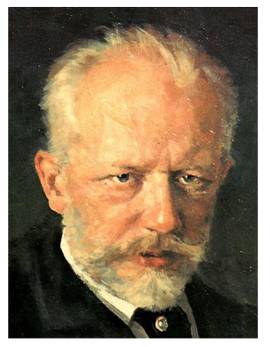
More specifically, we went to the Madison Symphony Orchestra concert at the Overture Center in Madison last Friday to hear Beethoven, Ravell, and Tchaikovsky. I was struck by one of the program notes for the magnificent and beautiful Overture to Romeo and Juliet. Allow me to quote from the program. “In 1868, (Tchaikovsky) dedicated an overture titled Fate to his friend Balakirev. While Fate was a complete flop – Tchaikovsky later destroyed the score – it was the beginning of a close friendship, and Balakirev encouraged him to take Romeo and Juliet as a subject…. The first performance in 1870 was unsuccessful, and Tchaikovsky revised the work, incorporating several of Balakiren’s suggestions. He revised it once more a decade later – the version that is familiar today – in particular working the dramatic ending. (Program notes by J. Michael Allsen)

Pyotr-Tchaikovsky-BORDER1


Ah, Peter Ilyich Tchaikovsky, a genius and double failure. Only the third try ten years later was a
success. I am reminded of other failures.


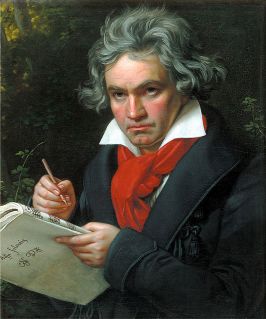
Beethoven had several, including his insistence to be onstage for the premier of his magnificent 9th symphony. Here is one eyewitness report.

800px-Beethoven

Jumping Around Like a Madman


By 1824, Beethoven was almost entirely deaf, but still wanted to be part of the performance and was on stage while the piece was performed to indicate the tempos. Yet, Beethoven could not resist “helping” the musicians on stage by showing them the style and dynamics that he wanted, even though he was nearly deaf.


The great composer’s actions were animated to say the least. One musician wrote, “He stood in front of the conductor’s stand and threw himself back and forth like a madman. At one moment he stretched to his full height, at the next he crouched down to the floor. He flailed about with his hands and feet as though he wanted to play all the instruments and sing all the chorus parts.” It was a good thing that the conductor had already instructed the musicians not to pay attention to the composer!

In another account…

The premiere of Ludwig van Beethoven’s Symphony No. 9 was nearly a complete disaster.

Beethoven’s first on-stage appearance in 12 years in Vienna on May 7, 1824 didn’t go as planned for the premier of the Ninth. It was the largest orchestra that he had ever assembled. It’s known that some of Vienna’s most elite performers were in attendance. Beethoven even had two famous singers sing the soprano and alto parts. Though the composition itself is beautiful, the performance itself was somewhat disappointing.

Many spoke out that they thought it was under-rehearsed and “scrappy” in its execution. It’s said that while the audience applauded at the end, Beethoven was actually off by several measures and was still conducting. A member of his orchestra, Caroline Unger, had to walk over and turn the musical mastermind around to accept the audience’s cheers and applause. But violinist Joseph Böhm stepped forward afterward to praise Beethoven and explain that he was not to blame for the choppy experience.

“Beethoven directed the piece himself; that is, he stood before the lectern and gesticulated furiously. At times he rose, at other times he shrank to the ground, he moved as if he wanted to play all the instruments himself and sing for the whole chorus. All the musicians minded his rhythm alone while playing.”

This failure didn’t hit Beethoven too hard. The audience gave him five standing ovations.

Even in failure we may succeed.

So far, this catalogue of failures merely documents what most of us already know. As the actor Jim Carrey once remarked, “Those who succeed are the ones who just keep going.”

There is another aspect of failure, however, that I believe is more important than seeing failure as merely a step, a pause on the way to success. Failure is important, and I’m convinced it is actually a blessing because what it does to us as humans. Success ruins us. The quicker it comes, the more it ruins us. The easier the success, the more damning the ruin. The greater the immediate success, the more complete the ruin.

How can this be?

Failure enlarges us. Failure in love makes us kinder, deeper, and more able to love greatly. Why? Because now we know its importance, its worth, its cost. We may temporarily become discouraged, angry, perhaps even despondent along with every feeling in between. Even those painful things make us more human. We become truly great by rising out of ashes. Suffering enlarges our capacity. What we often find is that the success we so desperately sought is not really the success we need. The game we are in is bigger than the game we think we are playing.

A child who falls in learning to ride a bike may have temporarily failed, but what that child is actually learning is how to overcome adversity. It’s greater than learning to ride a bike, which that child will learn to do eventually anyway. Which is the greater success – learning to ride a bike or learning to overcome adversity and skinned knees?

History is a catalogue of wonderful failures: Gandhi, Martin Luther King, Michael Jordan, J.K. Rowling, Thomas Edison, Abraham Lincoln, Ben Franklin, Galileo, Vera Wang, Vincent Van Gogh, Emily Dickinson.

emily-dickinson


Jesus!

To those who fail utterly or die in the struggle, even death cannot prevent their greatness, their legacy, their accomplishment, their bequest to the rest of us.

Take heart. When you fail, it is usually temporary; it is a blessed teacher; it increases your capacity and your potential. When you fail, your perspective changes. When you fail, you now have rubble with which to build a fortress instead of a tower. The stone rejected becomes the cornerstone.

I don’t deny the pain. When you fail, I recommend that you do it “big” and try not to die in the process. Then I think it helps to take a step back, put your chin in your hand, study the twisted wreckage for as long as it takes, and then tell yourself, “Wow, that was magnificent. That was one of my best failures e-vah.”


Just When You Think You’ve Seen Everything….

If you’re going to take note of the strange things people do, say, or wear, you must begin with a point of comparison. For a long time my standard of strangeness came from a bar somewhere in Bavaria in 1975. While there and sober, I noticed a strange-looking man at the bar and had to pretend to look at the collection of mugs behind him to get a closer look at the man. He was animatedly talking to friends who seemed to think he was normal, even though the bad toupee he wore was not really a toupee but a tanned hide rabbit skin he had cut and somehow molded to fit his head, complete with sideburns. This was in July. It was not a hat. He had combed a “part” into the top left side.


Ten years later, I acquired a new point of comparison after I had moved to the Chicago suburbs. I had heard that good fishing from the shore of Lake Michigan could be had from the Tower Road Pier because it was near a power plant that discharged warm water into the lake and attracted big fish and lots of perch early in the season. On my first trip I felt a little out of place with my medium-weight rod when a saw a man at the railing looking out at the expanse of beautiful blue-green water, and his “gear” consisted of a five gallon bucket, a hockey puck, a fire extinguisher, and a PVC pipe about three inches in diameter and four feet long. I rigged up and began casting while keeping a careful eye on the more experienced Lake Michigan fisherman. First he tied the end of a coil of line in his bucket to a screw eye embedded in the hockey puck. Then he baited a good ten yards of the line with worms and crickets. Next he stuffed the hockey puck down the tube and used some type of coupling device to attach the tube to the fire extinguisher. Finally with the same care he would use to aim a mortar, he braced the tube against the side of his foot, hit the release valve on the fire extinguisher, and watched proudly as the high pressure in his fire extinguisher blasted the hockey puck and its trailing, baited line several hundred yards out into the lake. No one could have cast that far with a rod. His strange method was a thing of wonder. In an hour, he retrieved his line hand over hand, coiling it carefully in his bucket, and eventually taking in at least a dozen nice-sized perch. I caught nothing.


I expected to see more strangeness when I moved to Madison where just under one-fifth of the population of 250,000 is college students whose first breaking away from parents means “anything goes,” and I have not been disappointed. I have seen a student riding to class on a unicycle, beer hats (not the insignia, the actual beer), kids walking through snow in shorts and flip-flops, and one young woman walking to class in the equivalent of a tasseled lamp shade – a very short lamp shade. I have seen dogs taken for a walk on a leash with a blinking safety bike light attached to the dog. In the dark, you couldn’t see the person, but the dog was safe. Last week I saw a young woman struggling to climb Highland Avenue on her bike with toddler’s trailer attached to the back. As a big fan of babies, I peeked into her trailer to see – a very content spaniel being given a ride. It was a different woman from the one I saw last winter trudging through a foot of snow with one of those baby-carrying snugglies on her chest and long-eared dachshund peeking out of the warm wrap. I have seen bikes with neon rims, bikes with four-inch wide snow tires, and cars entirely covered with bumper stickers, most in the same category as “I used to think I was indecisive, but now I’m not so sure.” O-kay.


Two other things have made appearances because Madison is a college town. Move-in days for probably 10,000 or so new students are usually a Sunday and Monday at the end of August, with move-out day for those changing residences a few days before. During that time, the city runs extra garbage pickup routes because the curbs are piled high with old mattresses, mousy couches, computer desks in various stages of disassembly, desktop computers, printers, tangles of router wiring, deflated footballs, basketballs and soccer balls, loft beds, (did I say mattresses?) and UW cafeteria trays stolen in the winter to serve as sleds down the hill outside Kronshage Hall. If you can imagine an army in full-panic retreat, jettisoning everything they cannot eat, you have a good image of what the Madison curbs look like. The locals call it “Happy Hippy Christmas,” and except for the mattresses and infectious couches, an incoming freshman need not buy anything at IKEA to get ready for school if he can drive around with a pickup truck.


Driving around, though, is something of a challenge. More than once, I have seen wide-eyed parents and a freshman in a car from Pennsylvania or Minnesota driving the wrong way on one-way University Avenue, Gorham, Johnson, Gilman, Carroll, Main, Pinckney, or Mifflin. I have been that parent. Twice. The fathers look bewildered, the mothers agog and the freshmen in the back seat – terrified. Couple that yearly Running-of-the-Freshman-Parent-Drivers with the fact that Madison, especially near and on campus, is a bicycle and Vespa scooter town, and the result is something like a county fair figure-8 race. Imagine such a race with several overloaded U-Halls, four mini-vans, two motorcycles, a tractor, six bicycles, four speeding pizza delivery cars, seven joggers, and a snowmobile. It’s not quite a demolition derby, but there are a lot of close calls to keep things interesting. Fortunately, the locals have learned to watch out for the lost, confused, wide-eyed parents of freshmen. I have seen police cars screech to a halt in front of them, lights flashing, in an attempt to protect the hapless parents. Usually the police don’t use their sirens then; I assume they have learned that a loud siren only makes things worse. Apparently, there are quantum stages of panic.


I saw one parent unfortunately heading east on University Avenue, realize his mistake too late and pull over the curb and across the bike path to park diagonally on the sidewalk and wait for the police. The father’s head was on the steering wheel; the mother looked like that painting by Edouard Munch called “The Scream,” and the freshman girl in the back seat was crying but looked strangely relieved. Unfortunately, my phone was not in picture mode at the time.


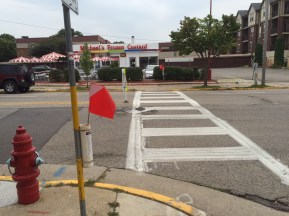
Another danger spot is near State Street, because cars are allowed to cross it at a dozen places with some six-way intersections, but no cars are allowed to drive down State Street in either direction. Students there usually flag the parents down before someone gets hurt. At many intersections in town there are canisters of orange flags that pedestrians can use to flag down motorists. Pedestrians are supposed to have right of way on all crosswalks, but …. Sometimes I think they should do away with the flags and just set up barrels full of water balloons. Rotten tomatoes might also work. If my car got hit by a water balloon or a tomato, I would stop.


IMG_1739


Strange life is not always related to driving or schools. On July 4, I rode my bike along a nice path to Blackhawk Golf Course, where there was a wonderful fireworks display after a lively Sousa concert by the Wisconsin Chamber Orchestra and a chorus of the National Anthem. After an hour-long booming display and a finale that lit the hillside, several thousand spectators packed up camp chairs, blankets and coolers to make our way across the 8th fairway, a ditch, and a railroad crossing inn the dark to parking lots and the bike path. Most of us used flashlights to get back. Directly in the path of almost everyone near the railroad crossing was a couple on a blanket, making out as passionately as anything I’ve seen … anywhere. They did not stop when the crowd split into two streams to go around them. Giggling children did not stop them. A dozen flashlights aimed at them at one time did not distract them. Two dozen “Oh, my Gods” did not stop them. They were not even distracted by a snickering teens who paused to applaud them. Ah, youth.


On my way back home along the bike path in darkness only occasionally lit by solar-powered path lights, I saw a wavering light coming at me, but it was too high for a bike light, and I couldn’t believe some giant was shakily just learning to ride at night. When I got closer, I saw an ordinary teen steering her wobbly bike with one hand, and holding up her smart phone to light a dim way with her other hand, not on flashlight mode but on end-of-concert tribute mode. It was a bad idea for at least a half dozen reasons. I hope she made it home.


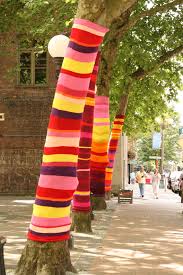
Last week, while traveling through the east side of Madison, known unofficially as Hippie Central, I noticed for the first time that some knitting fiend had somehow attached knit squares into eight-feet-high tubes around trees on the parkway. I don’t know if the trees were embarrassed by their bad sweaters, but I was embarrassed for them. I heard from our daughter-in-law that the same decorations exist somewhere in Evanston, Illinois, just off the campus of Northwestern University. Lately I’ve heard this phenomenon exists all around the country. See below. Those poor trees.


images


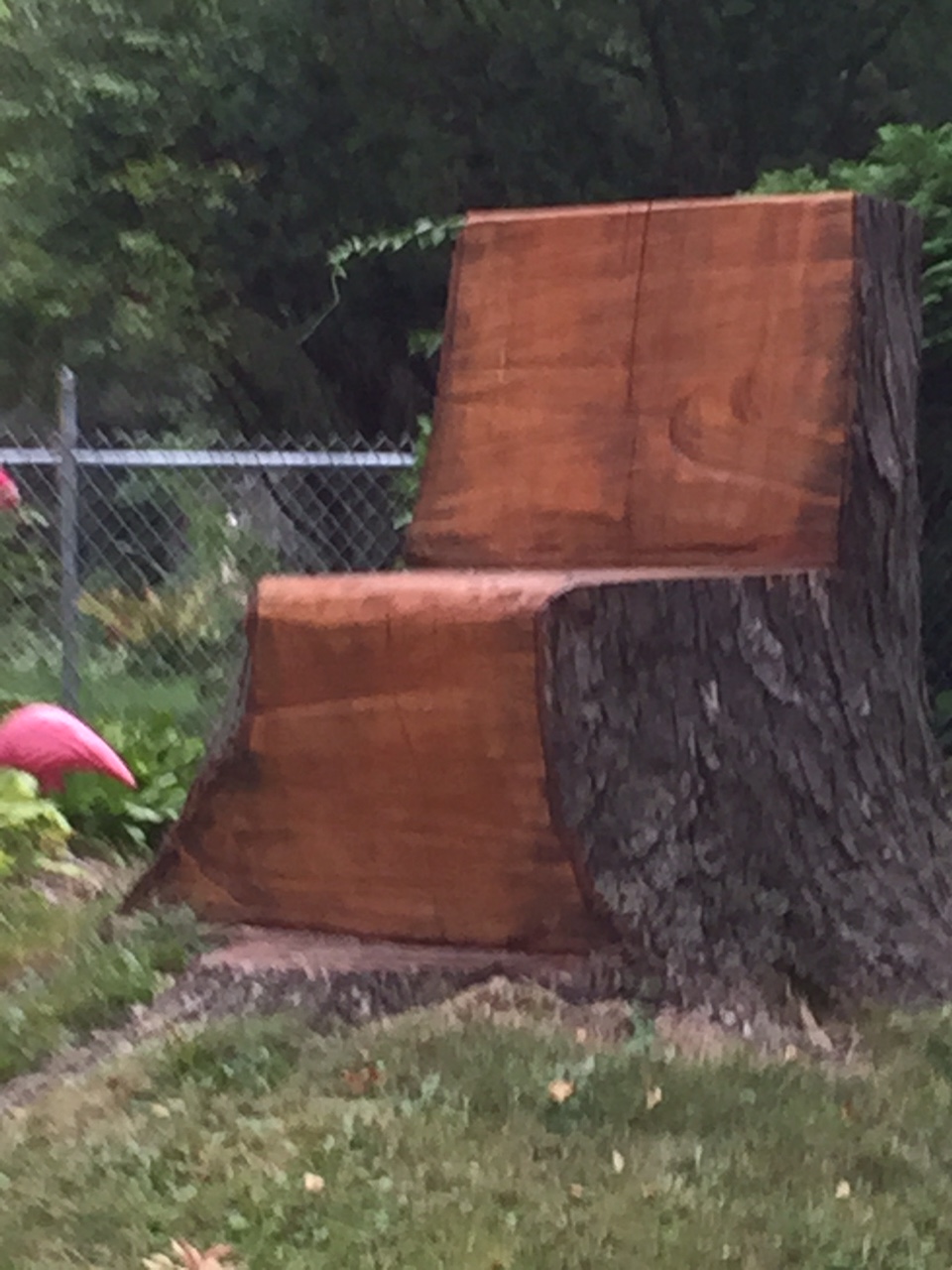
Speaking of trees… Ann and I took a walk to a nearby coffee shop this morning. Unfortunately, Madison is fighting the emerald ash borer these days with an added surcharge on our utility bill each month of about two dollars to fund chemical treatment for threatened trees. We’ve seen stapled messages on some trees around town announcing an applied treatment. For some trees, it’s too late. What can be done with the remains of a stately old tree? Here’s one solution we saw. The pink flamingo is added for a touch of … kitsch?

IMG_1737


Dempster Avenue in Evanston is an amalgam of many interesting cultures. Its shops range from temples to hookah lounges, from pita house restaurants to hot dog emporiums. During my last drive, I saw a very smartly-dressed Hasidic Jew on the sidewalk in a neatly pressed black suit, white shirt, tie, long curls, and wide-brimmed hat. His black shoes shone like ebony as he – wait for it – pushed himself along the sidewalk on a scooter. I don’t know what the typical Hasidic woman would think, but I thought he looked pretty cool.

I hope that this post will not end with me. If you choose to respond, please attach your favorite, “If you think you’ve seen everything…” I can’t wait to read about the rich tapestry of craziness we are collectively creating, not that I’ve ever done anything strange, you understand, except maybe for that one night outside Waterloo when several of us young campers thought roasting a chicken sounded good and, um, never mind.


Fun

It’s about time someone writes about this all-important topic, and I will do my best to do it justice – justice – the opposite of fun. I have an advantage in writing about this topic because I’m retired (mostly), so I don’t have the pressures of work, commuting, multiple bosses, or the desire to get a promotion. As a matter of fact, Epic Systems called me back in October to come back to them part-time, and instead of working in the kitchen, where I was learning to be a chef (it’s mostly about knives and playing with fire – kind of like Boy Scouts), they wanted to promote me to something administrative. I shuddered at the thought and told them, “No, it’s the time of year when football and basketball intersect, and I have no time for work, although I might consider it, if you let me go back to the kitchen. I lost the ten pounds I put on last spring working with the chefs.” It was mostly a lie; actually, now that I look at it, it was probably three lies in two sentences.


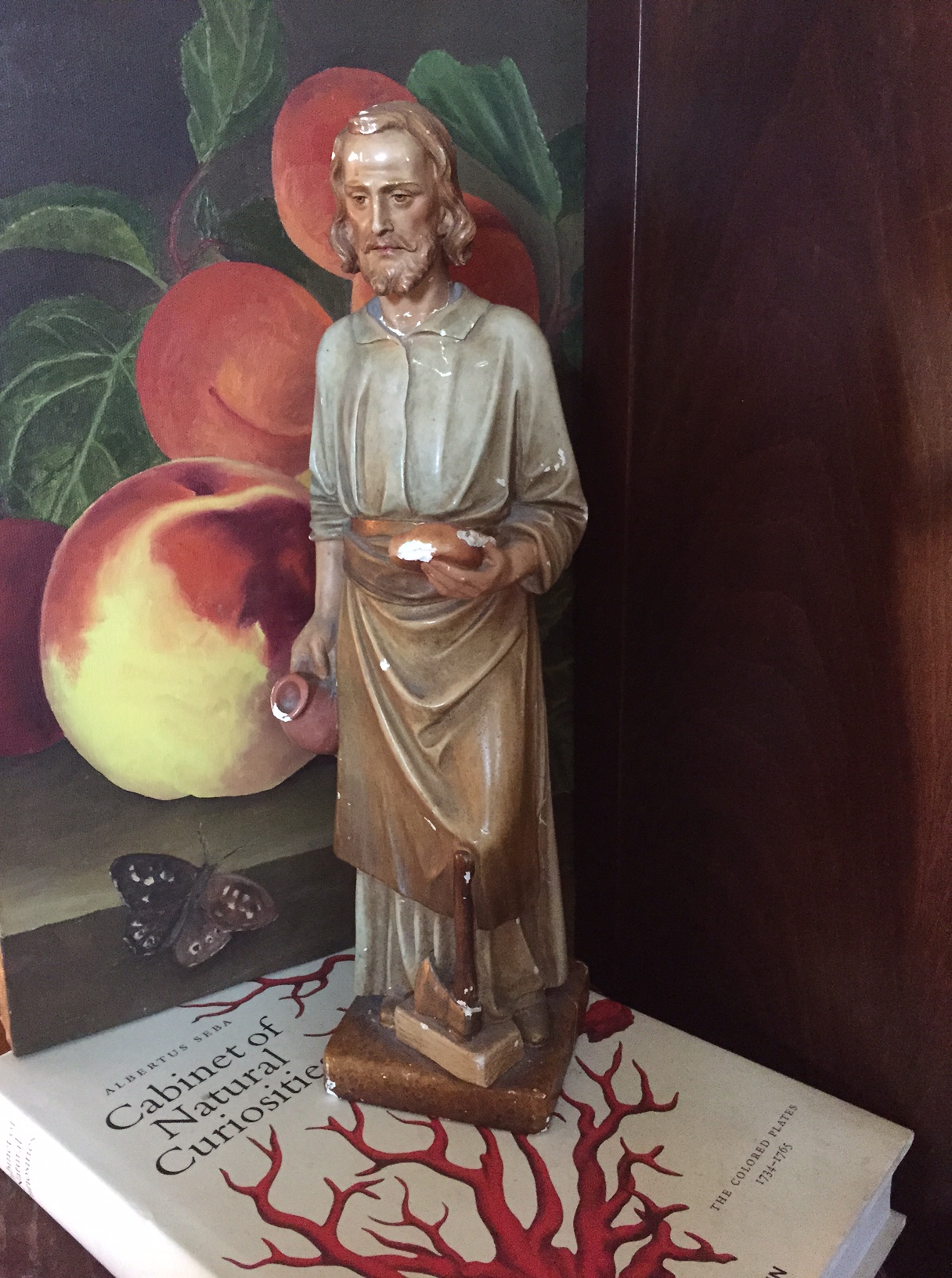
I also enjoy the advantage of having a grandson, who is three years old. No one understands fun like a three-year-old. He lives in a world of magic, where a large box only looks like a cardboard box; it is actually a rocket ship. His dad put stick-on lights inside because every rocket ship has to have electronics. On a walk to the park on a recent visit, he tugged at his Nana’s sleeve until Ann followed him around the corner to see his secret knot-hole (shades of To Kill a Mockingbird), which he pointed to and said, “Owl.” It was a double knot-hole and really did look like an owl. On his last stay with us, I pushed him around the circle from our living room to our dining room to our kitchen and through a hall back to the living room in a plastic car just his size. Every time we got to the living room, he waved at a two-foot high statue of St. Joseph that Ann inherited, and said, “Hi.” Each time, he was very happy to see his old friend. If you have young children or grandchildren, you have your own examples to supply here. Write them down somewhere so they aren’t lost.

IMG_1627


I’ve written elsewhere that I believe time is not linear, but is layered, and below my 64 years are layers leading back to three. I believe I can still access most of them. I am three again every time I pick out a musical birthday card for our grandson that blares “Funky Town,” or “Shout!” when he opens it. Even if you don’t have a grandson, you can remember when you zoomed around the house wearing a cape, when you made a wire hanger into a basketball hoop over a door and tossed sockballs at it, or when you thought it was the greatest fun to build a fort on a rainy day out of cushions, pillows, and blankets draped over coffee tables, so you could safely lob sockballs at your enemy brother. We lost a lot of socks in our family.


My memory is not limited to the world of our grandson. Twenty-five years ago, our daughter had a dress-up box of princess gear, doctor kits, Viking helmets, magic wands, a boa or two, and ballerina skirts. Her theatrical presentations were epic. She saved entire worlds. Our son favored action games, usually involved in jumping off things, a tendency that gave us some worry when he took up skateboarding. I thought he had some kind of injury-wish until I took him for the first time to a skate park, and saw that it was actually a team sport where any successful trick, even something basic by a beginner, was cheered by all other skaters, as if he just dunked a basketball over Shaquille O’Neill. That’s when I understood what was really going on. It was team fun.


Fast-forward to NOW. I read about an elderly man whose son bought him a self-propelled lawn mower with a grass catcher because he felt sorry for his father who would spend hours raking the clippings of their large lawn every summer week. On his next trip, the son was sad to see the new lawnmower had been used, but without the grass catcher that would save his father so much effort.


“I have a confession to make,” his father told him. “You know I’ve always been a history buff. Every time I cut the grass, I rake the clippings to re-enact some famous battle. Today I did the decisive Battle of Yorktown. Cutting the grass no longer is work, you see. It’s -”


“-fun,” his son said. “Now I get it.”


“It’s like doing a crossword puzzle,” his dad said. “I re-live what I know. It feels good.”


One of the things I’ve learned is that fun does not depend on the activity; it depends on the attitude of the person. I know it’s hard to believe, but there are some people in the world who think that sitting in a rowboat for four hours watching a little red and white bobber go under or not go under to catch a scaly, finny critter is boring. It’s not the activity, which is actually wonderful fun; it’s the person. I’ve even heard that some people would not enjoy putting on waders to slog upstream and cast tiny, feathered hooks at trout, usually unseen, and there isn’t even a little red and white bobber to watch. It’s all done by “feel.” Who wouldn’t enjoy that? It makes me wonder what’s wrong with some people.


I have a friend who is thrilled by spotting birds through binoculars; another who loves searching the internet for re-manufactured parts for a mint MG convertible which sits in his garage and is driven twice a year on sunny, summer days before the township rocks, tars, and paints lines on streets to get ready for the opening of school. There is an army of people who hit golf balls at a tiny hole in the ground, and they feel good, not if they get the ball in the hole in the ground, but if they can do it in fewer attempts than the guy who designed the minefield they play on. I have friends who think it is fun (read “chemically high”) to run when no one is chasing them. Then they put oval stickers on their cars that don’t even have words, just “26.2.”   My favorite was a beat-up car with a rather seedy-looking, unshaven smoker inside with the sticker “00.0” on his bumper. Even doing nothing can be fun.


I’ve heard there are people who have made a game out of plastic bag hunting and earn bonus points in their competition by retrieving bags from the tops of trees, barbed-wire fences, creek bottoms, and yards with dogs. I hear they use extension poles, rappelling lines, casting rods, and even drones with hooks. I can’t say that any of these people are my friends, but I’ve heard they’re out there. Inspired by them, I have tried to make an enjoyable game out of hunting dust bunnies under beds and dressers, but have not succeeded. I need a casting rod or dart gun of some kind, so I can say, “Take THAT, you little furry rascal!”


We make fun. When I proposed to my wife long ago, it was in a beautiful wooded spot, and her answer was punctuated by a nearby woodpecker, knocking away on wood for good luck. More than three decades later, whenever either of us hears a woodpecker, we text the other. “Good luck for us.” If we’re together, we smile and hold hands again. Now that’s fun.


If you’re not having fun, you’re not creating it. Nothing is more fun than the act of creation – or re-creation, for that matter. Writing this is fun, even if no one reads it. If you study a piece of music or memorize a poem, it is yours forever, something you can re-create whenever you want. That’s why I used to memorize one line per day with my students and repeat all the ones we owned on the first day of every month.


“Whan that Aprille with his shoures soote….” – Chaucer


“How do I love thee; let me count the ways….” – Elizabeth Barrett Browning


“Let me not to the marriage of true minds admit impediment….” – Will Shakespeare


“When you are old and gray and full of sleep and nodding by the fire….” – W,B. Yeats


“Tree at my window, window tree….” – Robert Frost


“Out of the night that covers me, black as the pit from pole to pole….”

– William Ernest Henley


I have friends out there who can still recite all of these lines and the dozens that follow. Today, they smile when they do it and get a shot of some brain chemical or other.


I think it best to conclude this important blog with the best four-word philosophy I’ve seen on the subject of fun. It’s from a bumper sticker on a dirty old car on the way to a coffee shop where I enjoyed writing this. You’ll get the idea.


IMG_1585


On Procrastination

Hibernal cover

 My last literary suspense novel is now available through Amazon for $4.61 paperback or $2.99 for Kindle download. 


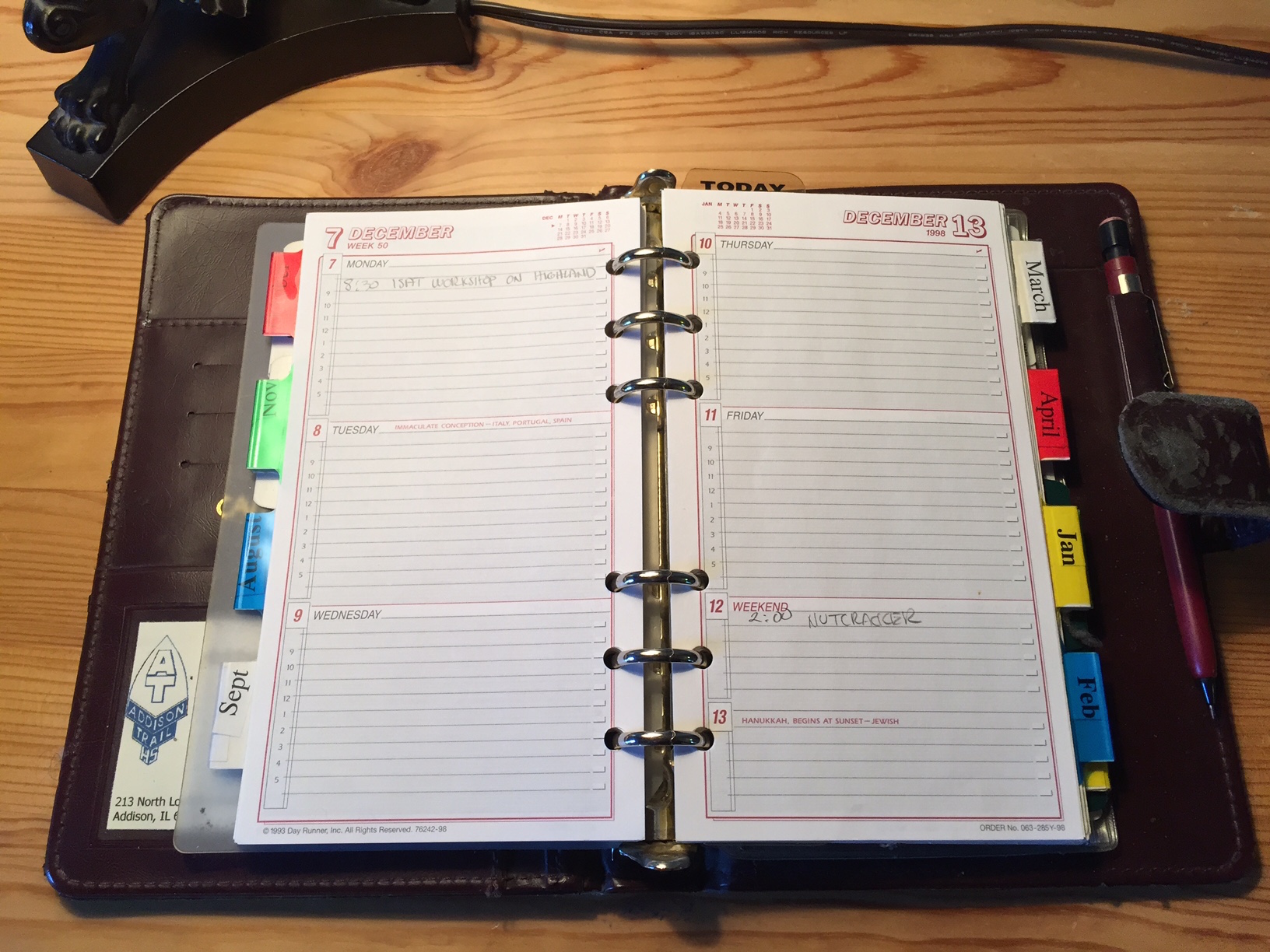
When I was teaching high school, I realized eventually (I say “eventually” because I am a slow learner and I think slow learners make the best teachers – not really, but it’s what I told myself) – that one of a teacher’s best tools was a Dayrunner. For those of you under 60, a Dayrunner was a calendar book, a daily planner with sections for birthdays, notes, phone numbers and addresses, and they were usually bound in fake leather with a flap that snapped. Each daily page was sectioned in 15 minute intervals, which was about ten minutes beyond my attention and mid-term memory span. Today your mobile phone and calendar app take its place, and if you’re sentimental about having a Dayrunner, you can still get a case for your phone in fake leather with a flap and snap. I know this for certain.


IMG_1582


Since teachers make hundreds of decisions and plan, plan, plan, my Dayrunner was filled with things like: “See Joey about his paper. Sign out two class sets of To Kill a Mockingbird. Reserve the video player for Tuesday. Call Mrs. Jennings about her junior high spelling bee. Call Tech to see why my grading program won’t record attendance. Grade 100 essays.” You get the idea. One of the interesting things about most teachers is that they are eternal optimists, mostly because they think at the speed of light, and imagine that time is so elastic that they can grade 100 essays in only an hour and a half. Those papers will be so wonderfully written that all a teacher will need to do is put stars by insightful passages, circle one comma splice, slap on an “A,” and write, “Paulette, this is the best piece you’ve ever written.”

On bad days, a Dayrunner was a frustrating record of how things can go wrong. Once entries on other people’s Dayrunners come into play, and they start calling YOU at 10:15 as scheduled by them for help with THEIR problem, your morning schedule is pushed off till the afternoon and then the next day, and inevitably, the next week. Eventually, everything important gets done, but often that means the 100 essays are started at 10:00 P.M. on a Sunday night after everyone else had gone to bed. All teachers know what this is like, and it is why they celebrate snow days, not so they can put on cross-country skis to admire Nature, but to deal with the Dayrunner and do papers. A Dayrunner is sort of a Sword of Damocles hanging over a teacher’s head.

Teachers suffer a typical kind of procrastination. They don’t really procrastinate as a general rule; they procrastinate something they dread, like the enormity of 100 essays, for something else that must be done that is less distasteful, like planning a unit that will excite students and make them wonder about Rites of Passage, justice, and the importance of parental example, in other words, To Kill a Mockingbird.

It took me an entire career to learn how to use a Dayrunner effectively, and now no one uses one, so I’m asking you to transfer anything useful that you read here to your calendar app, sticky note, or – worst case scenario – inked on the palm of your hand if you’re a high school girl who had her phone taken away first period because you were cartoon-izing your teacher and her bad hair.

Anti-Procrastination Performance Strategy 1: DO NOT WRITE “GRADE 100 ESSAYS” ANYWHERE IN YOUR DAYRUNNER. Instead, write “Grade 5 essays” in your Dayrunner. I have regularly preached the rewards of reading Anne Lamott’s book on writing called Bird by Bird, the story of how her brother broke down at their family’s summer cabin when he had not started a report to get into a special program and needed it in two days. Anne’s father, to his credit, helped his son do one page on one bird, and then taught him a life lesson: That’s how anything gets done, a project, a book, an education, a life – bird by bird

Is cleaning your house a daunting task? Clean one room every weekday. Want to write a book? Write one page every weekday, and in a year, you’ll have a book, actually too much of a book and you’ll have to cut 75 pages. Is it too daunting to save a million dollars for retirement? (Admittedly, if you’re 60, it’s too late). The pros say the greatest advantage young workers have, which is more important than a lot of money, is time and compounding. How to do it? Put 100 bucks a month into a big, total-market investment like a no-load index fund, and have more put in automatically, so you don’t even know you had it. The next year, put 150 bucks away. If you don’t have an actual career, put 10% of whatever you DO have away until you actually find a career that will pay you more than a hundred bucks a month.

Do you want to build a successful marriage? Do something little for your wife – unasked – first thing every morning (coffee in bed? a shoulder massage?). It’s better than money in the bank. You get the idea. Procrastination is often a result of feeling daunted – the job is too big; there’s not enough time; there isn’t $100,000 to invest, I have over 100 essays to grade. The solution is to forget about the end result, and just take the smallest first step possible.

Last month I shocked a Schwab account guy when I told him I wanted to open a Wilshire 5000 total market investment with 200 bucks a month automatic deposit, using the advantages of time and dollar cost averaging, and he said, “But you’re retired now. You should be taking money OUT of an account.” I told him, “You don’t understand. We’re getting by okay. This investment is for 20 years from now when we will need assisted living care. It’s money I won’t even remember I have. I will put more in by automatic transfer, a little more each year, and my wife or my kids will take it out when I can’t remember my name.” I love small steps because I can do them.

A.P.P.S. 2: DO NOT SCHEDULE EVERY MINUTE OF EVERY DAY. Teachers, especially, are too optimistic about how little time any one task may take. If you are semi-retired like me, I find it works if I limit myself to two things I want to get done in the morning, three things in the afternoon, and two at night. If you’re working full-time, it would only work to put one thing on your list for the morning, two in the afternoon, and one in the evening. If you’re taking your grandson to a water park, as I’m doing today to counter a month of sub-freezing temperatures, all Dayrunner plans are off. Anything else that gets done is just a bonus.

A.P.P.S. 3: PLAN REWARDS AND NEVER, EVER BEAT UP ON YOURSELF FOR A DISTRACTED DAY. We’re all kids at heart. Earned rewards are always more effective than punishments. M and M’s are great for grading papers. Sometimes I tell myself, “If I just finish cleaning the bathroom I’ll reward myself with Downton Abbey,” but for me chocolate works better than anything else to get myself to take that first step.

Sometimes the best thing I can do after a distracted day is to tell myself, “Well, that didn’t go so well.” It’s far better than telling myself, “I’m so stupid, so lazy, so …” There’s a big difference between noting the reality that something didn’t go well and telling yourself you are bad, crazy or worse. Shame is evil.

A.P.P.S. 4: As I’ve reported often, I learn a lot from reading. One of my recent adventures is a very useful book by Charles Duhigg called The Power of Habit. I highly recommend this book. “Power” is the right word in his title. What I have found is that it is possible to take a little thing, make it a habit, and then it no longer needs to be on your Dayrunner list. For me, it is now automatic to get up, stretch for 20 minutes, and then get on our treadmill at a good pace while watching TED talks or some documentary on my iPad for half an hour. I don’t procrastinate because I don’t decide to do it or not do it. I do it almost without thinking, and then, psychologically for me, my Dayrunner morning actually begins after the treadmill. If something interferes, if I am sick or away for a while, it takes me a week or two to re-establish the habit, but that’s not too bad. When I’ve been camping or visiting relatives for a while, often as long as a week, I actually look forward to the feeling of getting back to a routine and some habits that I feel good about. It’s probably chemical, something in my brain. Dopamine, Oxytocin, Serotonin, or Endorphins, one or more of those. If I get a daily D.O.S.E., I’m good for the day. Magically, they come from stretching and walking on a treadmill. Go figure.

Anyway, A.P.P.S. 4 is simply: MAKE A GOOD THING IN YOUR LIFE A HABIT.

A.P.P.S. 5: MEDITATE. I have found that meditation is a game-changer. Procrastination often appears in my head as a clash of bumper cars or the experience being in a room with three TV’s on different channels and two stereos on at full blast at the same time. T.M.I. or too much everything, including worries, a Dayrunner list, next week’s trip, something stupid someone said to me, something stupid I said to someone else, where are my keys, phone, wallet, glasses, or FitBit? I can tell when this bumper car experience is about to happen when I go downstairs to set up a recording of a Turner Classic Movie and don’t even get to the TV because I’m sidetracked by a dirty T-shirt that somehow launched itself to the floor, then a coffee mug perched precariously on the edge of a counter, a coffee pot that is empty but still on, a phone left off its charger that is now blinking at me, the beeping of a finished dryer cycle, a window left slightly open and it might rain – I’m not sure, so I’d better check my weather app – a hiking shoe left in the doorway and where is its mate, and finally why did I come downstairs? It had something to do with the TV, I think. You get the picture.


I don’t think it matters how a person meditates. In the Middle Ages, the monks called in Contemplative Prayer. Sometimes I count breaths and just focus on slowing down. Sometimes I put on headphones and listen to sounds of nature or soothing music. Sometimes I name all the people in my life, beginning with Ann and radiating out as far as I can go and simply bless them. Sometimes I go on an imagined happy journey to a campsite or trout stream. Sometimes I pretend to fly and go on wonderful flights through clouds and over meadows and mountains. (This happens after watching The Sound of Music.) Sometimes I have a conversation with God and tell my Beloved Spirit how I’m feeling, and ask questions and listen. Sometimes I pray a rosary, soon soothed by my own droning repetition as I finger a bead and name a person I intend to bless with that bead. I don’t know if it does anything for them, but it does wonders for me. Sometimes I reach the point where I’m just staring at a blank wall, or maybe I’ll stare at one of Ann’s landscapes, not thinking of much of anything until a brilliant idea comes to me from the depths, or a stupid idea, or no idea at all. It doesn’t matter. I always come out of the trance better off than when I went in. The most important things happen in silence.

Maud painting 4b


From the trance, from the place where the bumper cars and the noise of competing TV’s in my head have shut down, I find I can actually focus, and with no competing voice, I can write a blog I was thinking about or maybe one I was not thinking about. Sometimes after meditation, a blog writes itself.

The 6 Mistakes We Keep Making through the Centuries

Following a Trail

(Alert: this is probably one of the more important things I’ve written.)

It’s fun when you start on one journey in reading, and that path leads to unexpected places. That’s what happened last week while I was reading a book by Mark Nepo called Finding Inner Courage. In passing, he mentioned a quotation of Cicero, usually tagged, “Six mistakes mankind keeps making century after century.” It resonated with me, and I thought it deserved to be resurrected and examined more than just in passing.

Unknown-1


Marcus Tullius Cicero was born in 106 B.C.E., and was killed by forces in league with Mark Antony in 43 B.C.E., having been named an enemy of the State for writing diatribes against the Second Triumverate in favor of a return to a republic. He was a politician, but his most lasting reputation was that of an orator who affected writers after him for hundreds of years, most notably Petrarch. Others who trod his path were Hume, Locke, Montesque, and probably Thomas Jefferson. One historian wrote that the Renaissance was actually a revival of Cicero, and through him, classical antiquity. We could certainly use him today.

Our first recurring mistake according to Cicero: Believing that personal gain is made by crushing others.

The backstory to this error is the pie theory – if you get a bigger piece of pie, mine will be smaller. The error in this picture is its assumption that the pie doesn’t get bigger, that a Gross National Product never increases, that production doesn’t improve, that new products aren’t developed and greater efficiency never happens. In short, this mistake assumes there is never enough of anything – food, capital, knowledge, stuff. Even with recessions every 25 years or so, data and Warren Buffet contradict this view. Ten years ago we suffered through one of our worst recessions ever, but now the market is up to over 18,000, unemployment is down, and we’re producing more of everything from cars to cell phones. We’re almost back to where we were, and in some ways, we’re better off than then.

There is a corollary mistake, it seems to me. I don’t care how many assets the top 1% of our wealthy accumulate. Each one can have ten mansions and 43 Rolls Royces for all I care. What does bother me are two related things. When they use their money and its power through governments to crush or take advantage of others, I have a problem. Don’t tell me it isn’t happening. It doesn’t bother me if people rise to the top on a level playing field, but that’s not what we have.

The second thing is that all humans, I truly believe, deserve a minimum of safety, housing, food, and health care. We can afford that and don’t need to take away anyone’s mansion. We can’t accept starvation and needless death, especially of innocent children. How we treat our weakest, our infirm, our mentally challenged, and our veterans suffering from PTSD for our sake, is a greater test of who we are than how much affluence is evident in our society. I want some enlightened capitalism. For example, I saw an article in a local Madison paper last week with the headline: More Than Minimum. It noted that one of the independently-owned Culver’s fast food restaurants in Madison paid workers four to eight dollars over the minimum wage per hour, included health care, dental insurance, two weeks of vacation and a contribution to a 401 K account. The owner, Susan Bulgrin, said it was worth it to keep employees working together in an experienced crew rather than re-training temps every two weeks. Besides, she said “It was just the right thing to do.” I don’t eat much fast food, but the next time I do, I know where I’m going. Bulgrin has it right. Hers is now the top performing Culver’s in Wisconsin. It’s on Todd Drive, just off the Beltline near Park Street and Badger Road in Madison.


Seattle understood the same thing when they figured out if they required a higher minimum wage, those workers would spend more money in the community, and it would help everyone in the long run. The pie grows bigger, including a bigger piece for restaurant owners. Pay workers less and an owner might make more money in the short run, perhaps more than he can spend in the community, but the pie grows smaller and more stores will close, including eventually, that owner’s store. Detroit is a good example. If executives keep their high-paying jobs even in mis-managed companies with bad design decisions based on short-term profit, while the workers’ pay is reduced or their jobs cut, the community will fail.


Our second recurring mistake according to Cicero: Worrying about things that cannot be changed or corrected. This worry does not include the first recurring mistake. We don’t need to crush others. There really isn’t that much that fits into this category. There are some health issues, stage 4 cancer for example, that cannot be immediately be corrected. In the long term, I believe everything can be changed. We’ve already found treatments for cancer that add years, if not a lifetime, to diseases that were short-term death sentences 50 years ago. Do you know anyone with polio? Me neither. Everything else can be corrected or changed. (More on that next time). Even when our education system is under attack, is it better than the one-room schoolhouse of two generations ago? Yes. Is it better than the abuse I and my classmates suffered at the hands of a damaged nun in first grade? Yes. We can start by avoiding another fallacy – speaking of education in the U.S. as if it is one terrible monolithic institution. We have great schools and we have terrible schools. Most of the terrible ones are in ghettos or economically depressed areas. We should ignore the test scores, which are mis-interpreted at best and useless at worst. Here’s a better place to start – look at a recent TED talk about new and more human ways to run a business or a school.


http://www.ted.com/talks/ricardo_semler_radical_wisdom_for_a_company_a_school_a_life.html??utm_medium=social&source=email&utm_source=email&utm_campaign=ios-share

Cicero’s advice here makes much more sense on the personal level. I can’t change the people around me beyond requesting something irksome or offensive be stopped. They may not, and then I may choose to leave. There are things we can change. That’s the basis of the “Serenity Prayer” of AA penned by Reinhold Niebuhr and his daughter –

“God, Give us the grace to accept with serenity

the things that cannot be changed, Courage

to change the things which should be changed,

And the wisdom to distinguish the one from the other.”


This leads me to a subject of another blog at a later time, the fallacy of the “all or nothing” attitude. The short version is that I don’t believe we can solve most of our problems today. What we can do is make things better; keep making them better over the span of months and years, and then the problems go away. It’s the idea for most things we face. Infrastructure – fix one bridge and road at a time. Schools – improve one at a time. Healthcare, hospitals, dangerous mines, unwanted pregnancies, terrorist plots, unsafe neighborhoods? The only way they can be improved (and probably perfectly fixed) is one at a time. It’s the central idea of another thread, a book by Anne Lamott on how to be successful at writing a book on birds (or anything) by writing bird by bird.

The point of what Cicero said is the futility of worry about things we can’t change. We worry about society, politics, children, traffic, and the weather. One irony here is that some of the people I know who worry the most (or are angry – and anger is worry in action) are very religious people. You’d think their faith would give them reassurance that a higher power is in control, but that doesn’t seem to be happening for them. Deep spirituality matters a lot, but adherence to any one particular religious institution – not so much. We all ought to carry a card that we’d pass on to anyone we meet. It would read: I am a human being with spiritual traits. I am currently on Earth – just along for the ride. It’s an interesting vehicle – this little blue planet. I pick up my own trash. Tell me your story. In The Hitchhiker’s Guide to the Universe, it is recommended that we all travel with a towel and don’t panic. I agree.

I also believe and will soon write about the idea that if something is true, its complement is also true. Cicero says this in his next major human mistake: Insisting that a thing is impossible because we cannot accomplish it. History is full of examples of this fallacy.

If you are the politician, engineer, governor, or county road commissioner who believes he can fix every road and bridge in his district – go for it. When I look around, I don’t see it happening. We have had some major surprises, though. People do the seemingly impossible. Ending polio. Sending astronauts to the moon. Dental implants. 3D printers. Smartphones. Solar-powered buildings. Cars that warn of dangers and will soon drive themselves. Sometimes I think the greatest impetus to achieving something remarkable is being told it couldn’t be done. So I’m saying it. I dare anyone out there to prove me wrong. Ha. A cure for pancreatic cancer? Let’s see it. Cicero says you can do it, even though he couldn’t.

Even geniuses could be surprised. If you told Leonardo da Vinci how much a jumbo jet weighed and then said it was about to fly, he would not believe you. Einstein had a hard time believing that over 60% of the energy in the cosmos was in the form of “dark matter” that could not be seen and may perhaps exist only in another dimension that we could not study. He understood the math, but not the enigma. Mere milkmaids cured smallpox, although Edward Jenner got the credit. The “un-doable” is a long list: pyramids, heart surgery, detached retina surgery, memorizing the Bible, Fitbits, GPS devices that can find small trout streams in the middle of Wisconsin coulee country, bionic replacement parts, and even this “olde” iPad and Bluetooth keyboard on which I blog. If I write this blog again a year from now, who knows what could be added to the list in that short time. Cicero is right – we advance technologically and keep making the same six philosophical mistakes over and over again.


IMG_1558 2


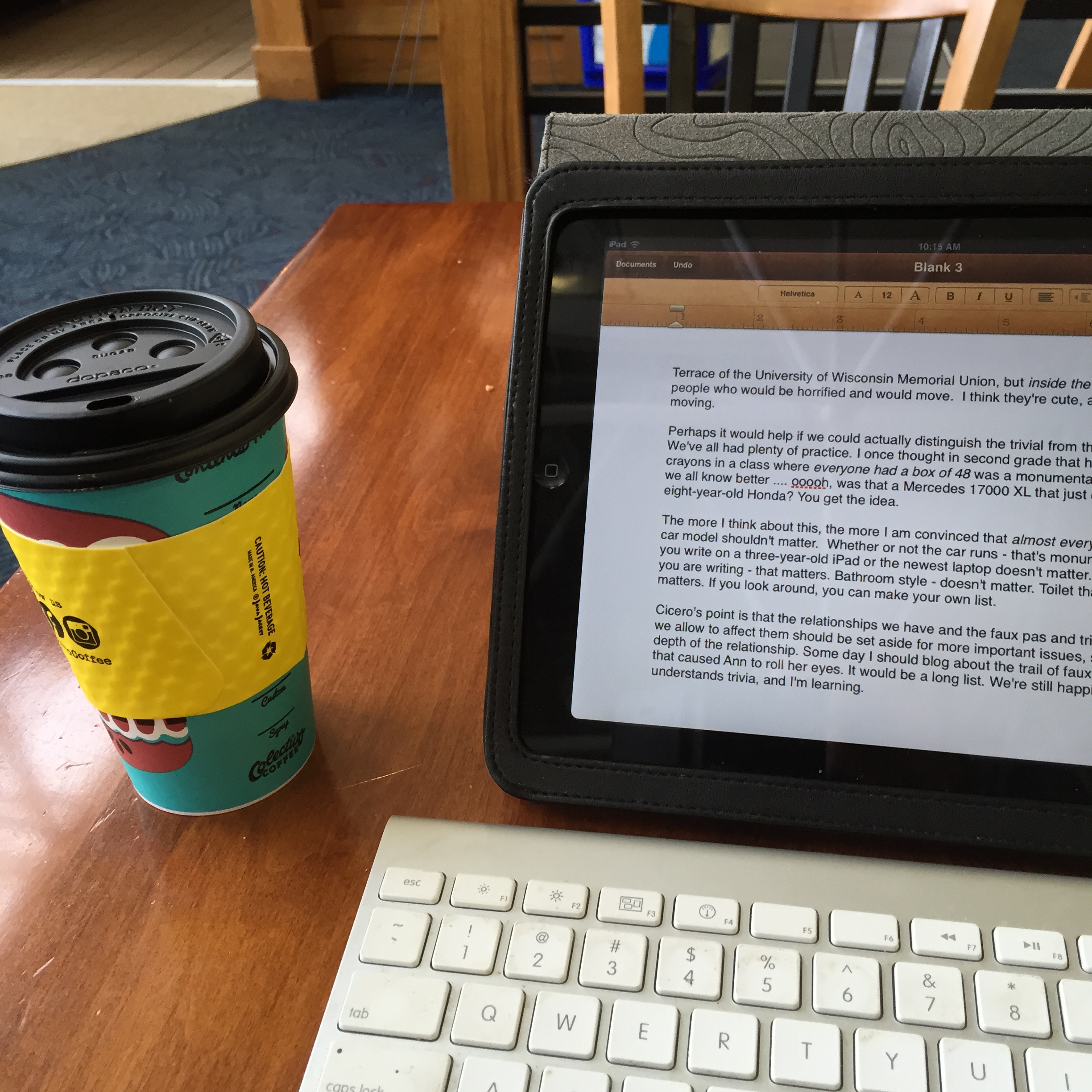
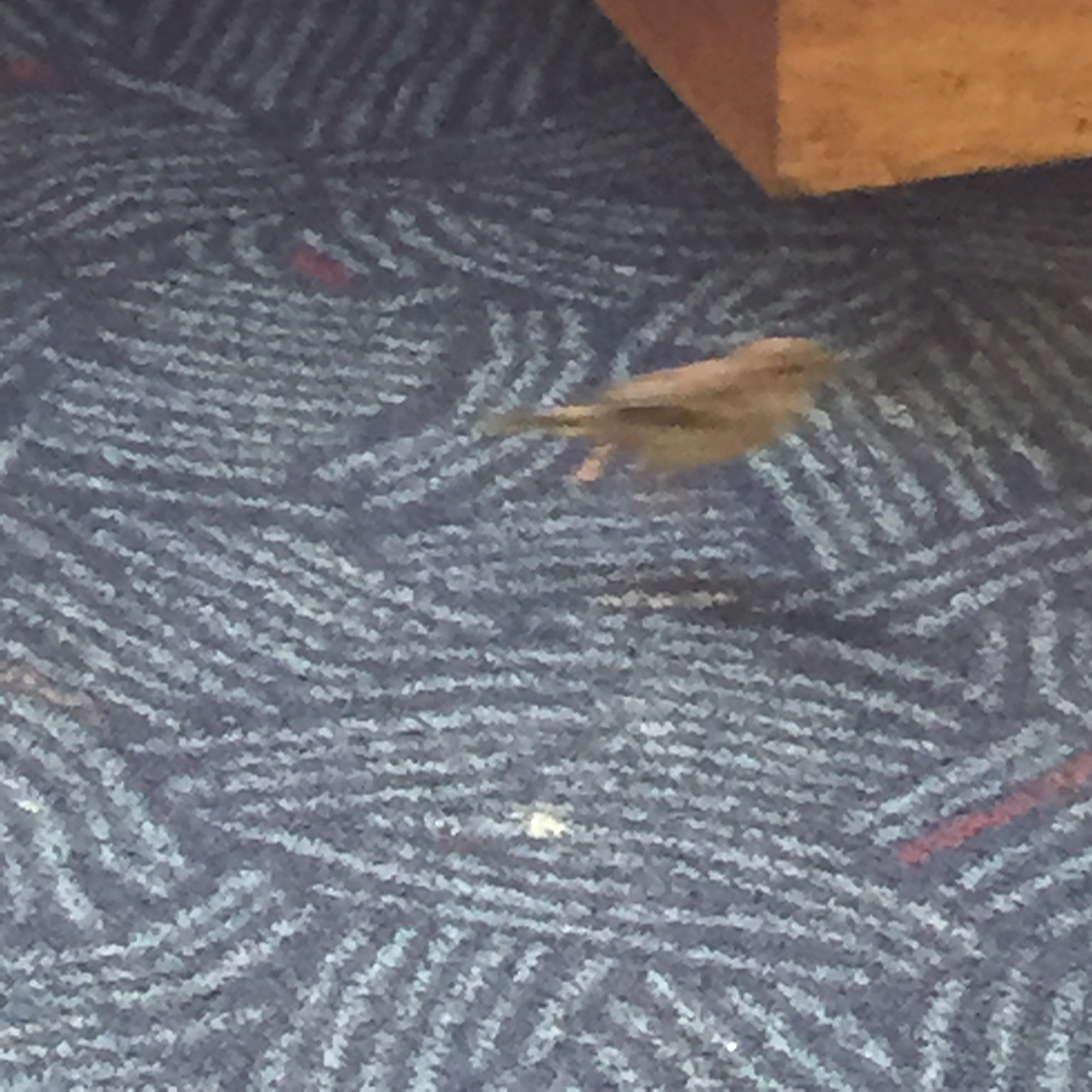
Mistake number 4: Refusing to set aside trivial preferences. We all have experienced family feuds, perhaps not the deadly ones between families, but the ones inside a family – Aunt Tillie won’t be in the same room with Uncle Marco because he made some disparaging, not-funny joke about her potato salad in 1987. Okay here’s one… I’m writing this inside the terminal of the Milwaukee airport (that’s another story) at a table next to a wonderful Colectivo Coffee lounge, and three sparrows just hopped by on the carpeting next to me looking for crumbs from my table. I’m used to this at the Terrace of the University of Wisconsin Memorial Union, but inside the terminal? I know people who would be horrified and would move. I think they’re cute, and I don’t plan on moving. Here’s one of my friends on the carpeting next to me.


IMG_1571


Perhaps it would help if we could actually distinguish the trivial from the monumental. We’ve all had plenty of practice. I once thought in second grade that having a box of 24 crayons in a class where everyone had a box of 48 was a monumental disaster. Now we all know better …. ooooh, was that a Mercedes 17000 XL that just drove by my eight-year-old Honda? You get the idea.

The more I think about this, the more I am convinced that almost everything is trivial. A car model shouldn’t matter. Whether or not the car runs – that’s at least important. If you live downtown in a city with good public transportation, a car may not matter at all. Whether you write on a three-year-old iPad or the newest laptop doesn’t matter. Whether or not you are writing – that matters. Bathroom style – doesn’t matter. Toilet that flushes – that matters. If you look around, you can make your own list.

Cicero’s point is that the relationships we have and the faux pas and trivial events that we allow to affect them should be set aside for more important issues, such as the depth of the relationship. Some day I should blog about the trail of faux pax I have made that caused Ann to roll her eyes. It would be a long list. We’re still happily married. She understands trivia, and I’m learning.

Human Mistake Number 5 – Neglecting development and refinement of the mind. Face it, we live inside our minds, and our bodies are smaller than our minds. I’ve listened to some people whose minds seem to be unweeded gardens. I don’t listen to them for long. I’ve listened to other people whose minds seem to fill the room. Their positive energy, love of life, interest in people and ideas, knowledge of history, and wide experiences make it worthwhile to be with them – along for the ride on this little blue planet.

I’m working on developing myself and recommend it. During any given week, I’m reading some classic that has stood the test of time (currently Antony and Cleopatra), some non-fiction (currently Nepo’s Finding Inner Courage), daily Bible chapters and something else spiritual (currently re-reading Joel Goldsmith’s The Infinite Way), my hobby (currently Ernest Schweibert’s book on stream nymphs – um, of the insect variety), and something modern (currently Donna Leon’s mystery series set in Venice).

I quit watching the news on TV when I concluded it was mostly bad, mostly about incidents of violence, and according to recent studies – mostly untrue. I’m talking about a range of 45% to 83% untrue, depending on the network. I look at headlines online and avoid reading any articles that are negative, attacks on individuals, or sensational. I know next to nothing about current Hollywood and network stars, and I’m almost proud of it. Katy who? There are a few thoughtful writers I trust but do not always agree with. I will read almost anything by Malcolm Gladwell, David Brooks, Paul Krugman, Anne Lamott, John Nichols, Maureen Dowd, Daniel Pink, or Ray Kurzweil. I watch TED talks online while I walk on a treadmill every weekday. I realized that I was terrible at reading music, so I bought a series of instructional DVD’s on learning the piano, so now I’m studying it, not just playing it.


I challenge you to do likewise, whatever developing yourself means to you. I recommend avoiding anything on TV, the net, or papers that induces fear in you, or worse – anger. Anger is poison. The Hunger Games, Game of War, and 50 Shades of Grey are infections. Read Cicero instead. Play chess. Play with your kids and grandkids. It’s amazing what you can learn from them.


Cicero’s Last Continuing Mistake – and Probably the Most Important – Attempting to convince others to believe and live as we do.


I recently read an eye-opening book by Parker Palmer called Healing the Heart of America. He cites studies in which people show a marked tendency to watch only programs that already fit their world political view, and when confronted with facts or events that contradict that view, they only become more set in that view and look for support elsewhere. Facts become meaningless if they do not support their view. This closed-mindedness is often coupled with a fruitless propensity to try to change everyone else’s point of view. I believe his studies are true. The implication for me is a resolve to avoid pointless arguments on politics, religion, or science, especially on Facebook. Instead, I only want to comment in the interest of truth with “That’s not true. Here’s a reliable source.” I may post something surprising without comment in the interest of truth, but even there, I’ve had to follow up with a modification or correction when I learned something additional. I’ve not had any total retractions that I can remember. I am shocked at how easily people repost the most outrageous, scandalous charges without looking anywhere to see if any of it was true. Then I realize there was a time when I was that guy. I don’t go there anymore. It’s like stepping into a tar pit. Tar pits are full of dead dinosaurs, so unable to understand anything different that they got stuck where they were and died. Don’t die in a tar pit. Go along for the ride with me on this little blue planet. Bring a towel and don’t panic. Oh, look, there’s a trout stream in a meadow. You don’t need to find a better universe next door; it’s right here. Let’s go.


Husbands, Listen to Your Wives

This is a blog about awareness, one of the steps along the path to Enlightenment, which I don’t understand, and it’s probably not a path anyway, and if you have to write or think about it, you don’t have it, just like trying to explain jazz to someone who’s not a musician. You get the idea. Anyway, I think awareness must eventually come from lessons learned. Sometimes I think the concept of reincarnation was invented to encourage people like me who learn in fits and starts. A “start” is equivalent to one year, and a “fit” takes 50 years – minimum.


A few days ago, I went to Whole Foods, a fine organic local market, which our daughter jokingly refers to as “Whole Paycheck,” only it’s not really a joke, and I got behind a woman about my age who was using her shorty cart like a walker, and she was in the middle of the doorway to pick up and examine a heart-shaped box of holiday chocolates or mints or something which she had no intention of buying. I started singing “Dum, de, dum,” jazz style in frustration. I probably should have prayed or done some kind of mini-meditation – slow breath, one, two, focus, ahh, inner peace, yes, I am so aware of what’s around me and – Geez, is that woman going to look at those chocolates all morning? I need some lettuce and a pomegranate for my wife – come on, Lady. Then I realized this was just another classic demonstration of the differences between men and women. Shopping to her means gathering information, picking up and examining everything that might be of remote interest, today or in five years – before choosing things on her list and a few other things of some inexplicable appeal. I am the hunter – go to the produce section to get organic lettuce, onions, and a pomegranate for my wife and get on with my life, which this week includes a lot of college basketball and looking at where future football stars will go to college after national signing day. Come on, Lady.

Stay with me; this is still a blog about awareness. After I got the lettuce and pomegranate, I dodged two tackles, juked a linebacker, spun through the clutches of a safety, and made it to the goal line. I spiked the lettuce, some onions, a pomegranate, and tub of organic cottage cheese on the rolling counter to check out. A young woman with a ring in her nose (apparently a requirement for working at Whole Foods in Madison) started to check my things, and then paused.

“Um, I’m sorry, sir, but one of these onions you chose has some mush or rot or something on the bottom. Do you want to get another one?”

Bam. Awareness. Wow, she noticed that rot through the plastic bag I put them in. Why didn’t I check out all of the onions I picked up like the lady in front of me?

“No,” I said, “Just give me the other two.”

“Okay.” She started over, but another pause came.

“I’m sorry,” she said with great patience, almost pity for me, “This cottage cheese has been opened by someone. Look. Both the lid and the foil seal have been opened. Who knows how long ago. Do you want to get another one?”

“Yes,” I said and rushed off through more linebackers and safeties to get a sealed tub, for once acting like careful woman more aware than I. Lesson learned. Hunters have no business in grocery stores. They belong in woods and trout streams unless they can learn to listen and be a little more observant.

Now, about listening to one’s wife….

Because my wife spent several weeks on the couch with her foot up on pillows after some surgery to remove a bone spur from her foot, I’ve been running more errands than usual. I’ve learned to take two lists, one list of the things we need, and one list of womanly instructions. Here’s what they look like, side by side.

“Freezer bags – Don’t get the cheap ones. They have only one seal and are so thin they rip easily. Because the brand-named ones are more expensive, they’re at eye-level before you get to paper goods.

Lemons – The “Dirty Dozen” list says these need to be organic.

Onions – The “Dirty Dozen” list says these don’t need to be organic. Get the sweet ones, not the red or or little spuddy ones. Vidalias aren’t worth it, because most of those labeled as Vidalia onions aren’t really from Vidalia. I read all about it.

Apples – These must be organic, preferably Honeycrisp, but not if they’re $3.99 a pound. Gala apples are okay if they’re $2.99 a pound. They’re on the other side of the display bins towards the broccoli. Use your own judgment. (Men: this is a trap. Do not use your own judgment when buying apples. Buy the Honeycrisp and tell her they were on sale for $2.99 a pound. Then rip up or lose the receipt. She’ll excuse your being a man and losing the receipt, but not buying Honeycrisp apples at $3.99 a pound, even though that’s what she really wants and paying an extra $.25 an apple is no big deal to a man.)

Rotisserie chicken – Because it’s Tuesday, they’re $2.00 off. There is grease on the bottom, so put the plastic container inside a plastic bag that you can get at the end of the aisle near the frozen fish. Don’t spill the grease on anything else. Ask to have it bagged separately. I want to make soup broth out of the carcass.”

And so it goes. There is a place in a woman’s brain where she remembers stuff like this. That place in a man’s brain is filled with motor oil and WD-40.

In case any readers are women with brains like my wife, here’s what WD-40 looks like. It fixes everything that should move or pivot without squeaking. For everything that should not move, there is duct tape. Do not be fooled by the brand “Duck Tape,” which is marketed to fool women who don’t also know about WD-40 and men who are CEO’s and don’t know about either duct tape or WD-40.

IMG_1557


While the girl was checking out the onions and rotisserie chicken, I got a text from my wife, which read: When we re-packed the Christmas stuff in boxes, I noticed that many were popping open. We need more duct tape, not the mailing tape you used that ripped the boxes and then dried out.

Another lesson learned. Marry a woman who knows what duct tape is.

Shopping is one place where a woman’s expertise intersects with a man’s ignorance. A final case in point. Several months ago we bought a Wisconsin Badgers watch on sale as a Christmas present for our son, a UW grad. “It’s pretty big for a watch,” my wife said. “He likes watches, but his other ones are not that big. Save the receipt.” Fast forward to Christmas morning when I noticed the look on my son’s face when he opened the box with the watch. Later I went through a file of hundreds of receipts and could not find the one for the watch. The occasion prompted my reciting the three most important words in the English language….

“Right again, Ann.”

Men, listen to your wives when you’re shopping. However, it’s not all bad, being a man. I now have a Wisconsin Badgers watch, which I have convinced myself that I like a lot.

Things Are Getting Better

Things are Getting Better – and a Disclaimer

 In a blog dedicated to all things positive, optimistic, and humorous, it is time to catalogue what I mean by first noting that things ARE getting better, though not necessarily easier. This is especially true this week, because on December 9, 1979, smallpox was officially declared eradicated, and there have been no cases since then. I admit that what follows is a rather risky blog, but I still think it’s worth the effort. Many believe we’re not better off where convenience, fast “food,” processing speed, and expectations are the order of the day. Speed dating has become speed marriage. Books are written in weeks rather than years, and for many, the motto of the age is: “I want it all and I want it now.” I am not of that ilk, and when I have slipped and temporarily become a speeder of life or expected immediate remedies, it has not gone well for me. Stew, chili, spaghetti sauce, and life should be cooked long and slow. Almost anything worth doing is worth doing slowly. You can imagine.

My observations cover a lifetime, and it is only such distance in time that gives us a true panorama. Up close and immediate, one sees little – perhaps a tree, but no forest. I also admit and will include a sampling of the many tragedies we now face: violence in unlikely places, disease that may not be cured, and natural disasters.

Let’s begin with one great American love affair. I have a friend and long-time fishing buddy named Bob Olach, who long ago bought a burned-out hulk of a Volkswagen Beetle. Over the years, he took off every mechanical part and either reconditioned or replaced it. That included the engine, seats, suspension, door handles, and drive train. He re-did windows, gauges, the electrical system, tires, bumpers and only he knows what else. The body was restored and repainted red. It is a beautiful thing, a work of love, and probably more expensive than simply buying an original. He does not drive it in winter or in rain. It is wonderful because it is old, because it was made perfect over a long period of time, and because my friend made it a labor of love. I believe he made it better than the original.


Car 1


Bob is also a guy who greatly appreciates old things – friends, bamboo fly rods, wool trousers and waxed jackets. For full disclosure, I admit that I wrote an earlier entry simply about appreciating old things. I also believe (to quote Gwen in Hibernal), if something is true, so is its complement. I admire how my friend’s restored Volkswagen looks, and yet, when I drive anywhere, I appreciate the safety of seat belts and airbags, the efficiency of fuel injection, air conditioning, wipers that are not powered by the air pressure in the spare tire (which assumes that all storms are short), and a sound system that resonates rather than gasps at me. It has taken several generations, but the safety of warning systems and cameras, automatic traction control, and anti-lock brakes were worth the wait. As one who once drove an old panel truck down a slick hill and slid off the road on the way to class at St. Louis University after a 540-degree “turn,” I appreciate the advances. They may not make up for all bad teen-age driving, nor the effects of alcohol consumption, (well, not that I ever did that), but such safety features may come sooner rather than later.


If you are not convinced, look at the following chart, which shows a decrease in traffic deaths of over 12% per year for the last 20 years. Although even one traffic death is too many, this improvement in the percentage of fatalities per capita is worth appreciating. We are now at the same level as 1918 when cars were barely able to go 30 miles per hour, roads were worse, and there were so many fewer cars to get in each others’ way.


Chart


Also, as I’ve gotten older and my memory more faulty, I appreciate the aid of a GPS that can alert me to gas stations, my favorite trout streams in the middle of nowhere, and an approximate arrival time that more than once has saved my marriage. My wife may occasionally curse such an electronic device, but when she does, she is not angry at me, and the avatar known as Allison on our GPS never takes it personally. For one who has learned that the gas station or the left turn by the big oak tree that most certainly is just over the hill, only it is NOT just over the next hill, and it is not even on this same road, the reassurance of Allison is a kindness to be appreciated. Besides, I imagine that Allison – by her voice – is a sexy, slender, long-haired, dark-eyed – well, you can imagine the rest. The British version named Emily on our first GPS may have been even more irresistible, but her occasional un-American propriety in words such as “Take the off-romp,” or “Turn wrought on Smythe Bool-vahrd” led to several dangerous misunderstandings. I had to un-friend Emily. That’s a good thing because Allison is so much better at her job than Emily was.


So many things are getting better. When I was a kid in my Huckleberry Finn little town, even the best bike had only one gear and a coaster brake. We made it better by hanging plastic tassels off the end of our handlebars and clothes-pinning baseball cards to the frame so their flapping through the spokes made the bike sound like a Vespa. As good as those improvements were, they do not compare with the wonderful preponderance of multiple gears on most bikes today, and even more important, the nearly universal use of bike helmets, which have saved the brains of many reckless boys and saved the faces and brains of many beautiful girls. These wonderful improvements took place in only one generation.


Even those among us who may be described by my daughter as “digital immigrants,” rather than “digital natives,” must appreciate the improvements in technology. Who among you remembers the days of the typewriter, White-out, backspace corrections, and the ultimate frustration of typing a research paper the night before it was due and noticing that on page seven you forgot to leave room at the bottom for two footnotes required for your quotations (found by luck amid the stacks of books and quoted on 3 by 5 index cards), and would have to type the whole page over. Do you remember the first mobile bag phones that were the size of a shoe box and worked only in metropolitan areas at a charge of about a dollar a minute?


Just last week, while we were in Marietta, Georgia for a wedding during the first mid-November blast of an Arctic Vortex (yes, it’s now an official name, so I’ve capitalized it), I wondered how bad the snow was back in Madison, Wisconsin, and with just a few clicks on my phone and access to local traffic cameras at major intersections in real time, I could see that on University Avenue, just three blocks from my house, the streets were wet but clear and there was about an inch of snow on the curbs and grass.


Do you want to know what is new and what you can do with new technology? Go to one of my favorite websites – Appsgonefree – and see a listing of a dozen or so apps free to download that day and keep forever. Many are silly games, but I’ve also downloaded guitar tuners, emoji keyboards, a dozen games for toddlers, including a favorite Trainzdriver, meditation sounds, timers, bicycle navigation, storybooks, crossword puzzles, piano keyboards for an Ipad, photo editing apps, weather sources with radar, Dropbox to share and save files, a library search engine, a PdF reader, and foreign language games. Those apps were all free. My phone is so much smarter than I am.


The betterment of the world is not just in technology, though. Populations grow because more people are surviving and having children. Children are better educated than they have ever been. (Do not believe the current fad of testing by the for-profit bean-counters. No school or student can nor should be judged on the basis of a 59-question multiple choice test like the ACT. Look at what happened to the few colleges who took the ACT as its only entrance criteria, and then found they lost entire classes of high-scoring but unsuccessful students.) Your kids not only know different things than you; they know more. Just to start, they know how to use a DVR and streaming capabilities. Give me a choice to play any game, including Trivial Pursuit, with a young person with a smart phone as a partner or a education-baiting pundit with a smart phone, and I will choose the young person every time…. and I will win. They know how to find information – useful information – when they need it, while the typical over-40 is still fumbling with fat fingers to turn on Google and then mis-type vague questions.


What else is better? You now can choose to eat organically, instead of the typical “food product” of Velveeta (read “not cheese”), Tang, (read “not orange juice”). Now we even excellent craft beers almost anywhere in the country. Doctors today know more and are better trained than those of only a generation or two ago. Cataract surgery is now done in fifteen minutes to outpatients. Buildings are safer. Clothes are more comfortable. (Do any men still wear starched shirts or women – whalebone or metal-braced corsets?) Weather prediction is more accurate (okay, I’ll admit the difference may be marginal, but you can now check your own isobars and radar to make your own predictions).


The flu, which once killed millions, can now be mostly prevented with a yearly vaccination. Now I’m back to where I started.


It’s time to take a leap, or at least to make a meaningful observation. I quit watching most news programs because their mission of providing a “story” almost always means reporting bad news, some disaster, or violence. Almost always it is mere fear-mongering. Good news is not news. Here’s my observation, and it’s risky enough, but probably true enough that I’m going to “bold” it.


In recent times, with the exception of war, most disasters are limited in scope, not pandemic, and truly affect a relatively small number of people, while improvements have been large in scope and affect millions. Even more important, nearly all disasters are temporary, while advancements like seatbelts are permanent.


I’m not denying that a global economy effects almost everyone, but even the economic meltdown of eight years ago was temporary, and now jobless reports show we’re almost back the where we were, and the stock market has advanced far above what it was. There will be regular crashes, probably for every generation, just like there will probably be more wars, one per generation, but the slow general trend upward for 20 of the 25 years per generation has continued for a long time. Humans are resourceful enough to keep that going, even as we fight localized ebola, ISIS, hurricanes, and blizzards.


Be patient, keep solving local problems; ignore fear-mongering news, and ride the wave along with me. Put on your bicycle helmet. Carry a towel if you must. We’re going up.


On Being Late and an Indictment of Spring

I know that time is just a construct, a made up system of seconds, minutes, and moments (In Old English, a moment was officially 1.5 seconds, or the time allowed for a husband to tell his wife she looks beautiful in that wimple), but I really don’t like being late. I think it stems from the time when I was an awkward sophomore who missed the team bus for a basketball game and got there only by the kindness of parents of a GIRL in my class (Ewww!) who waited for me and drove me there.  It was a very long ride in which each moment was a minute and a half long, and after that, not a good game.


The issue of lateness is complicated by the number of young children you have so that your lateness grows geometrically by the number of toddlers you are trying to get ready. One child equals one half hour late. My parents had six children, and I don’t know how they got anywhere.


Over the years, I’ve learned something important. Lateness is not a problem; it is an opportunity.  A case in point….

photo 2-1

Plenty of time!

Friday night we had tickets with friends to a Madison Symphony Orchestra concert at the Overture Center with an entirely Beethoven program, including two piano concertos. We invited our friends to crock pot chili before the concert, and had such a good time that we left for the concert only twenty minutes before the start. Ordinarily we might have made it, but this time we crawled through traffic caused by two other events in or near the Overture Center, a lane closure, and construction.  By the time we reached the balcony seating, the doors were closed, and we were forced to stand and watch all four movements of Beethoven’s first symphony on a monitor in a lobby outside the hall. In my foolish younger days, I would have fussed and fumed, said something sarcastic to my wife, stressed out my friends, and made missing Beethoven’s first symphony an issue.  Such a reaction would have been bad for our friends, my wife, and me. We hurt ourselves and others far too often.


Instead, I listened to the music, watched the maestro on the monitor, and read the program notes. Ludwig’s first symphony was written while still under the strong influence and form taught to him and Mozart by their mentor, “Papa Haydn.” Now I am more interested in Haydn and I want to listen to Mozart’s early symphonies and compare them to Beethoven’s. We were admitted after the first symphony and got to enjoy both piano concertos with Yefim Bronfman as the pianist and later, Beethoven’s Prometheus. It is interesting that most often when we are on time, I don’t have time to read the program notes before the house lights dim and the Concertmaster walks onstage. How ironic it is that being very early or very late can both be advantageous.


I would like to apply this same lesson to the weather and the late arrival of spring after a nasty winter that began November first, sank to near zero temperatures every night with two snowfalls every week and no January thaw to give us a break. I cannot.  This winter makes me fuss and fume, say sarcastic things to my wife, grump at my friends, and generally wear my depression like a scratchy wool scarf around my own neck. Mother Nature is not Beethoven and her lateness is simply intolerable.  Besides, there are no program notes to read, and if spring doesn’t get here soon so I can get out on a trout stream, I may do something really radical like write a blog about the weather.  Last night I read a joke about God telling St. Peter that He thought it was a good idea to give Wisconsin amazingly beautiful lakes and streams, forests, rolling hills, fertile fields, and bounteous flora and fauna. St. Peter said, “Wouldn’t other parts of the world get jealous?” God answered, “Wait till you see the winters I give them.”

photo 2

Yes, the drifts are still three feet high.

Unfortunately, I have friends who can easily remind me of the Facebook postings I made last summer sitting on the Terrace at the Student Union looking over the sailboats and beautiful sunset on the lake and eating Babcock Hall ice cream. I can hear them mumbling that I’m getting my just deserts. (That was an accidental pun, so I’m not claiming any points.)


There is a point here. The weather is not about the weather. Being late to a concert is not about the concert, nor about being late. It is about – everything is about – how we react to whatever we experience. It reminds me of a Robert Frost poem I sometimes memorized with my classes…


Tree at my window, window tree,

My sash is lowered when night comes on;

But let there never be curtain drawn

Between you and me.


Vague dream-head lifted out of the ground,

And thing next most diffuse to cloud,

Not all your light tongues talking aloud

Could be profound.


But tree, I have seen you taken and tossed,

And if you have seen me when I slept,

You have seen me when I was taken and swept

And all but lost.


That day she put our heads together,

Fate had her imagination about her,

Your head so much concerned with outer,

Mine with inner, weather.


Yes, your head so much concerned with outer, mine with inner weather. There is truth there, the importance of our inner weather. We create our own low pressure, our own ice storms, our own lakeside sunsets with a scoop of Babcock Hall ice cream. Mine is butter pecan. You choose your own.