Fear of Flying and Why I Like It

Ann hates to fly.  I don’t mind it, except for the cramped seats where we travelers don’t just rub elbows, we exchange lint, and our auras become Venn diagrams. I really don’t mind it except for the ear popping on takeoffs and landings, and except for the instructions on how to use a seat belt, a seat cushion, and an oxygen mask. If anything really serious would happen, would any of those matter?  I don’t worry because flying is sort of like a Mexican standoff with fate. If the pilot really messes up and is going to kill us, then he’s going first.  Flying brings into focus for me the only use of math I can tolerate, the reassurance that thousands of flights take place every day and all the planes I see overhead are actually flying, and I’m safer in a plane than in a car, and I’m not afraid of driving, so why should I be afraid of flying? Besides both pilots up there are more experienced and better trained in their jobs than I am at driving a car. The math is on my side, for once.

When I get upset about flying, it’s usually about other things.  Two examples: A few years ago I flew with my brother to Corpus Christi (a rather ominous name if you’re afraid of flying) with a stopover in Denver. When the TSA agent checked my carry-on in St. Louis, she asked me to step aside for a moment, and I wondered if my brother had planted something in my luggage to get back at me for the time I broke his new arrows when I was ten, and he couldn’t shoot his bow.  The agent was staring at her X-ray screen, and said to me, “Please explain to me what that thing is. It looks mechanical or electronic.” I looked over her shoulder at the screen, and said, “That is a spinning reel – for fishing – I’m going to Corpus Christi to go fishing with my brother and my uncle.” She said, “It doesn’t look like a reel to me,” and in a moment five other agents crowded around her screen and they began to argue about its strange spidery shape, loose wire, and should they unpack my bag and see if the wires were connected, and I thought, “God, help me,” and then He did. An old guy who had worked for the TSA on the first Wright Brothers flight shuffled over and said, “That’s a spinning reel – for fishing – hm, it’s not the standard Garcia Mitchell 308; it’s probably a Shimano with a trigger bail and 200 yards of monofilament on it, so let him on the plane.” He was one smart guy, that old TSA agent.

Image

Here’s one my daughter experienced.  On a flight from St. Louis back to Boulder where she is attending grad school, she was also pulled aside by a TSA agent, probably the same one who pulled me aside years ago. “What is that?” the agent said, pointing to a long, dark roll in my daughter’s carryon. “That?” my daughter said.  “It’s a summer sausage that my uncle gave me (the same one who flew with me to Corpus Christi, so there’s a pattern here), actually a homemade venison sausage.  He hunts deer.”  “With a gun?” the agent asked.  “Yes, and a bow and arrow.”  “It looks like plastic explosives,” the agent said.  They unpacked my daughter’s bag, cut off a slice of her summer sausage, and put some kind of chemical on it to see if it contained any flammables, TNT, glycerin, or propellant.”  The test was negative. It seems like the TSA agent thought my brother might be hunting deer with plastic explosives, or if he owned a gun AND a bow and arrow, he could be one of those survivalist, bomb-shelter nuts out to blow up people, including his own niece.

These are true stories. I’m glad the TSA is being suspicious for our own safety, but someone should train them in fishing reels and summer sausage.  I mean, everyone should know about fishing reels and summer sausage. The only question here is: “Why doesn’t my brother ever get stopped?”  The next time I fly with him, I’m going to sneak a little bottle into his luggage of the gel we used in grade school to get back at our friends by putting some of it in a kid’s jock.  It was supposed to cure athlete’s foot and it stung like hell and it was called “Atomic Bomb.”  I wonder what that TSA agent in St. Louis would think when she pulled a one-and-one-half ounce plastic bottle out of my brother’s luggage that was labeled “Atomic Bomb.”  Even the shuffling, old TSA guy couldn’t save my brother, I think.  Not that I would really do it. Thinking of doing it makes me laugh enough so that I don’t have to go through with it.

This brings to mind another story which I believe is true because a Catholic priest told it to us during a sermon about ten years ago.  I forget the sermon, but I remember this story.  (Let that be a lesson to priests everywhere.) The priest was in line at O’Hare Field along with a lot of other frustrated holiday travelers. Behind him came some overweight, blustery guy in a suit who was cursing at everyone and everything.  He ignored the line, wheeled his overstuffed baggage right up to the front of the line and said to the agent, “I’m in the Admiral’s Club; here’s my ticket.  I’m checking this bag, and I want a boarding pass – now!”

She said, “I’m sorry, sir, but even Admirals have to get in line and take a turn.  It’s only fair.”  The big jerk argued with her, then cussed at her, wrote down her name so he could complain, and stared down the rest of us as if to say, “Don’t you all know who I am?”  The ticket agent was polite, no matter what foul things he said to her, but she would not budge and eventually he got in line.

In a few minutes the priest got his boarding pass, but since he had plenty of time, he went back to the agent after the line went down and after the big jerk went to the Admiral’s Club to drink some more.  “I’m going to write to the airline about how well you handled that insulting passenger a few minutes ago. I was very impressed,” the priest told her.

“Thank you,” the agent said sweetly, “but that’s not necessary.”

“Why not?”

“We’ve been trained in ways to stay calm with such passengers,” she said, even more sweetly.

“What do you mean?”

“That man is going to New York – eventually.”

“Eventually?”

“Yes, eventually, and his baggage is going to Tokyo.”

Man, I love flying.

Special: You can now download my literary suspense novel Hibernal for your Kindle or the Kindle app on iPad or iPhone for $2.99 through Amazon.  Just log on to Amazon books and type in Hibernal or Kurt Haberl.  Also, the video trailer is still there.

Hibernal cover

Technology and Me, a Horror Saga

2005-01-12 11.51.37


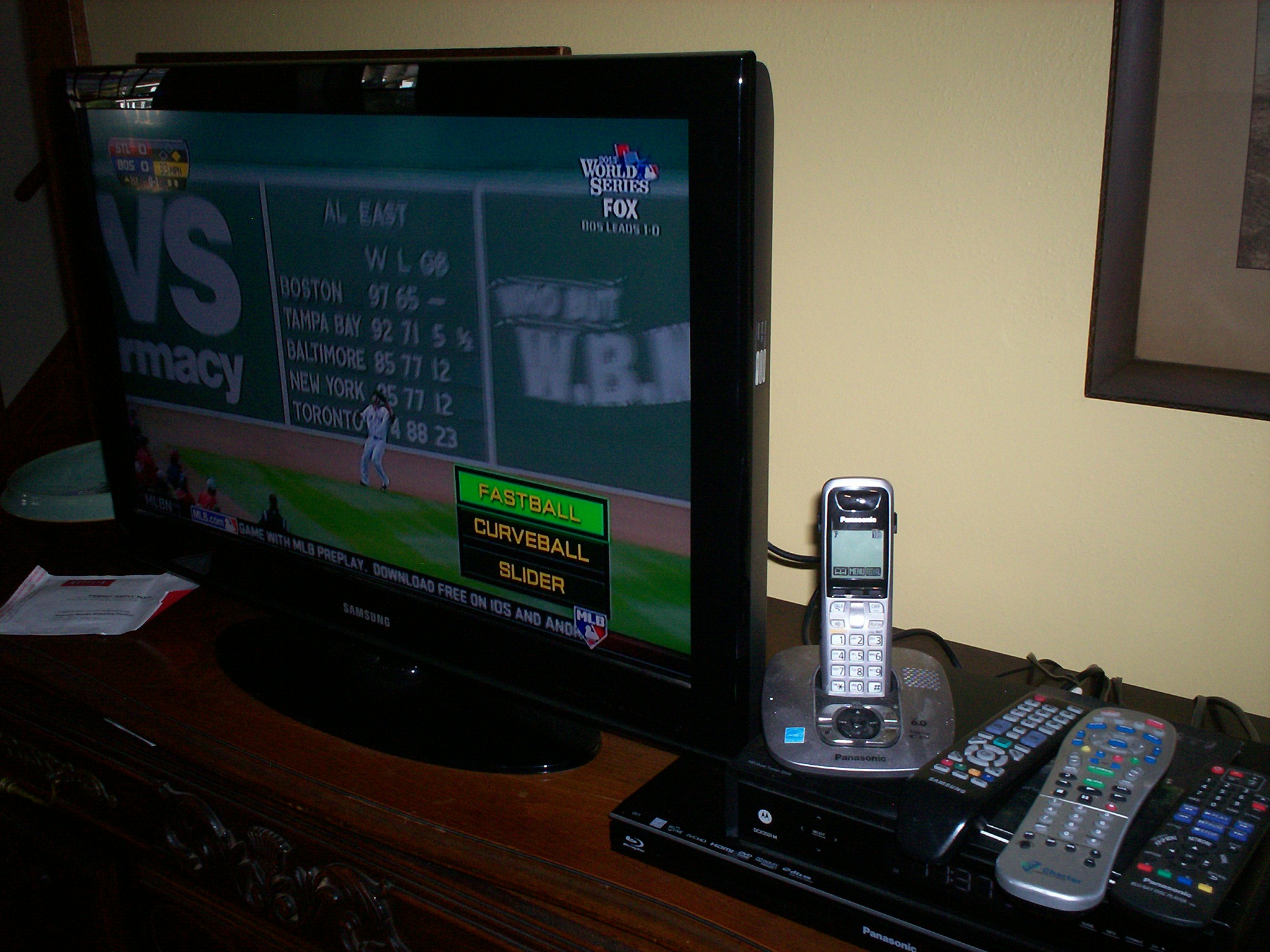
Man, I love technology, especially the sleek way it looks and the cool things you can do with it. I love everything from smartphones to guitar tuners that work by neck vibrations, from my GPS that marks trout streams in the middle of nowhere, to the DVR that tapes The Daily Show and Downton Abbey, from a flatscreen HDTV that shows the seam spin on an Adam Wainwright curveball, to the Ipad I’m using in The Froth House to write this.

However, when things go bad, it’s not like changing the flapper on our toilet upstairs that trickled water all night. It’s not like gurgle, gurgle, detach the corroded rubber gasket inside the toilet tank, run to the hardware store, find one that looks the same except for the corrosion, run home, pop it on the fill valve, flush the toilet, yep, it works. Two points.

Technology is not like that.

Here’s my latest saga. When we moved into our house in Madison over three years ago, our first service hookup was a bundle for internet, cable TV, and phone. I thought we had everything, a re-wired house, wi-fi, high speed internet for streaming videos, and even the company’s virus protection. Then the internet went out. The cable guy, whom I’m sure I had seen before on Star Trek, came to our house, scuttled around our basement, and said, “Your splitters are in the wrong order. Internet is more demanding than your TV. I fixed it.”  The next week, our cable TV went out.  The cable guy who came this time, a guy I’m sure I saw on the ads for Duck Dynasty, scuttled around our basement and said, “Your splitters are in the wrong order. Cable TV is more demanding that your phone. I fixed it.”  The next week, our phone went out. This time I complained loudly to four people and two computers that answered the help number, and the cable guy who came out was Darth Vader himself, a guy all in black, including his eyebrows and deep eyes. He had the look of a man who had just emerged from two weeks of hacking China’s Central Committee computers from somewhere underground.

“The last guys who crawled around our basement-” I said, but he interrupted – “I don’t need to crawl around your basement. Your return signal is so weak that it is telling our system that everything is turned off.”

“But our signal splitters-” I said, and he merely raised a hand at me. “I hate splitters. I’m installing three separate power supplies to your lines, so your phone, TV, and internet lines will have the same power we use for a business of 100 offices. I’m plugging in the transformers where the line comes into the house. Don’t unplug them. Don’t put your ear next to them, even though they emit a pleasant hum. Do you wear a pacemaker?”

“Not yet,” I said.   “Good,” he said and then disappeared into a foul-smelling mist.

photo

That was three years ago, and everything worked until….

You can stop reading here if you think it’s normal for a cable bill to double and double again to the price of a car payment every month, which wouldn’t be so bad if I had high-powered cable and the car I was paying for, but in this case, there was no car, only the car payment every month.

So I tried to log on to the “contact us” screen using my high-powered, Chernobyl cable system, but it wouldn’t let me access my account because either my username, my password, or my security question based on my favorite sports team was wrong – and it wouldn’t tell me which. I tried every possible combination, with caps, without caps, using the names of teams I liked and some I only sort of liked. I even looked at my hidden file of three pages of passwords and usernames, beginning with AARP and ending with University of Wisconsin. No luck.

I picked up the phone on my separately powered transformer and called the company, using the number on my car payment bill without the actual car, just the bill. The first machine that answered was a pleasant-sounding voice that told me to simply state my concern, such as “I want to install new services,” or “I need to upgrade my TV package.”

“Shit,” I said, and the line immediately went dead. Apparently, the computer was not amused and was also programmed to shut down after expletives.

I waited a few minutes to calm down and called again.  A different computer voice answered, but it said the same thing. I said, “My bill is more than the cost of the pacemaker I can’t wear because of the power transformers in my basement.”

Either the computer did not understand metaphoric comparisons or it was not programmed for bill questions.  I heard three clicks and the whir of something like The Wheel of Fortune. A real woman’s voice came next, who said, “Hi, my name is Shelly.  How can I help you, Mr. Haberl.”

“You know my name?”

“It’s attached to your phone number and account. Would you verify your address and favorite sports team, please?”

“Don’t you already have that information?”

“Yes, but I need to make sure YOU do. What if you’re a hacker for the Central Committee in China or some African sweepstakes winner?  We wouldn’t want that, would we?”

“But I’m calling you from my home phone which popped up on your screen. Why would a Chinese hacker or an African sweepstakes winner break into my house just to use my phone and call the cable company?”

She apparently looked down her list of proper responses, couldn’t find anything, and then went with the most general script.

“Um, um, Mr. uh, Haberl, I’m excited about being able to help you today.”

After I convinced her I was not a hacker, she listened to me explain that I could not log on to my account, no matter what sports teams I named, and my monthly bill was approaching the level of a drone-fired hellfire missile, which I was thinking of using on their cable system as soon as I could find one.

Shelly gave a nervous laugh, which I took as a good sign.

“Okay,” she said, “You’d like to lower your bill and you can’t log on, is that correct?”

“Yes.”

“Okay, well, I only arrange for new services and upgrades, and you don’t want either of those, so I’m going to transfer you to a specialist who does service removals. Please hold.”

They have a specialist for service removals?

A moment later, a voice said, “Good morning, Mr. Haberl, my name is Becky, and I’m excited to help you today.”  It was the voice of a sixteen-year-old cheerleader who just got a prom date, no it was worse than that – it was the voice of a cheerleader whose team was already losing 64 to nothing and she believed everything depended on her cheeriness. I sighed.

“Okay, Becky, my total bill is way too high and I need to know what is the lowest cable package available.  I’m also thinking about discontinuing our phone service since we mostly use our smartphones, and I want the slowest internet money can buy.”

“I’m so excited to help you. Here’s what I can do – let’s see – I can reduce your phone cost by over half because of our new You-Deserve-It-All package, and we’ll pay the tax, so your phone service will be $19.95, and you were already on the slowest, cheapest internet service, but we’ve installed new routers in our Faster-Than-the-Speed-of-Light package, so I can double your speed for the same price you were paying and your modem is still the fastest one we have in homes, so let me push that button, and – there – done – and I see that the cable package you have is based mostly on sports. I can give you a lower package but your wife might not be happy.”

“Why not?”

“She won’t be able to watch Oprah or one of her soap operas.”

“She doesn’t watch Oprah any more, and her soap opera went off the air two years ago.”

“Okay, so let me push this button, and – there – you now have our “Husband-Gets-Sports-and-Wife-Gets-Romantic-Comedies package, and, let’s see, I’ve reduced your bill by over $60.00 per month. Does that help?”

“Yes, but-”

“And you need to re-do your login. That’s a different specialist, so hold please.”

I was still in shock. All she did was push two buttons, which could have been done any time in the last three years, and my monthly bill would have gone from a car payment to a new bicycle every month.

“Good morning, Mr. Haberl, my name is (because of his talking speed and accent, which could have been Indian, Swahili, or Polish, I think his name was either Antwan or Yeshblinka, and I couldn’t tell which), and I am so excited to help you today.”

“Um,” I said.

“I see that you tried to log on to your account eleven times this morning, and you were locked out four times because of too many failed attempts.  What was the problem?”

“Um, either my username, my password, or my favorite sports team security question was wrong, and I couldn’t tell which.”

“You know there is a help screen to download answers to the most frequently asked questions.  There’s a blue button in the top right corner.”

“But don’t I have to be logged on to my account to get to the help screen?”

“Of course, how silly, I’m so excited to help you today. Let’s see, do you still like the Cardinals?”

“Yes.”

“And is your username ‘Flyfish?'”

“Yes.  So what was my password?”

“That is blocked out on my screen.  You wouldn’t want me or hackers from China to-”

“But-”

“I am happy to announce to you today that all is not lost. I cannot quote your password to you today, but I can help you reset your password to a new one, and you can get in that way.”

“Isn’t that what hackers do?”

“Yes, some do that, but I assure you, I am not a hacker and I am not in China or Africa.”

“But wouldn’t I be hacking into my own account?”

“Not exactly.  What you will be doing is authorized hacking. You authorize yourself with your new password to go into your account.  It’s like a side door. It works every time. So, what would you like your new password to be?”

I gave him a new password and on the fourth try we agreed on one was long enough, had at least one capital letter, a number, and a symbol.

He told me to write it down very carefully and read it back to him.  After that, he said, “And do you want any upgrade or new services today?”

“No,” I said, “I’m trying to reduce my bill and -”

“Oh, I am so sorry. I am not a reduction in services specialist. I must transfer you.”

“No, please,” I said, but I was too late.

A fourteen-year-old cheerleader whose team had just lost 75 to nothing came on and said, “Hello, Mr. Haberl, I am so excited to help you today. You say you want to reduce your bill, is that correct?”

“Yes,” I said.

“Well, I see that you have our old Husband-Gets-Sports-and-Wife-Gets-Romantic-Comedies package. I can give you a new lineup in which you get all the sports you have been watching but I will cut out competitive bungee jumping, the World Series of Gardening, and the Moving Sponge Obstacle Course.”

“But I kind of like obstacle courses. I mean, this phone call alone-”

“But you haven’t watched it for three years.”

“Yes, you’re right.  What about my wife?”

“Our new package will reduce your bill by eleven dollars and twenty-three cents, and your wife will get the Oprah network and some new soap operas. Is that agreeable?”

“Um,”

“Okay, I just push this button here – and – you’re all set.”

“What’s this new package called?”

“Um,” he paused and I heard some papers shuffling. “Um, it’s so new, it’s, uh, it’s, called the ‘You-Deserve-It-All’ package. I am so excited to help you today. Please hold for a short survey and entry ticket into our sweepstakes.”

“No, please-” I said, but I was too late.  Sometimes I really don’t like talking to people.  Just give me a machine and three choices. That’s what I got.

It was another overly cheerful voice that asked me to hold for a brief survey to improve their service, but this one had a slightly metallic ring to it, like the woman who recorded it was in a spaceship, which would explain where my cable company got its technical support guys who made house calls. It went through the usual loaded questions, such as “Was the technical support person cheerful? Say ‘one’ for very cheerful, ‘two’ for moderately cheerful, or ‘three’ for not very cheerful.”

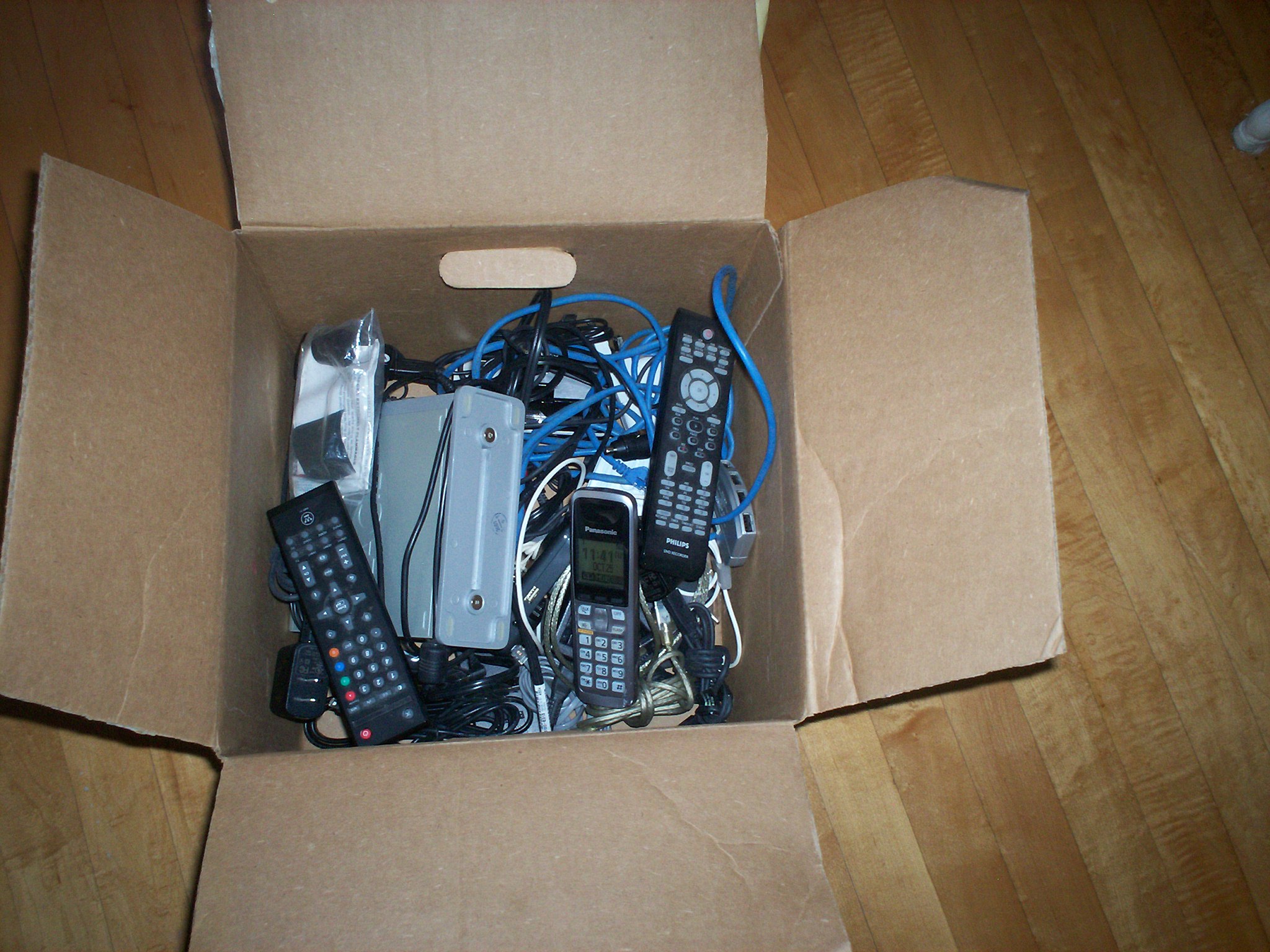
“Which support person?” I answered, and the alien in her UFO said, “That is not a valid answer. Please say ‘one’ for…” and so on.  After fifteen minutes of trying to get through six easy questions, I’d had enough, said good-bye, and ended the call. I wouldn’t have won the sweepstakes anyway. The survey was probably taken by 10,000 people that day alone. Man, I hate technology. I want to put it all in a box, take it out to a field, and beat all the components with a baseball bat. I have a good memory of some guys doing that.

2005-01-12 11.54.43

I know robots will eventually solve our problems. We won’t fight wars anymore; we’ll just send our robots against the enemy’s robots in some forsaken place like Afghanistan, and then watch the whole thing from drones. The winner will get all of the loser’s assets, which will merely be numbers in some IMF account. It’s not like we’re going to advance enough to end war; we’ll just change how we fight it.

When we realize that football has become too dangerous because of players who are too big, too fast, and too well-trained to follow piddling rules like “It’s a fifteen-yard penalty to hit a defenseless receiver in the chest or back with your helmet,” we will have robot football, and actual heads will fly off, or at least pop up like those toy red and blue boxers used to do after a direct shot to the chin.  I think those football players will look like the droid on the Fox Sports leads, you know, the one with the logo on a shield that appears out of the robot’s shoulder. That will be football, our latest substitute for war. Timeouts will exist only to retrieve shrapnel, run a Zamboni over the gridiron to scoop up arms, replace batteries, and allow viewers to get more popcorn, pizza, or whatever new combination of salt, sugar, and fat the latest corporations hawk to us.

Please excuse me while I look for my baseball bat.

TMI

Hibernal coverYou can download Hibernal, my recent literary suspense novel after Shakespeare’s classic A Winter’s Tale, for your Kindle for $2.99. If you like intrigue, the trials and triumphs of love, humor, and fascinating characters, it’s worth a click at the Kindle store.

 Go to:  http://www.amazon.com/Hibernal-ebook/dp/B006VZ175U/ref=sr_1_1?s=digital-text&ie=UTF8&qid=1377633229&sr=1-1&keywords=kurt+haberl

The paperback is available as well through Amazon. 


TMI – This is a problem/solution entry; one I think is part a growing pandemic. Picture this. There is a character in Great Expectations named Matthew Pocket, an educated and kindly father completely incapable of dealing with the little household crises that arise in his family, and his usual reaction is one of overwhelming desperation in which he grabs his own hair and lifts himself six inches out of his chair. It’s a wonderful image that catches a character with remarkable accuracy.

photo-1

We are all Matthew Pocket. If you haven’t felt overwhelmed lately, either by news (nearly all bad), economic forecasts (nearly all inaccurate), or advertising (buy this new scented shampoo, better yet, buy this “must read” book), just Google “cold remedies” and see what happens. Yes, the result you see in the upper left hand corner is correct – 19,100,000 hits. All of them certainly are accurate because they’re published on the internet, right? The Google staff removes all inaccurate posts, right? I might be sensitive about this topic of Too Much Information because of the amount of paper coming into our house (The Capital Times, New Yorker, New York Times, two Waterloo hometown papers, not to mention AARP, fishing magazines, The Isthmus, and my favorite The Onion). We have stacks of books (currently The Pickwick Papers, You are a Badass, a good self-help book for artists, Montaigne’s Essays – the never ending collection of essays, actually – Rachel Maddow’s Drift, my worn Jerusalem Bible) and whatever else our teacher/professor neighbors send over. When driving to Evanston to play with our grandson, I listen to a 75 CD series on the history of Western Literature (not for everyone), Harry Potter, more self-help readings, and anything else Ann brings home from the library. Self-induced TMI overdose. I’m not a TV addict because most of the weekly shows are worse than junk food, but I do watch Masterpiece Theater (currently airing Poirot mysteries) and whatever sports season is in.

You get the idea.

I, and I suspect everyone, is drowning in information, entertainment, viewing choices, and an onslaught of advertising, “Look at This!” OMG, breaking news, the market is up, the market is down, can you believe what that politician just said/did/questioned/voted for/voted against? TOO MUCH INFORMATION If you have a full-time job, and after retiring from teaching, I don’t, you might be helped a little by the limits on your time not at work, but even then, if you’re ever on vacation or sick for a day, it’s surprising how much email can pile up, and that’s assuming you have a decent spam filter. What can a thinking, reading, semi-informed person do?

I have seven suggestions. They have preserved the little sanity I still possessed when I left home.

1. My friends are my Angie’s List. I highly recommend Goodreads, the site much like a Facebook for readers. It’s a link to my friends’ recommendations and it allows me to rate books as well. With the bothersome exception of political emails friends pass on without checking them at all (and there are some emails from friends and relatives I simply delete without opening), I read/buy/watch/listen to very little that does not have a friend’s recommendation. Whether it’s Youtube, TED talks, music, books, concerts, or audiotapes, I waste my time on almost nothing unless it comes with a recommendation. I don’t surf the web much anymore; I fish. If you have the good sense or luck to marry someone who reads a lot, gathers friends like lint, and will watch anything that moves on TV, you have your own Angie”s List available every day. In return, I make the best hot, buttered popcorn in Madison and have learned to concoct a really good carbonated water and lemonade drink to go with it. I follow the Mafia rule: We don’t let in nobody wit’ out nobody’s recommendation.

2. Watch TV consciously. I focus on what I know will be good. My wife accuses me of watching only “happy TV,” and that is mostly true. I’ve seen enough cars and buildings blowing up and innocent people killed to last a lifetime, so most adventure/killer/action/suspense films and the news in general are usually like sour milk to me. Even some movies and shows that have won awards I may watch for ten minutes and then leave the room, saying only, “I don’t like any of these people.” How do I fish? I will watch almost any Turner Classic Movie, almost any romantic comedy (a weakness, I know), and anything with Meryl Streep, Cary Grant, Woody Allen, or Matt Damon. It’s not because they are the best actors; it’s because they are the best readers, and what they do is interesting. Your list will certainly be different but what matters is that you have a list. Anything by Bill Murray is reliably goofy. Steve Martin is both funny and poignant. Jane Austen knows emotions. The point is to know what you like.

3. Take breaks from all input. A bike ride, a canoe ride, trout fishing in a stream, daily meditation, are all silence breaks that halt the assault on my psyche and wallet. A crossword puzzle is a break from TMI because it forces me to focus, think, and search my little grey brain cells that haven’t been searched in a long time. Will Shortz, who edits the NY Times puzzles, may have done more to stave off Alzheimers than anyone or anything.

4. If I have a question about a movie, I check out the site by a former student who knows more about movies than anyone else I know: Brian Welk. He’s at brianwelk.com. I highly recommend adding him to your “Angie’s List.”

5. I avoid anything with “Dumb,” “Fail,” “Redneck,” or “America’s Funniest” in the title. I avoid Jennifer Aniston, with the exception of the cult classic Office Space. I avoid murder and violence unless it is offstage, usually the case with Poirot, Miss Marple, and Hitchcock. I avoid drug movies, fast cars, crashing cars, flying cars, burning cars and exploding cars. I no longer watch war films, hostage films, or genocide films. To me, the Age of Glorious War is over, and probably never was. And finally, I avoid any contest that is not really a sport, including dancing, survival, obstacle courses made out of sponges, and who gets fired this week by the insufferable Donald Trump. I don’t recommend you do what I do on this one; do what works for you.

6. Take a reality check. Most of the information thrown at you is not true. Since I’ve been involved in publishing, I’ve learned that the space in the surviving bookstores is rented, and the tables by the entrance with stacks of books and a giant cutout of some vampire/movie star/politician/waif or mockingjay are prime real estate rented in a bookstore at a very high price. Pay no attention to advertising that sounds too good to be true or includes the words “Save, for a limited time only, you don’t want to miss, you gotta’ have,” or “Blowout Sale.” I try to follow my own rules: Here’s my book; here’s what it’s about; here’s what it costs; here’s what readers say about it; here’s where you can get it.

photo

7. Use every mute button available. My car radio has six well-used preset buttons. The “mute” letters on our TV clicker is worn off. Better yet, tape or DVR Jon Stewart and fast-forward through the commercials. I really like the 30-second jump ahead button on some controllers that means I can hit the skip button six times and automatically go the the next part of the program. I’ve learned to digest newspapers by reading every headline and then one or two articles.  For my own peace of mind and for the greater good of my country, I now avoid all “attack” programs which have shown themselves to be mostly inflammatory rather than accurate.

Eventually, I believe we will all figure out this “internets” thing and will vote with our computers, attention, and dollars. Something that goes viral will be a good thing.

Peace

April 23, is generally regarded as Shakespeare’s most likely birthday, so it would be appropriate to begin with one of his quotations.

“Expectation is the root of all heartache.”

Some think he never said that, since scholars can’t find it in his plays, but that doesn’t matter if the plays were all written by Edward de Vere anyway. Who knows?

The complement to this is the title of the Dickens novel, Great Expectations. As I’ve written before, if something is true, I believe its complement is also true. I love paradoxes. As a retired teacher, I know the power of expectations in a classroom, where behavior and learning are so certainly a function of expectations. A teacher who expects little from his students will most certainly get it. It seems to me that in professional relationships, like those in teaching, which over time become personal, great expectations matter. That may be largely due to an unspoken statement akin to, “I have great confidence in you. You can do this difficult thing.”

Great expectations on a personal level, however, may be sure to bring disappointment. Wives and husbands could keep counselors employed for generations on this source of difficulty, never mind issues of debt, affairs, or addictions. I wonder how many times such sessions began with “I thought he was…” or “She should ….”, “Why doesn’t he …” or “If only she would ….” This doesn’t mean married people should have no expectations of each other. Common courtesy, loyalty, a willingness to help, a willingness to listen, a place of emotional safety, and shared long-term goals are things that matter. No marriage should be in trouble, though, because of the replacement of toilet paper, the position of a toilet seat, or a woman’s underthings drying on any available horizontal pole or doorknob. (I’m not saying my wife does this, mind you.)

Expectations are an intensity multiplier. Take the Super Bowl, for example. It’s still fun for me to watch a championship game played at the highest level, even if I’m not a fan of either team. I will always favor one side a little, but if my team loses, I’m not going to go out into the streets to overturn cars, set trash cans on fire, or break windows. If my team wins, I’m not going to go out into the streets to overturn cars, etc. If I really am a fan (short for “fanatic”) of a team, I may experience highs and lows that come from each individual play and range from extreme anger (that ref called WHAT?) to extreme elation, (Take THAT, in your face, you jerk!) Such extremes may be tolerable, perhaps even preferable for those who enjoy a sport, one of our substitutes for outright war, but I don’t recommend it as a way to live one’s life.

In the 60’s we youth (yes, there was such a time) used to tell each other, “Peace and love,” which kids of the 80’s turned into “Peace out.” It was the primary way many of us fought the Viet Nam war. There is something to be said for that attitude. Emotional highs and lows are not nearly as healthy as a whole series of little highs. If you don’t expect your wife to fill up the car with gas, but she does, what a nice present that is. If a husband isn’t expected to clean the bathroom, but he does, what a nice present that is. The point is that expectations always carry judgment, and it’s so much healthier to simply observe what is, rather than judge what ought to be but is not.

This is one of the primary ways in which a person lives a life in peace. Because I cannot control other people, games, the weather (ah yes, the weather lately), the timeliness of other people’s arrival, traffic, the news, politics, where birds deposit excretions, which direction the wind is blowing, or what someone just said to me, the solution is not rage, disappointment in expectations, or depression. To misquote Shakespeare or Edward de Vere, “All the world’s a TV show.” If you don’t like what you see, don’t throw the candy dish at the screen or yell at your kids, change the channel. Observe with interest, and if you don’t like what you see, look at something else. You have the TV clicker for your life. It’s in your pocket right now. Peace out, everyone.

In Praise of Old Things

I’m not old yet. There is something to be said for old things, though. I’m not just talking about twelve-year aged single malt scotch, although that smoky, thick taste has its appeal to some. Twinkies aside, not everything old is good: not ice cream that has acquired its own layer of permafrost, not sidewalks whose cracks, puddles and tectonic shifts are mere trips for anyone on wheels or twelve-year old scotch, not even old televisions with predictable channels and a familiar clicker with a volume button that sticks and the numeral 7 that doesn’t work at all. Old laptops, not good. Old cellphones with a battery life of half a phone call, not good. Old glasses, not good. Old textbooks, old maps, and old towels – not worth saving unless they begin a second life as a prop, background for a paper collage or a rag for washing cars.

There is something to be said for old things, though, almost anything that is cared for, sharpened, painted, oiled, or cleaned. Quite a list could be compiled: guitars, violins and pianos; jeans and boots, watches and jewelry, classic novels, and an occasional lawnmower. I am currently the proud owner of a 1940 Sears push mower inherited from Ann’s grandfather. It is easy to push, quiet, safer than my old runaway Toro, and perfect for the small yard we now have. It works, and as long as I keep it oiled and sharpened it hasn’t worn out its useful life. I especially appreciate the fact that it never kicks gravel and nut husks out a side vent at a hundred miles an hour toward one’s car. It will measure up any day to the previous four power mowers I’ve owned and used until they self-destructed in their teens.

A few old things deserve special attention, I believe.

My car, which I have dutifully serviced according to the schedule, now has 120,000 miles on it and runs like it was new. I need to fix a scratch in one door where a stump slid into me when I was out in the woods of the Upper Peninsula, but other than that, its four-wheel drive, four cylinder engine, sweet air conditioning, and purr when idling tell me there is no reason to replace it. Besides, it holds a lot of camping gear, fishing rods, and even a canoe on its rack with perfect ease. When I’m out on the streams, I distrust a fisherman who comes by in the latest Land Rover or Crossover. Until they’re broken in or earn some respect with a few dings, those cars are not suitable as fish-mobiles.

Our old house, a solid brick fortress build in 1925, has earned my respect. It was generally well cared for by its previous two owners who did a few curious things to it but kept as much original as possible. The hardwood floors are still smooth, well-grained, and mostly unscratched. After a cleaning, the fireplace works. The three-season porch is wonderful in the summer. The towering ash out front and the nearly as old pin oak out back are exactly the right height. (Please permit me a small joke.) Somehow our house came with the most wonderful neighbors who are already old friends, and we’ve only been in Madison two years. By comparison, our other houses, much newer and more modern, had basic flaws: cold downstairs, hot upstairs, a noisy furnace just below a master bedroom, air conditioning that could never be regulated well, and worst of all, they were in a neighboorhood where riding a bike was a death race; highway and air traffic from O’Hare fifteen miles away sounded like flame throwers had suddenly gone on sale. We could walk to Mosquito Park at the end of the block, and that was it. There were bike paths in Schaumburg, but you had to mount your bike on the back of your car and drive to them. Once you were on the forest preserve path you regularly received dirty looks when your passing interrupted drug deals. Our new old house is so much better. Yes, we replaced the wiring and kitchen and bathroom, and put in some air conditioning, but we had to do that in our newer old houses as well. An old house is like a favorite uncle. It has character and a happy story.

Old friends. Yes, they deserve special attention as well. There is something to be said for a group of people surviving twelve years with the same Catholic nuns as teachers, some of whom were the most inspirational masters possible, and others should have been tinsmiths or road graders. The latter were very good at cutting things up and bulldozing anything not perfectly flat. The former brought out what was good in us. That good survives. One of the interesting things about Facebook is that its re-connections remind us of who we are, and that hasn’t changed much. The brilliant ones are still brilliant. The kind ones are still kind. The smart alecks have softened a little but still follow the trajectory of kindergarten.

The actual number of years required for someone to become an old friend is variable, probably the same way time is flexible. Some friends you’ve known all your life, even though you just met them two years ago. When you reconnect with an old friend you haven’t seen in years, the time in between doesn’t matter, sometimes as if it never passed at all. Anyone who has gone through a divorce knows that relationships never end, not even when we want them to.

Old things remind us that we belong somewhere. The light switch you can find in the dark, the third fret on your guitar, middle C on your piano, the junk drawer in the kitchen where you know there will be the screwdriver or a rubber band you need – these are important old things. They also tell us something important about ourselves. In themselves, they mean nothing. A screwdriver is a screwdriver; a coffee mug is a coffee mug, but the tool or the coffee mug handed down from your father means something. We put that meaning into it. The mug is about us, I and my father, not about the coffee or the color or heft. As Shakespeare (or perhaps the Earl of Oxford, Edward de Vere?) wrote, it is thinking that makes a thing so. That is true of us, as well. We are what we think we are or, sadly for the weak among us, what we allow others to tell us we are.

I look forward to the day when I become an old thing in spite of the aches, health issues, and inevitable feeling that I have been left behind. I look forward to it because for someone else I will be the light switch she can reach in the dark, the coffee mug with just the right sized handle, the engine with 120,000 miles that still purrs, and the book of stories that are funny, interesting, sometimes sad and always readable. That book will be underlined throughout and annotated in the margins. It will have a happy ending.

Before that happens, I plan to visit the old things to remind them I’m still here: the pond at Konarcik Park outside Waterloo, the spring run at Montauk State Park with its gravel and watercress, Wrigley Field, Busch Stadium, Hubbard Street Diner with its chocolate-topped cheesecake, Disneyworld with grandchildren, Agate Falls in the Upper Peninsula. The list is too long and too personal. I think it should include trespassing at Camp Vandevanter west of Waterloo where we planted a whole hillside with pine seedlings when we were Boy Scouts. I’d like to see those trees, now that they are 50.

Even more fun will be to see the old things I haven’t met yet: Bleak House by Charles Dickens, some Agatha Christie I’ve missed, another season of Downton Abbey (yes the end of the last season was tragic, but no one loves only once), next year’s snows, another season of football at Camp Randall stadium with its raucous student section who always sing “Sweet Caroline” loud and a capella after the music stops and jump around after the third quarter. I can’t wait for the next Mumford and Sons album, their banjo, acoustic guitar, and base drum stomp reminding me that old-style music is still kicking. This is how it is, or as Ann says, whenever anyone asks her how’s she’s doing, “Good, mostly.” Old is good – mostly.

Two Birds with One Stone

I have a brother-in-law who’s a really smart guy, a PhD in chemical engineering, a guy who thought our boat house and its porch up in the Northwoods ought to have refrigeration, ceiling fans, recharging outlets and lights, so he built his own solar panels and wired the boathouse for all of the above. Yeah, one of those guys. Anyway, one of his best sayings is, “The trick is to make your dysfunction function for you.” I see evidence of this all around. Look at almost any Olympic athlete. These are crazy people, the physical outliers who have small torsos but long legs, so they can swim like mer-people. Then there are the obsessed children who can flex like slinkies so they become gymnasts until their careers are over at seventeen years old. Yeah, those people.

I think people can use their dysfunctions (special talents, obsessions, physical traits, or just weird quirks) to much greater advantage. For example, what if a person has some tendency for things I just don’t understand; let’s say he likes to do math stuff like adding numbers all day. He could work happily to catch the cheaters in Las Vegas or work in a toll booth. Think of the fun with odds, numbers, license plates, and states. And all he would have to say is number words all day. That would be hell for me, but for a person who can actually add and subtract in his head – wow, what an opportunity.

My kind of dysfunction would tend to other areas. I think writers ought to be the guys who work the night desk at hotels. They should have laptops next to the hotel registry from midnight till dawn (perfect for dysfunctional insomniacs) and work on great American novels. Any weird people who check in after midnight could become another Gatsby or Silas Marner.

Artists should take over for window cleaners and instead of cleaning windows that are dirty by the time they finish, they should paint murals on them, and then hose them off and re-paint them a couple of times a year. They could do tunnels to heaven and other perspective drawings like those guys who do the sidewalk chalk art that shows up on the internet twice a year.

Musicians, most of whom need a day job to survive anyway, should be nannies and baby-sitters, as should those who are bilingual. Think of the possibilities. Babysitters shouldn’t be plunking kids in front of a TV or pushing strollers to the park. They should be talking to little kids in Spanish or Polish and playing music to them.

People who are overweight should be personal trainers. All day long they could be telling clients, “No, do your arm curls slowly – here, let me show you. Joey, that’s not how you do a squat-thrust. Do it like this.” Then when they get too conditioned and toned up to be personal trainers, they could become waiters and waitresses where they eat enough to qualify as personal trainers again. In some cases they might eat themselves silly for a while and then get sick of that restaurant’s food like the kids who work in ice cream shops, and then they could become cooks.

Here’s one of my favorite dysfunctions. You know those people who post all that intense political stuff on the internet and never factcheck anything and think Snopes is a family in a William Faukner novel – those people should work for the IRS.

Here are two real cases. I know of an oral surgeon who also ties fishing flies, and his bug creations are so realistic that they scare people. His nickname is “Doc,” as it should be. If I needed an oral surgeon, he’d be the one I wanted. When I found out I needed cataract surgery I had a recommendation on an eye doctor from my father-in-law, but I was still worried since I’d never been in a hospital except to see babies. In the pre-op interview he asked all kinds of questions about my eyes to see what kind of lens he should put in. When I said, “I read a lot and tie flies,” his eyes lit up. “You’re a fly fisherman?” “Yes.” “That’s great. That means if you tie flies, you need a focal point of 14 inches, so I know what lens to put in.” “You tie flies?” I asked him. “Yes.” That’s all I needed to quit worrying about the surgery. If you ever need cataract surgery, get a doctor who can tie a tiny midge on a size 22 hook. No problem.

Golf courses are a dysfunctional use of land. You can’t farm on them, park cars on them or even picnic on them unless you can dodge little dangerous flying objects. I think we should make the dysfunction work for us by combining golf courses and cemeteries. Instead of a tombstone for a person who moved on, we could put in a little name stone angled toward the green, and then if a ball hit it, the ball would bounce perfectly toward the hole just like the advantage of hitting a golf cart path and getting a kicker. You could call it a “Namestone shot,” a lucky thing and as you pass, you could say a blessing on “John Schlemiel, 1927 to 2011.” If I were a golfer, I think I would like that. It would be killing two birdies…. okay, that was uncalled for, I know.

Think of some of the other possibilities. If you’re a high school kid who is failing math, you should be paired up with a fifth grader to teach that fifth grader easier math and then move along with him through sixth grade and so on until you both graduate – and can do math. If you’re afraid of flying, you’d be the best, the most reassuring pilot in the world. No one could be a better janitor than someone who is obsessive/compulsive. Wow, what a clean school you have here, Mr. Tenbroomholder! The possibilities are endless.

If you’re obsessed with movies, you could work for Nielson.
If you’re a gambler….
If you’re a clutterbug….
If you’re a birdwatcher….
If you can’t help blogging, you could, um, blog. Okay, that was uncalled for, I know.

Dysfunction is such a wonderful thing. Heck, I could have been five or six successful things.

It Is All Good

Today’s inspiration started with music. One of the first inspirations for me, something fifty years ago, was the Beatles’ I Want to Hold Your Hand. I remember taping and playing that song over and over again, not so much to listen to it, but to feel it. Eventually, I overplayed it, and the feeling passed. It was followed by the Rolling Stones’ Honky Tonk Woman, The Animals’ House of the Rising Sun, and dozens of others, Springsteen’s Born to Be Wild, Knopfler’s Sultans of Swing, and much later on, Keith Urban’s You’ll Think of Me. More recently, I’ve greatly overplayed the Decembrists’ Down by the River, Adele’s Someone Like You, especially the YouTube version by Charlie Puth and Emily Luther, and this month, Mumford and Sons’ I Will Wait. I’ll admit that some of this repetition is due to the corporate radio’s tendency to promote anything that looks like a winner, but I think something else is going on. I’m feeding an innermost part of my brain, the same way a drug addict does, the same way a runner pushes past the wall to get that stream of endorphins, and the same way lovers love. The songs help me to feel something I like, even if sometimes that feeling is vicarious pain. Each song stimulated a different feeling, but they were all good in their way.

I believe three physical laws are operative here. The first is our need to feel something, sometimes anything. The second is the vicarious law of literature, video, and music. We are attracted to the sharing of other’s stories, their triumphs, and even their pain, as long as we don’t have to feel the real pain ourselves. I want to watch Abraham Lincoln and feel some of his ups and downs; I do not want to be him. The third law is that of diminishing returns. It is a wonderful blessing both to our families and ourselves that the repetitive playing of Mumford and Sons eventually bores us and we must wait for another such masterpiece or not play the song for a year.

Ann and I are currently taking a wonderful course based on Rosenberg’s book Nonviolent Communication, which I’ve recommended before. Mary Kay Reinemann, our inspiring teacher, tells us regularly to watch for feelings. They are messengers. Anger is a messenger shouting a need. Every feeling is a please (help me) or a thank you. Hatred is please help me; I am overcome by fear. It is shouted out through a Marshall double stack amplifier with the volume on max. It is written in giant, red, bloody letters. Kindness is a thank you. Communication is more complicated than that, but you get the idea. You can also see why we’re taking this course for the second time, just so we can practice with others. The point is that feeling, even unpleasant feeling, is life, and numbness is death. To feel nothing is to be nothing. It is true that we also think, but even thinking can be dominated by feelings, and I never listened to I Want to Hold Your Hand because it gave me a thoughtful, philosophical position in life.

The second law, the law of vicarious living, is also a gift in disguise. We all must work for a living, and that work takes up so much time and energy that we do not usually have the space to be Humphrey Bogart, Harry Potter, or Lady Mary Crawley finally married to her Matthew. We can choose to live such lives, to feel what they feel, and not actually have to say goodbye to Ilsa, be orphaned by another wizard, or feel the anguish of ruin, scandal, or loss. We may live many lives in one. Their reality, even if we don’t participate as deeply as Walter Mitty in his secret life where he pilots a submarine or saves a life with a pen is real enough. We feel a measure of what they feel. We become them to a degree, and that degree is just enough. That degree can be geometrically multiplied. We may be Lady Mary and Matthew, and Lord Grantham, and any number of maids, footmen, and butlers. We may even be scoundrels if we choose. To feel them is to live them, and it is a blessing.

The third law, that of diminishing returns, is also a blessing. When we choose to love and marry, we feel intensely and wonderfully, but also, we cannot feel that same intensity forever. This is providential because one’s spouse is bound to change, as are we all. A marriage based only on what a partner was like at 22 is a marriage in trouble. I believe the best marriage is one that assumes a trajectory. My wife is not the woman she was at 24; she is better, wiser, more alive, and I had a pretty good idea that was going to happen. The law of diminishing returns also forces us to grow, to change. Stasis is death. The law of diminishing returns forces the creation of a fifth symphony after we have tired of the other four. It forces the creation of What About Bill after we have tired of Groundhog Day, and a third season of Downton Abbey after the late night kiss in the snow that ended the last season.

The law that rules this world, including our own brains, is providential, blessed, and necessary because it nudges us to live. It is all good.

On Little Things and God

The devil is not in the details; God is. One of the advantages of being over 60 is that age affords perspective, and all the teenage angst over am-I-good-enough, will-she-like-me, oh-no-the-test-is-TODAY is long over. This perspective tells me two things of which I am absolutely convinced. One is that little things are important. The other is that the most important thing we have is time. I just finished reading The Little Book of Common Sense Investing by John Bogle, whose long-term study shows that having a whole lot of money to invest means a lot less than investing over a long time and doing it sensibly and without the excess of greed. A smaller return by owning shares of ALL stocks to minimize risk, avoiding investment costs, and holding everything for a long time beats all other strategies. Once you don’t care about making a million by day trading, searching for the next killer pick for this month, or giving all your money to someone who charges you to invest your money, you can make a million or more.

Enough about money… I said God is in the details, and that deserves some explanation. It’s not just that Jesus was born in a manger, the smallest, least important place ever, he never led an army or held an office, and was not even comfortable with the title “Messiah,” because of political connotations, preferring “Ben Adam,” or “Son of Man.” Nor is it just William Blake’s exhortation to “see the world in a grain of sand and a heaven in a wildflower,” or Tennyson’s study of the flower in the crannied wall. By Divine Design, I see that good little things done over a long time amount to great consequences. It’s all in understanding the details.

Read Malcolm Gladwell’s book, Outliers, which shows that ordinary people (and the Beatles were ordinary people) who practice for 10,000 hours (their time spent in German cabarets) will become remarkable musicians. Even Mozart was an ordinary composer until he put in his 10,000 hours. I’ve written about this before, but good things sometimes bear repeating.

Log on to TED Talks and watch the short video by Amy Cuddy on how little things like posture, power poses and self-talk can change not only the testosterone and cortisol ratio in your body that makes you strong or stressed, it also results in a better, more successful YOU. It doesn’t really hit home until Amy tells her own remarkable story two-thirds of the way through the video. If you watch nothing else all week, watch this. (Amy Cuddy: Your body language shapes who you are) Our bodies were simply designed this way. Fake strength until you make it; make it until you become it.

Exercise? I’m finding that I don’t need to be a marathoner, and my knees probably wouldn’t take that stress anyway. It is still remarkable after a month of slacking off because of eye surgery, that if I just go back to thirty minutes of stretching, breathing and weights in the morning, followed by thirty minutes on a treadmill watching TED talks, I not only feel better and have great energy, I am alert rather than tired, kinder (or at least less crabby), and more able to write. I will never look like a football player, have six-pack abs, or be able to dunk a basketball, but stretching, breathing, and walking for thirty years has made me feel well and kept me from getting soft and fat. That is enough. It’s actually a big thing when I look around me at those who struggle to get through the day or go up a flight of stairs. I’m not bragging since I have so many other weaknesses; I’m observing. Little things done over an extended period of time make a big difference.

About two weeks ago I saw Warren Buffet on The Daily Show with Jon Stewart, and I was amazed at his attitude and answers to Stewart’s most challenging economic questions. In short, the wise, smiling man, perhaps the best investor of all time, delivered a truly optimistic message: Of course there are bubbles and even recessions, but that’s just an opportunity. That’s the time to BUY. The point is that the general trend is upward. It is all done little by little over many years.

That’s how we do everything. It’s the message of Anne Lamott’s great book on writing, Bird by Bird, which I’ve recommended before. What is new for me is that I see this “Little Things Are Great – in the long run” is by design. If you write, it takes at least a couple of years to turn out a good novel. If you pray for something good for someone else, it may take a couple of years for the miracle to appear (unless you are Jesus and I am not). If you want to be a great musician/composer/free throw shooter/landscape painter/teacher/parent…ANYTHING – it will probably take ten thousand hours. If you repeat affirmations, it will still take a couple of years for that little change to take effect. My only suggestion would be to make sure you choose something you love to do, because 10,000 hours doing something you hate is no fun and not good for your psyche. The testosterone/cortisol ratio will not be in your favor.

How amazing this world design is. Because of this design, great things are available to all of us by doing little things for a long time. Everyone is familiar with the adage, “The devil is in the details,” meaning it may be the little, unnoticed thing that causes a problem, but most people probably do not know that the original saying was most likely by Gustave Flaubert, “Le bon Dieu est dans le détail.” It’s not the devil in the detail; it’s the good God.

Advice to Women on Sports and Men

I suppose this fits under the heading “Men are from Mars.” While most husbands/boyfriends and their eyes are laser-pointed at a flatscreen during any football/basketball/baseball game, the look on a typical wife/girlfriend is that of one who has just opened the hood of her new car. It is a look of XUG, which is one click beyond another acronym. Here’s what a caring woman needs to know.

First, a short cut. One of my favorite true stories is of a good friend/lawyer/banker, a brilliant woman who was forced to go to Soldier Field by her boss to entertain clients, and she knew-nothing-and-could-not-care-less about the violent game of football. Her partner, a very wise man, told her not to worry because she only needed to say four things, and she could say them over and over again. After anyone kicks the ball, always say, “Special teams always make the biggest difference.” After either team scores, always say, “Defense wins games. No defense – no win.” Any time there is a time out, even at the end of the half, always say, “Well, let’s see if they make adjustments.” Any time there is a yellow flag on the field, just mutter, “Are you kidding me?” I know you women are thinking, “Are you kidding me?” but honestly, I’m not. These four things work every time.

I don’t know if she won over her clients, but she has been working at the same bank for twenty years, so I assume the men were duly impressed.

photo

Football isn’t really a game, not any more than a soap opera is a TV show. It is a substitute for war, a campaign with territory won, players described as offensive weapons, passes that are bombs, defensive plays that are blitzes, quarterbacks who have rifle arms, defensive players who have nicknames like Samurai Mike, and a battle that is won or lost in the trenches. Women who care about men should first appreciate that these men are not actually killing each other. The other thing to remember is that a football game is the one occasion in which an otherwise uncommunicative man can show an emotion. A smart woman would capitalize on that. If you’ve been invited to a Saturday morning bike ride in Wisconsin, show up in a green Aaron Rodgers jersey and see what happens. If you’re in Chicago, you can choose from Urlacher, Tillman, or Marshall. You could wear a Cutler jersey, but this year, that is somewhat risky. If the local team loses, look sad, or better yet, look angry. It’s amazing how a furled brow and grimace can make a guy think you are Athena, or better yet, Venus.

If you’ve already attracted a guy with your football jersey but you’re not sure how to start a conversation, simply ask, “Hey, what time is the game?” Be sure you say, “THE game.” Even if it’s the middle of the season, it’s still “the game” to a guy.

After the football season is over, men focus on basketball. The easiest thing to remember about basketball is that the refs are always wrong. Even if they call a foul that benefits the home team, a typical guy thinks the foul should have been a technical foul, which is a really bad thing, kind of like telling a woman her jeans make her look, well, um, like a heifer. A technical foul, you see, is a really bad thing.

I’m not sure why, but women don’t usually look good in basketball jerseys, so don’t buy one. Just wear the local team’s colors. Basketball is only slightly different from football. It’s not an all-out war; basketball is more like a series of skirmishes. There are fast breaks, screens, setting a “pick,” running the floor (after all, where else could the players run?), and steals. Besides complaining about the refs after every call, there are a few things a woman can say during a basketball game. Whenever you see two players moving at the same time, just yell, “Pick and roll! Pick and roll!” It doesn’t matter whether your team has control of the ball or not. It doesn’t matter if a woman even knows what a pick-and-roll is. It still works if you yell it out.

Another thing a woman needs to know about basketball is that it is more like gambling than war. Statistics like shooting percentages, the current number of fouls, how many time outs are left, and who is “hot” – those things mean a lot in basketball. The best thing a team can do, as in gambling, is go on “a run.” That means one team has outscored the other team by, say 10 points to 2. A final thing a woman can do any time the game is going, no matter whether the home team has the ball or not, is yell, “Back door! Back door!” I’m not sure why, but in basketball, it’s more effective if you yell out something twice in a row.

I’m going to add a text note here. Some men will argue that after football season comes hockey season, especially in places like Wisconsin, Minnesota, and Canada. The problem is that – unless you are a woman who likes cold climes, you may not want to impress a man with your knowledge of hockey. Besides, it’s a very fast, very violent game, in which there are a lot of official rules and a lot of unofficial rules, and the rules are usually only applied after a referee notices blood on the ice. When a hockey referee gets bored or is tired and wants to slow the game down, he calls “icing,” which is sort of like a delay of game, and it’s supposed to follow a rule, but usually a referee calls it whenever he feels like it.

Another problem is that hockey is four games in one, which doesn’t make a lot of sense, unless you understand J.K. Rowling’s Quidditch. Much of hockey is like speed skating to see who can get to a puck first. Then it becomes soccer with passing, blocking and trying to score a goal. If the puck gets close to the net, it becomes a wrestling match, and after that, it degenerates into one-handed boxing where you hold the opponent’s jersey with your left hand and flail away at him with your right. If you actually hit him and you’re both on skates, he’d slide away from you, and a boxing match with only one punch isn’t very sporting, so you have to hold on to his jersey. I don’t mean to insult hockey fans, but I wonder about a game where fighting puts a player in time out for 45 seconds, and most players have lost their front teeth years ago. I think hockey was invented by bored dentists in very cold places.

After basketball and hockey, it’s time for baseball which lasts through the spring and summer. Women look cute in baseball jerseys, especially pinstripes or flannels that button down the front. Even cuter is a woman who wears a baseball cap and puts her ponytail through the little gap above the sizing tab in the back. Baseball is a slower game than football or basketball, so a woman might actually have a conversation with her date at a baseball game. Baseball has a lot of strategy, though, so some guys don’t talk all that much. In the old days, a baseball game was a bad date because the slowness of the game meant a lot of beer drinking, but today, beer in a baseball stadium is so outrageously expensive that drinking it has become an economic issue that favors conversation and cracking open peanuts.

Here’s what a woman can say during a baseball game. First of all, whenever a player is out, just say, “Good pitching always beats good batting.” It doesn’t matter who has just batted. Fans used to imitate Little League players by repeating a senseless litany that went like this: “Hum, baby, hum, baby, humma humma, swing batter!” That is outdated now, so a woman is safest shouting out after any pitch, “You call that a slider?” Pitchers have lots of other pitches – fastballs, curves, and change ups, but in today’s modern stadiums and the current price of tickets, to most fans all pitches look like sliders, which could be a fast curve or a curving fastball. Do not confuse a baseball slider with a White Castle hamburger. If you do, it will be your last date with that guy. If you want to get rid of him, misusing the “slider” word will do it.

Another thing a woman can do during a baseball game is read the scoreboard. It usually has so much information on it, even scores from other games, that a woman can narrate any piece of it during a slow game, and a guy will appreciate her knowledgable contributions. Also, if you really like the guy you are with at a baseball game, you can attract him by saying, “You know, Tom (or Joe or Mike or whatever), I really appreciate a guy who’s not juiced.” Most guys don’t take steroids, so he’ll appreciate that.

In some cities is easier to be a fan than in others. If you live in Chicago and go to a Cubs game, after the game is over, you can always say, “Just wait till next year.” It’s also good to have a list of names to say out loud. You don’t have to use a verb or put the name in a sentence. Just say the name and he’ll fill in the rest of the information. You can say the names any time during the game, and it will be appropriate. The Babe. Ted Williams. Joe Dimaggio. Stan the Man. Ernie Banks.

If you’re sitting next to two guys and you want to see them fight to ease your boredom, just say, “Pete Rose.” They’ll argue for the rest of the game.

In baseball, there is also a trump card you can play any time. You can say anything you want, even something silly like, “Was that strike four?” and if the guy looks at you with that XUG look on his face, one click beyond the usual acronym, just say, “Yogi-ism.” Yogi Berra said the most inane things and fans loved him for it, so you can too, and then repeat them as often as you like. It’s deja vu all over again.

Holidays

Yes, ’tis the season, and what so many complain about is all the periphery: Black Friday, football Thanksgiving, decorations up right after Halloween, Cyber-Monday, Santa Claus, and so on. I recently saw a headline that read: The War on Christmas Has Started Early this Year. Okay. I have a different “take” on all of the hype.

People, especially pundits, who are scandalized by all of the holiday sub-plots (since I’m a writer, I thought that term ought to have acceptable use) misunderstand or misinterpret the signs they see. I’m not denying the signs, the “holiday trees” (and what is a “holiday” but an elision for “holy day?”) the gift buying, the car commercials (with Santa driving a red Mercedes behind eight silver ones), or even the jewelry commercials which blend Christmas lights, romantic love, and some perfect diamond. As this paragraph shows; it’s all parentheses.

The point is that for anyone who is Christian, Jewish, Zulu, or any other culture that celebrates this season, all of the things I would put in parentheses, including the Mercedes, the perfect diamond, and even the newest iPad, are merely additional layers that make the holiday more fun, but do not replace it. Someone who is a pagan and doesn’t believe in the original meaning of Christmas or Hanukkah or Kwanzaa, at least participates in some way, and for the rest of us, it’s more icing on the original cake.

Keep in mind, the original holidays were made up by us anyway. Anyone who has studied some theology has probably learned that Christmas is celebrated on the wrong day because early Christians adopted a pagan holiday, and they probably also had the year wrong. At least that’s what the Pope says in his Christmas book just out. That doesn’t bother me. We all decide on what anything means, and it doesn’t have to be a collective decision. I decide (and so do you).

The Christmas of Charles Dickens is not the same as the Christmas of Charlie Brown, or the Christmas of White Christmas (such a wonderful song writen by Jewish Irving Berlin while living in California and sung by Bing Crosby, a Catholic), or the Christmas of It’s a Wonderful Life, and yet, I believe each version enriches our celebration. The Christmas of Luke isn’t even the same as the Christmas of Matthew in the New Testament.

Of course there are people who go crazy; some who light up their house with computer-driven sequenced eruptions; some who knock others down at Toys R Us sales while trying to get the latest “hot” toy to celebrate the holiday of peace and love; some who celebrate by going to Disneyworld. These are outliers, though, not the majority, and that’s why they are newsworthy. Even then, they cannot escape the continuous re-runs of It’s a Wonderful Life, the manger scenes on lawns and in front of churches, the stars, angels and other subliminals on top of Christmas trees, or the menorahs. These are good things. No action, no celebration, no tradition, will ever be celebrated by one-hundred percent of the people in perfect “kosher” style. That’s okay. Their laxity does not affect my celebration and its meaning to me unless I let it.

I greatly admire and believe in the Jewish principle of zikharon, memory or remembrance, a practice once explained to me by a Bible scholar lecturing on Passover. The belief is that time is merely a construction by us, that eternity is “all at once” to God, and therefore, for a family celebrating Pesach, reading the prayers and being part of the ritual, they participate in the actual event as if they were there. That’s my Christmas, and as a Christian, I celebrate the birth of Christ the Lord. You may celebrate however you wish and it won’t affect me.

I don’t need the Mercedes to celebrate or Disneyworld or a new giant flat-screen TV. Smaller things, some egg nog with German chocolate cake or chocolate anything, a hug and kiss from a family member, a card or two, some beautiful carols, a tree, a Cabela’s gift certificate, It’s a Wonderful Life, A Christmas Carol, and a few battery-powered candles in the windows – those are just extra layers in a wonderful celebration, icing and candles on the cake.

Happy holy-days, everyone, however you celebrate, and may there soon be peace on Earth.