Cabin Fever


img_1508

I wonder whose terrible idea it was to put 31 days in December and January. That god probably felt so guilty that he decided to ease up a bit with 28 in February. Our calendar is all wrong. December, January, and February ought to have about fifteen days in each of them. May and October, our prettiest, most temperate months, ought to be 45 days long, maybe 50. This morning when I looked at the calendar, I thought, “This is terrible. You mean it’s only January 13th? Really?” Don’t get me wrong; I like four seasons; it’s just that the witchy-ness of winter ought to last for just a few weeks, along with the sauna heat of August. Two weeks – that’s enough. Change is good. I’ve spent several weeks in San Diego, not to disparage California, but every day was the same – humid and foggy in the morning with the mist burned off by the sun at exactly 10:15 AM, then partly cloudy with a slight breeze for the rest of the day, followed by a calm, humid night. Every day. It was like – eating chocolate for every meal. I love the 4 1/2 pounds of dark chocolate my kids gave me for Christmas, but if that’s all I had for every meal, I’d go on a hunger strike after only two weeks. Okay, maybe two months. It is pretty good chocolate.

Two or three weeks of just about anything ought to be enough. We could have two weeks of winter in January, then two weeks of Octobuary, then maybe two weeks of early spring, then two more weeks of January, then Maybruary, and so on. You get the idea.

It’s not just the weather. Cabin fever means I’m really tired of looking at the same crack in the concrete of our porch every time I go in or out. Someone should fix that. It’s like the Newel post cap that Jimmy Stewart grabs every time he goes up the stairs in It’s a Wonderful Life. That brings up another problem. I love that movie, but every winter it has the same ending. Why the hell doesn’t someone fix it in version B so Potter gets caught with the $8000 he stole from Uncle Billy and is sent to jail where he goes crazy because he can’t control everything, and his unclaimed millions go to the state, and they use it to build more houses and a hill for sledding that doesn’t end in a pool of frigid water that could make a boy deaf? They could even afford to have sleds or toboggans available instead of those rusty old coal shovels. I also wonder why a little town like Bedford Falls can afford a high school gym with a movable floor over a swimming pool (and this was back in the days of black and white film), and they can’t plow their streets when it snows, and cars slide off into stately, old trees. Is that crazy or is it me? Cabin fever is a terrible thing.

Books help a little. Thank you, Emily Dickinson, for reminding us that there is no frigate like a book to take us lands away, especially if you have a little fire in the fireplace, a cup of hot tea, some chocolate and Pentatonix harmonizing quietly in the background.

img_1512

The problem is that reading is like meditation – you can do it for an hour or so, but eventually it feels like solitary confinement. It’s all in your head. Then something else needs to happen – maybe a mousetrap to snap up in the attic, or a smoke alarm battery to run down and begin to chirp so you rush around the house to check for a fire, or maybe even a fluorescent under-the-cabinet light in the kitchen to pass its ten-year life and begin to flicker. Something needs to happen. Anything. Cabin fever calls with irking insistence.

Some days I walk to the nearby Crescendo Coffee and Music Bar, but even getting out that way becomes a problem. My Fitbit tells me it is exactly 3892 steps, counting the puddle on Edgemont Avenue I have to sidestep and stopping to talk to the crossing guard at the corner of Allen and Eton Ridge. It’s like being in the movie, The Truman Show, only I don’t have a boat. It’s all so predictable that I swear I’d even be willing to do something different like finish painting the trim outside our house if the paint wouldn’t freeze on the brush. That’s how desperate I am. Cabin fever is terrible.

That’s when the worst thing possible happens. My loving wife looks at me with great pity and says, “Maybe you need a job. Get out and meet more people.”

I love winter. Really I don’t care if it lasts for four months. There’s nothing better than hanging out in a cozy house. You can light a fire in the fireplace and eat a piece of chocolate – whenever you want. It’s great to recharge the batteries, to plan for the first trout fishing trip in the spring, to watch the birds fighting over seeds in the feeder you just filled, to wave at the mailman who dropped off some interesting bills today, to look at the sky and appreciate the fact that it’s not the same sky that appeared yesterday. Winter is a blessed month. It’s got Christmas and Hanukkah and Kwanzaa and Festivus-for-the-Rest-of-Us in it. I mean, what’s more exciting than putting up that aluminum pole before the airing of grievances followed by feats of strength?

If you’re one of those poor unfortunates, especially retirees, who suffer from cabin fever, just remember there is a remedy that works every time. All you need is for your wife to give you that look of pity and tell you to get a job and meet new people. Poof! Cabin fever gone – cured – defeated – boxed up and carted past that loose Newel post cap into the attic with that fantastic, beautifully-designed mouse trap protecting your house. Winter may be the best season of the year. I love it. I really do.
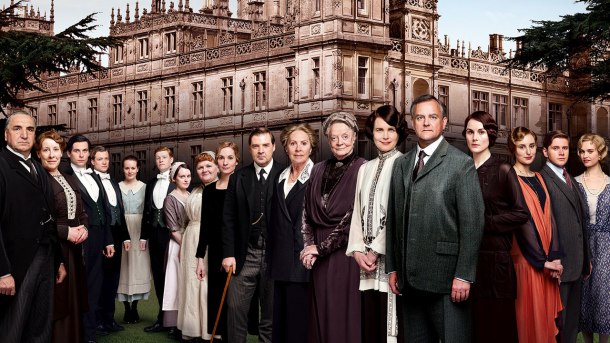
What I Learned from Downton Abbey

1280x720_downtonabbey_s4_cast


Six years is a good run. It’s also an investment in fictional lives, a milieu, and the often unnamed things that matter. Botch the story, send the characters off into self-absorbed whining, or worse, bore your audience, and they quit watching. Keep viewers who watch until the end and then look at each other with an expression of, “I-wish-there-were-more,” and you have done well as a writer. Downton Abbey, I believed passed the ultimate test of literature – a presentation close enough to life without actually mirroring it so that it speaks to us. A private world is created and we are allowed to live in it. We learn. We take something with us after the experience. This blog is about that something.

Lesson one: More than money, social position, or even the possession of near absolute power that can raise up the lowly or cause the downfall of the unfortunate – Kindness rules. (Take that, you politicians today who practice various scorched earth policies.) Kindness is the ultimate currency that buys life and influence; it is the power that eventually beats all others. It is in a lady’s concern for the progress of a village hospital. It is in a lord’s concern for the quality of housing built on an estate to help fund the Abbey. It is in a daughter’s willingness to swallow her triumphant pride and call back her sister’s estranged lover because it is best for her sister. It is in the pat of the hand of a dowager who tells the lady who has taken over her position as president of the hospital that she is doing a wonderful job. Kindness marks the lives of servants who worry about each other, save their own from suicide, risk their own positions to testify in court, keep secrets or not depending on what they think is best for the other person. It marks the generosity of an earl’s American wife and later, a newly-married husband who put their entire fortunes at the disposal of the family and the estate.

The greatest kindness is the vein that opens even in the prick of meanness. Because of it, the dog-stealer, the rebel, the scandalous, war’s wounded, and the petty autocrats are redeemed. Kindness heals; it makes the broken whole; it makes the savage human and the unsophisticated better than the aristocrat. When in doubt – be kind – always. At this point I am led to a greater passage – Portia’s speech on mercy from The Merchant of Venice, which many of us had to memorize (with good reading). “The quality of mercy is not strained. It droppeth as the gentle rain from heaven on the place beneath. It is twice blessed. It blesseth him that gives and him that takes….” Part of the lesson from Downton Abbey is that when the people are not kind, things do not go well, not for their rivals or themselves. The story of the under-butler Barrows is the best illustration. He almost died because of his own meanness and was saved only by the last-moment concern of a lady’s maid.

Lesson two: Nothing lasts. One would think that a house, an estate, a title chiseled into a culture and layers of traditions over many generations would ensure the continuance of those things, but it is not so. One of the interesting things is that Americans, we title-less, disorganized, anything-goes Colonials could be so fascinated by a class system we do not want, barely understand, and would certainly resent if it were imposed in the States. After all, we’ve developed our own class system based on money, which anyone can join if he or she has enough, no matter how that wealth was amassed. The Kennedys, the Rockefellers, the Gettys, and even the Walton family come to mind. What many did to get their fortunes may or may not have been legal; much certainly was unethical, but they did not get caught, or if caught, they found an oily way out. Fortunes are lost, not always by blunders, theft, or revolution. A fortune is lost because it is almost inevitable. It may take several generations, but it may also happen because a comma, a minuscule serif, is inserted in a piece of otherwise well-meaning legislation. Big Oil is a recent example, but there are others. Do you still own Sears stock? Enron? Bell Telephone? American Motors? Zenith Electronics? Even those that still exist are poor step-children today, sometimes the scullery maids who must get up first to clean out ashes and stoke the fires for others. Some ruined their own prospects; some fell to changing economic conditions, and some were simply swallowed up by predators.

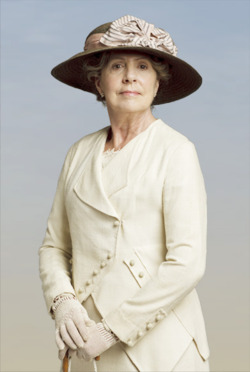
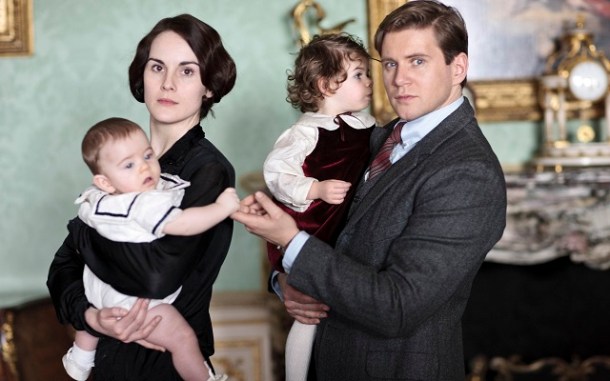
FIRST LOOK DOWNTON ABBEY SEREIS 4. Lady Mary played by Michelle Dockery with Baby George and Tom Branson played by Allen Leech with baby Sybbie COPYRIGHT: CARNIVAL/ITV

Even love may not last. It is interrupted by death, trouble, self-centeredness, pride, and faithless behavior. Love is a choice, and it must be re-chosen every day. We must tell our spouses. I choose you. I choose you. I choose you. Someone else may temporarily seem to be a better deal, but I choose you for the long term. Counselors tell us marriage is killed by disdain and the repeated eye roll. That means it is important we tell each other as often as possible: I choose you again. Designing maids may seduce lords. Ladies may be overly-appreciated by art historians. A visiting Turkish diplomat may die in a lady’s room. A chauffeur may marry a titled lady. We choose, and when we choose for the long term, things almost last. At least they last for long enough. At least they may last for a lifetime. What more could we ask?


Lesson three: No matter what our position, power, or personal integrity – we all just muddle though. In one of the most prescient titles of all time, Achebe’s novel Things Fall Apart reminds us all that Plan A is never enough. As Bobby Burns put it, “The best-laid schemes of mice an’ men gang aft a-gley.” In Downton Abbey we see the repeated near-bankruptcy of a privileged estate, a witness to other estates that failed, decayed, and became the mere ornament for the ultra-materialistic nouveaux-riches. Even the terms used to describe them are hyphenated.


images


In Downton Abbey, ovens break down the night of an extended family banquet; an old letter tossed into a fire nearly burns down the house; the joyful birth of a son is overshadowed by the death of the husband in a car crash, the same kind of accident that eventually sends Mary another husband. A child is born before Edith’s true love can marry her. An outsider, even worse, an Irish activist and mere chauffeur becomes the common-sense savior of the family estate. A bright, but naive daughter inherits a publishing company. A mere footman becomes an admired teacher who knows more than many graduates of Cambridge. All of this muddling, like struggles in any life, may seem impossible, but the older one gets, the more one has seen the impossible. A poor, black boy with an absent father becomes president. The presumptuously-named God-particle is found. A tiny wave in the time-space continuum is detected. Cancer cells may be “tagged” so one’s own immune system sees them as invaders and attack. Curiouser and curiouser. No one stays clean all the time. We rust. We sag. Our eyesight fades. Our memory gets more selective. It’s true of me, of you, of the famous, of the powerful, of the simple, of professors, of mothers who would give almost anything for a full night’s sleep, of fathers who don’t know where the next job will be, or the father who would give almost anything for a full night’s sleep, or the mother who doesn’t know where the next job will be. It’s all the same. We muddle through. We Muggle through. Magic may happen, but we have no wands.

The muddling makes us grow, and if it does not kill us, it makes us stronger. That is how LadyMary learns to run an estate; Lady Edith learns to edit a magazine; Molesley learns how to be a teacher, and Robert learns how to let go, possibly the most difficult lesson of all

Lesson four: No one succeeds alone. It was fascinating to watch the Abbey work on a daily basis like a finely-calibrated watch. Not always, but usually. The clearly defined roles and coordination were amazing. Even more powerful was the handling of a crisis. A dead body was moved. Farms were run; sick pigs nursed; fires put out; deaths mourned; banquets prepared. It was done by people thrown together by circumstance, by choice, and sometimes by necessity. Even when some said, “No,” others stepped forward to offer support. If you want to help, but there is really nothing you can do, give empathy. Empathy heals as well or better than kindness and often better than misguided intention. The fast friendship of Lady Violet and Matthew’s mother Isobel Crawley was not cemented by kindred spirit or even similar interests. It was firmed and confirmed by empathy. Sometimes they merely sat with each other, listened, and “felt.”

tumblr_lolef1fsM71qaendxo4_250


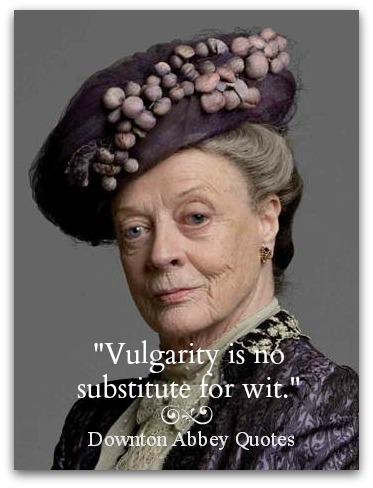
Lesson 5: Wit is always fun. My favorite character had to be Violet. At least she had the best lines, including several classics. “Weekend? What is a weekend?” About her friend Isobel in a tussle over the hospital. “Fight? Of course she’s allowed to fight. She’s just not allowed to win.” Even in her backhanded slaps, the harm is not so great from one somewhat physically feeble, someone still mentally sharp, and someone wearing a velvet glove. Comic relief is always important. I tried very hard to put it in my book, Hibernal, in the scenes with Porkchop andTrailer. It seems that some readers remember only that about the book. If they laughed out loud, as many readers reported, I am satisfied.

lady-violet-downton-abbey-quotes


All good things must end. Years ago I wrote a blog making fun of Downton Abbey, its excess, its confusing multiplicity of characters and emotional highs and lows. Somewhere along the line, I was won over, quite possibly because the reasonableness of its excesses, its interesting multiplicity of characters, and its emotional highs and lows. My disbelief certainly was suspended. If you win over a skeptic like me, you’ve done something, Julian Fellowes.


On Failure

We’ve all been there, that place where hope becomes expectation and then slides into wreckage. The kite crashes to the ground and is no longer a kite but only torn paper and two sticks. The blog we’ve written to inspire or at least amuse others has instead offended or worse yet, angered. The blog we decided to write every week or two slipped away into a six month hiatus while we worked at Epic culinary, celebrated various holidays, and visited relatives. A proposal for almost anything – a vacation, a job, a date, is met with – what’s that new thing called – the “resting bitch face.” Then there is the failure of having worked for years on a book and other years on a Master’s degree in writing, only to receive  dozens of rejection letters from agents and publishers of your genre who are not interested. No readers is a failure. Eventually one loses count. I was about to add the ultimate failure, the marriage proposal, but Pride and Prejudice notwithstanding, few today take the Darcy-esque risk with Elizabeth Bennett. Most often the couple has talked about marriage, and the guy already knows she will probably say “Yes.” (Often with an exclamation mark or two)

The interesting thing is that failure is often accidental or circumstantial rather than a disaster we caused. We don’t consciously choose to wreck our cars, break windows, or hammer thumbs. We knew those things were possibilities, but certainly, such an unlikely – ouch! Damn! (Followed by other automatic responses.)

What I’m mostly talking about today are the ones we ourselves cause and afterwards think, “How could I be so dumb?” I’ve experienced quite a few, and I think I’ve learned from them.

A whole class of failures are the ones witnessed by a spouse. A few years after we were married, we bought our first house, a small L-shaped ranch with a big back yard enclosed by a chain link fence. Trying to chase two birds with one stone, I hoped to please Ann by cutting out 200 square feet of sod, which I would use to cover the ugly sore of a new sewer line we needed the first month in our house, and fence in a garden for her where the sod had been. It would have been a beautiful gift. After fencing in the garden, I found the dirt below the sod was mostly clay, perfect for planting rocks or a tennis court, but not so good for a garden. In phase two I bought several bags of topsoil and rented a tiller, thinking that I could break up the clay, and she might at least be able to plant cacti. In her version of this failure from looking out a triple window in our kitchen – the only accurate version I might add – everything was going fine until I got too close to the chain link fence. One tine of the tiller caught the fence and started to climb it. To make matters worse, the climbing tilted the opposite tines, one of which caught our two foot high rabbit fence. As the tiller churned and I tried uselessly to pull it away (a six-horsepower engine really is stronger than one dummy), it wrapped the rabbit fence around itself until the blades locked; the engine backfired once, and then died. Ann figured we had just bought a tiller we could not afford in addition to a sewer line, and we needed the sewer line more. She said her eye roll turned to laughter when she saw me in typical English teacher fashion, take a step back, put my chin in my hand, and just examine the mess. Three hours and a lot of snipping later, the only real loss was the rabbit fence. The tiller was returned to the garden store in working condition. I did not charge the store for sharpening the tines on our wire rabbit fence. It was a magnificent failure. I learned that sometimes the universe kindly forgives stupidity, but even more meaningful is wifely kindness.

Sometimes failure can be funny, especially if it is shared. Before I was a teenager and started failing magnificently on my own, I remember a Saturday morning on a beautiful fall day when my father planned to cut down a rotting, very old cherry tree in our back yard before the branches broke off and landed on our porch. It was a tall tree, at least 50 feet high, and my father borrowed a chain saw and a lot of rope for this project. Because he was young then, and I was not even a teenager, he climbed the tree, roped himself to the trunk for safety, and attached pull lines so my grandfather and the three oldest boys could pull branches down into the yard as he cut them. The first three or four were successful, but when he got to the largest branch, he told us we’d better move the picnic table he had built out of two by fours.

“It will be fine,” my grandfather said, looking up at my father and eyeballing the falling trajectory of the branch.

My dad cut, the branch groaned, then fell free, sliding off a lower branch. We pulled the rope, and the branch crashed down on the middle of the picnic table, now a folded picnic table. Grandpa John, in a clear case of a master kicking the dog, looked at me, aged 10, Chris aged 8, and Ken aged 7, and said, “I TOLD you to pull. Why didn’t you pull?”

Dad started laughing hard enough that I thought he’d fall out of the tree. It was a magnificent failure. The lessons I learned from that one were so obvious and wonderful, I don’t really feel I need to state them here.

I will add the story of one of Ann’s brothers, but to protect his identify, I will not name the particular brother – he knows who he is, as does his other brother, Ann, and most of his other relatives. It happened on a beautiful fall Saturday when all the men on the block were in their back yards raking leaves. My brother-in-law is known to be slightly impatient, and in those days, at least in Indiana, piles of leaves were burned rather than scooped up by city machines and mulched. His piles were too damp to do much except smoke, so he decided in true manly fashion to help them along. Since lawnmower season was over and he had plenty of leftover gasoline, he began to squirt his piles until they simply had to burn. In a matter of seconds, one of his piles caught fire and the flame followed his stream of gasoline back into the gas can he was holding. He had a moment to think, “Uh oh, this is not good,” and then threw the can as far as he could. According to him, it did not explode, it IMPLODED in mid air, ruptured and spewed a shower of burning gas over most of his back yard. He raced around the yard, stomping out dozens of small fires before they could unite into one big fire and burn down the neighborhood. When it was over, he noticed that all the men in the neighborhood had been watching in shocked silence. Then, in unison, they began to applaud. Well done, man. Literally, his yard was well-done. It was a magnificent failure. You can imagine what it was like if you recall any one of the commercials by Allstate Insurance, featuring the burning, cut-up guy who calls himself “Mayhem.” I’m not sure what my brother-in-law learned, if anything.

As a short aside in tribute to Pride and Prejudice, I will quote Mr. Bennet, who said after one of his family’s magnificent faux-pas, “For what do we live, but to make sport for our neighbors, and laugh at them in our turn?” Ah, truth.

What prompted this blog was not so much a desire to air my secret lapses or to prepare myself and those around me for future, more eye-rolling achievements, but rather, it began with an evening of Tchaikovsky.

More specifically, we went to the Madison Symphony Orchestra concert at the Overture Center in Madison last Friday to hear Beethoven, Ravell, and Tchaikovsky. I was struck by one of the program notes for the magnificent and beautiful Overture to Romeo and Juliet. Allow me to quote from the program. “In 1868, (Tchaikovsky) dedicated an overture titled Fate to his friend Balakirev. While Fate was a complete flop – Tchaikovsky later destroyed the score – it was the beginning of a close friendship, and Balakirev encouraged him to take Romeo and Juliet as a subject…. The first performance in 1870 was unsuccessful, and Tchaikovsky revised the work, incorporating several of Balakiren’s suggestions. He revised it once more a decade later – the version that is familiar today – in particular working the dramatic ending. (Program notes by J. Michael Allsen)

Pyotr-Tchaikovsky-BORDER1


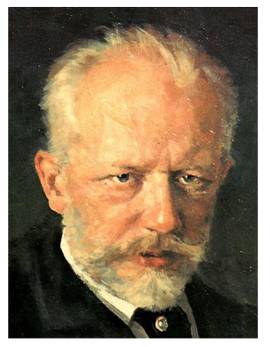
Ah, Peter Ilyich Tchaikovsky, a genius and double failure. Only the third try ten years later was a
success. I am reminded of other failures.


Beethoven had several, including his insistence to be onstage for the premier of his magnificent 9th symphony. Here is one eyewitness report.

800px-Beethoven

Jumping Around Like a Madman


By 1824, Beethoven was almost entirely deaf, but still wanted to be part of the performance and was on stage while the piece was performed to indicate the tempos. Yet, Beethoven could not resist “helping” the musicians on stage by showing them the style and dynamics that he wanted, even though he was nearly deaf.


The great composer’s actions were animated to say the least. One musician wrote, “He stood in front of the conductor’s stand and threw himself back and forth like a madman. At one moment he stretched to his full height, at the next he crouched down to the floor. He flailed about with his hands and feet as though he wanted to play all the instruments and sing all the chorus parts.” It was a good thing that the conductor had already instructed the musicians not to pay attention to the composer!

In another account…

The premiere of Ludwig van Beethoven’s Symphony No. 9 was nearly a complete disaster.

Beethoven’s first on-stage appearance in 12 years in Vienna on May 7, 1824 didn’t go as planned for the premier of the Ninth. It was the largest orchestra that he had ever assembled. It’s known that some of Vienna’s most elite performers were in attendance. Beethoven even had two famous singers sing the soprano and alto parts. Though the composition itself is beautiful, the performance itself was somewhat disappointing.

Many spoke out that they thought it was under-rehearsed and “scrappy” in its execution. It’s said that while the audience applauded at the end, Beethoven was actually off by several measures and was still conducting. A member of his orchestra, Caroline Unger, had to walk over and turn the musical mastermind around to accept the audience’s cheers and applause. But violinist Joseph Böhm stepped forward afterward to praise Beethoven and explain that he was not to blame for the choppy experience.

“Beethoven directed the piece himself; that is, he stood before the lectern and gesticulated furiously. At times he rose, at other times he shrank to the ground, he moved as if he wanted to play all the instruments himself and sing for the whole chorus. All the musicians minded his rhythm alone while playing.”

This failure didn’t hit Beethoven too hard. The audience gave him five standing ovations.

Even in failure we may succeed.

So far, this catalogue of failures merely documents what most of us already know. As the actor Jim Carrey once remarked, “Those who succeed are the ones who just keep going.”

There is another aspect of failure, however, that I believe is more important than seeing failure as merely a step, a pause on the way to success. Failure is important, and I’m convinced it is actually a blessing because what it does to us as humans. Success ruins us. The quicker it comes, the more it ruins us. The easier the success, the more damning the ruin. The greater the immediate success, the more complete the ruin.

How can this be?

Failure enlarges us. Failure in love makes us kinder, deeper, and more able to love greatly. Why? Because now we know its importance, its worth, its cost. We may temporarily become discouraged, angry, perhaps even despondent along with every feeling in between. Even those painful things make us more human. We become truly great by rising out of ashes. Suffering enlarges our capacity. What we often find is that the success we so desperately sought is not really the success we need. The game we are in is bigger than the game we think we are playing.

A child who falls in learning to ride a bike may have temporarily failed, but what that child is actually learning is how to overcome adversity. It’s greater than learning to ride a bike, which that child will learn to do eventually anyway. Which is the greater success – learning to ride a bike or learning to overcome adversity and skinned knees?

History is a catalogue of wonderful failures: Gandhi, Martin Luther King, Michael Jordan, J.K. Rowling, Thomas Edison, Abraham Lincoln, Ben Franklin, Galileo, Vera Wang, Vincent Van Gogh, Emily Dickinson.

emily-dickinson


Jesus!

To those who fail utterly or die in the struggle, even death cannot prevent their greatness, their legacy, their accomplishment, their bequest to the rest of us.

Take heart. When you fail, it is usually temporary; it is a blessed teacher; it increases your capacity and your potential. When you fail, your perspective changes. When you fail, you now have rubble with which to build a fortress instead of a tower. The stone rejected becomes the cornerstone.

I don’t deny the pain. When you fail, I recommend that you do it “big” and try not to die in the process. Then I think it helps to take a step back, put your chin in your hand, study the twisted wreckage for as long as it takes, and then tell yourself, “Wow, that was magnificent. That was one of my best failures e-vah.”


The 6 Mistakes We Keep Making through the Centuries

Following a Trail

(Alert: this is probably one of the more important things I’ve written.)

It’s fun when you start on one journey in reading, and that path leads to unexpected places. That’s what happened last week while I was reading a book by Mark Nepo called Finding Inner Courage. In passing, he mentioned a quotation of Cicero, usually tagged, “Six mistakes mankind keeps making century after century.” It resonated with me, and I thought it deserved to be resurrected and examined more than just in passing.

Unknown-1


Marcus Tullius Cicero was born in 106 B.C.E., and was killed by forces in league with Mark Antony in 43 B.C.E., having been named an enemy of the State for writing diatribes against the Second Triumverate in favor of a return to a republic. He was a politician, but his most lasting reputation was that of an orator who affected writers after him for hundreds of years, most notably Petrarch. Others who trod his path were Hume, Locke, Montesque, and probably Thomas Jefferson. One historian wrote that the Renaissance was actually a revival of Cicero, and through him, classical antiquity. We could certainly use him today.

Our first recurring mistake according to Cicero: Believing that personal gain is made by crushing others.

The backstory to this error is the pie theory – if you get a bigger piece of pie, mine will be smaller. The error in this picture is its assumption that the pie doesn’t get bigger, that a Gross National Product never increases, that production doesn’t improve, that new products aren’t developed and greater efficiency never happens. In short, this mistake assumes there is never enough of anything – food, capital, knowledge, stuff. Even with recessions every 25 years or so, data and Warren Buffet contradict this view. Ten years ago we suffered through one of our worst recessions ever, but now the market is up to over 18,000, unemployment is down, and we’re producing more of everything from cars to cell phones. We’re almost back to where we were, and in some ways, we’re better off than then.

There is a corollary mistake, it seems to me. I don’t care how many assets the top 1% of our wealthy accumulate. Each one can have ten mansions and 43 Rolls Royces for all I care. What does bother me are two related things. When they use their money and its power through governments to crush or take advantage of others, I have a problem. Don’t tell me it isn’t happening. It doesn’t bother me if people rise to the top on a level playing field, but that’s not what we have.

The second thing is that all humans, I truly believe, deserve a minimum of safety, housing, food, and health care. We can afford that and don’t need to take away anyone’s mansion. We can’t accept starvation and needless death, especially of innocent children. How we treat our weakest, our infirm, our mentally challenged, and our veterans suffering from PTSD for our sake, is a greater test of who we are than how much affluence is evident in our society. I want some enlightened capitalism. For example, I saw an article in a local Madison paper last week with the headline: More Than Minimum. It noted that one of the independently-owned Culver’s fast food restaurants in Madison paid workers four to eight dollars over the minimum wage per hour, included health care, dental insurance, two weeks of vacation and a contribution to a 401 K account. The owner, Susan Bulgrin, said it was worth it to keep employees working together in an experienced crew rather than re-training temps every two weeks. Besides, she said “It was just the right thing to do.” I don’t eat much fast food, but the next time I do, I know where I’m going. Bulgrin has it right. Hers is now the top performing Culver’s in Wisconsin. It’s on Todd Drive, just off the Beltline near Park Street and Badger Road in Madison.


Seattle understood the same thing when they figured out if they required a higher minimum wage, those workers would spend more money in the community, and it would help everyone in the long run. The pie grows bigger, including a bigger piece for restaurant owners. Pay workers less and an owner might make more money in the short run, perhaps more than he can spend in the community, but the pie grows smaller and more stores will close, including eventually, that owner’s store. Detroit is a good example. If executives keep their high-paying jobs even in mis-managed companies with bad design decisions based on short-term profit, while the workers’ pay is reduced or their jobs cut, the community will fail.


Our second recurring mistake according to Cicero: Worrying about things that cannot be changed or corrected. This worry does not include the first recurring mistake. We don’t need to crush others. There really isn’t that much that fits into this category. There are some health issues, stage 4 cancer for example, that cannot be immediately be corrected. In the long term, I believe everything can be changed. We’ve already found treatments for cancer that add years, if not a lifetime, to diseases that were short-term death sentences 50 years ago. Do you know anyone with polio? Me neither. Everything else can be corrected or changed. (More on that next time). Even when our education system is under attack, is it better than the one-room schoolhouse of two generations ago? Yes. Is it better than the abuse I and my classmates suffered at the hands of a damaged nun in first grade? Yes. We can start by avoiding another fallacy – speaking of education in the U.S. as if it is one terrible monolithic institution. We have great schools and we have terrible schools. Most of the terrible ones are in ghettos or economically depressed areas. We should ignore the test scores, which are mis-interpreted at best and useless at worst. Here’s a better place to start – look at a recent TED talk about new and more human ways to run a business or a school.


http://www.ted.com/talks/ricardo_semler_radical_wisdom_for_a_company_a_school_a_life.html??utm_medium=social&source=email&utm_source=email&utm_campaign=ios-share

Cicero’s advice here makes much more sense on the personal level. I can’t change the people around me beyond requesting something irksome or offensive be stopped. They may not, and then I may choose to leave. There are things we can change. That’s the basis of the “Serenity Prayer” of AA penned by Reinhold Niebuhr and his daughter –

“God, Give us the grace to accept with serenity

the things that cannot be changed, Courage

to change the things which should be changed,

And the wisdom to distinguish the one from the other.”


This leads me to a subject of another blog at a later time, the fallacy of the “all or nothing” attitude. The short version is that I don’t believe we can solve most of our problems today. What we can do is make things better; keep making them better over the span of months and years, and then the problems go away. It’s the idea for most things we face. Infrastructure – fix one bridge and road at a time. Schools – improve one at a time. Healthcare, hospitals, dangerous mines, unwanted pregnancies, terrorist plots, unsafe neighborhoods? The only way they can be improved (and probably perfectly fixed) is one at a time. It’s the central idea of another thread, a book by Anne Lamott on how to be successful at writing a book on birds (or anything) by writing bird by bird.

The point of what Cicero said is the futility of worry about things we can’t change. We worry about society, politics, children, traffic, and the weather. One irony here is that some of the people I know who worry the most (or are angry – and anger is worry in action) are very religious people. You’d think their faith would give them reassurance that a higher power is in control, but that doesn’t seem to be happening for them. Deep spirituality matters a lot, but adherence to any one particular religious institution – not so much. We all ought to carry a card that we’d pass on to anyone we meet. It would read: I am a human being with spiritual traits. I am currently on Earth – just along for the ride. It’s an interesting vehicle – this little blue planet. I pick up my own trash. Tell me your story. In The Hitchhiker’s Guide to the Universe, it is recommended that we all travel with a towel and don’t panic. I agree.

I also believe and will soon write about the idea that if something is true, its complement is also true. Cicero says this in his next major human mistake: Insisting that a thing is impossible because we cannot accomplish it. History is full of examples of this fallacy.

If you are the politician, engineer, governor, or county road commissioner who believes he can fix every road and bridge in his district – go for it. When I look around, I don’t see it happening. We have had some major surprises, though. People do the seemingly impossible. Ending polio. Sending astronauts to the moon. Dental implants. 3D printers. Smartphones. Solar-powered buildings. Cars that warn of dangers and will soon drive themselves. Sometimes I think the greatest impetus to achieving something remarkable is being told it couldn’t be done. So I’m saying it. I dare anyone out there to prove me wrong. Ha. A cure for pancreatic cancer? Let’s see it. Cicero says you can do it, even though he couldn’t.

Even geniuses could be surprised. If you told Leonardo da Vinci how much a jumbo jet weighed and then said it was about to fly, he would not believe you. Einstein had a hard time believing that over 60% of the energy in the cosmos was in the form of “dark matter” that could not be seen and may perhaps exist only in another dimension that we could not study. He understood the math, but not the enigma. Mere milkmaids cured smallpox, although Edward Jenner got the credit. The “un-doable” is a long list: pyramids, heart surgery, detached retina surgery, memorizing the Bible, Fitbits, GPS devices that can find small trout streams in the middle of Wisconsin coulee country, bionic replacement parts, and even this “olde” iPad and Bluetooth keyboard on which I blog. If I write this blog again a year from now, who knows what could be added to the list in that short time. Cicero is right – we advance technologically and keep making the same six philosophical mistakes over and over again.


IMG_1558 2


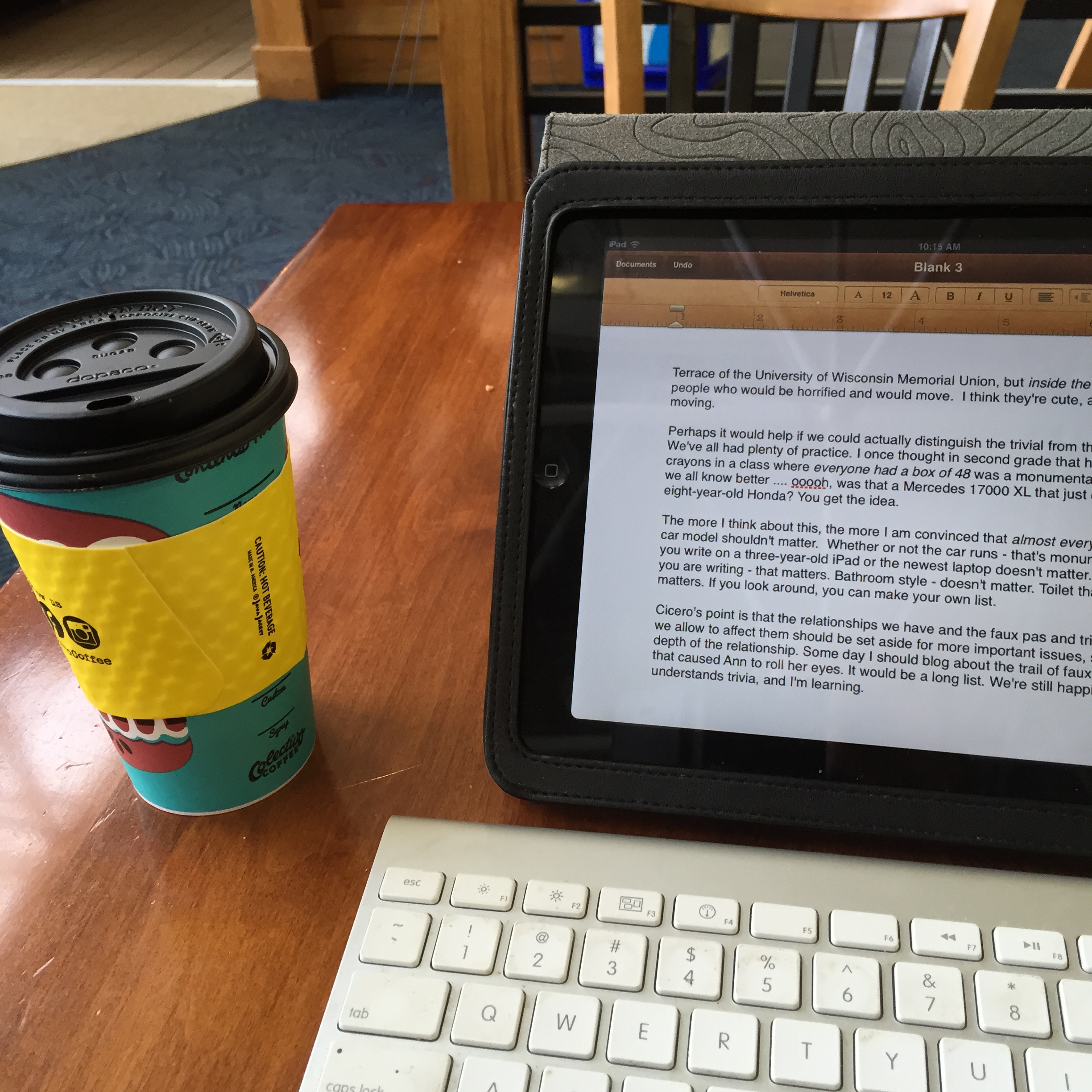
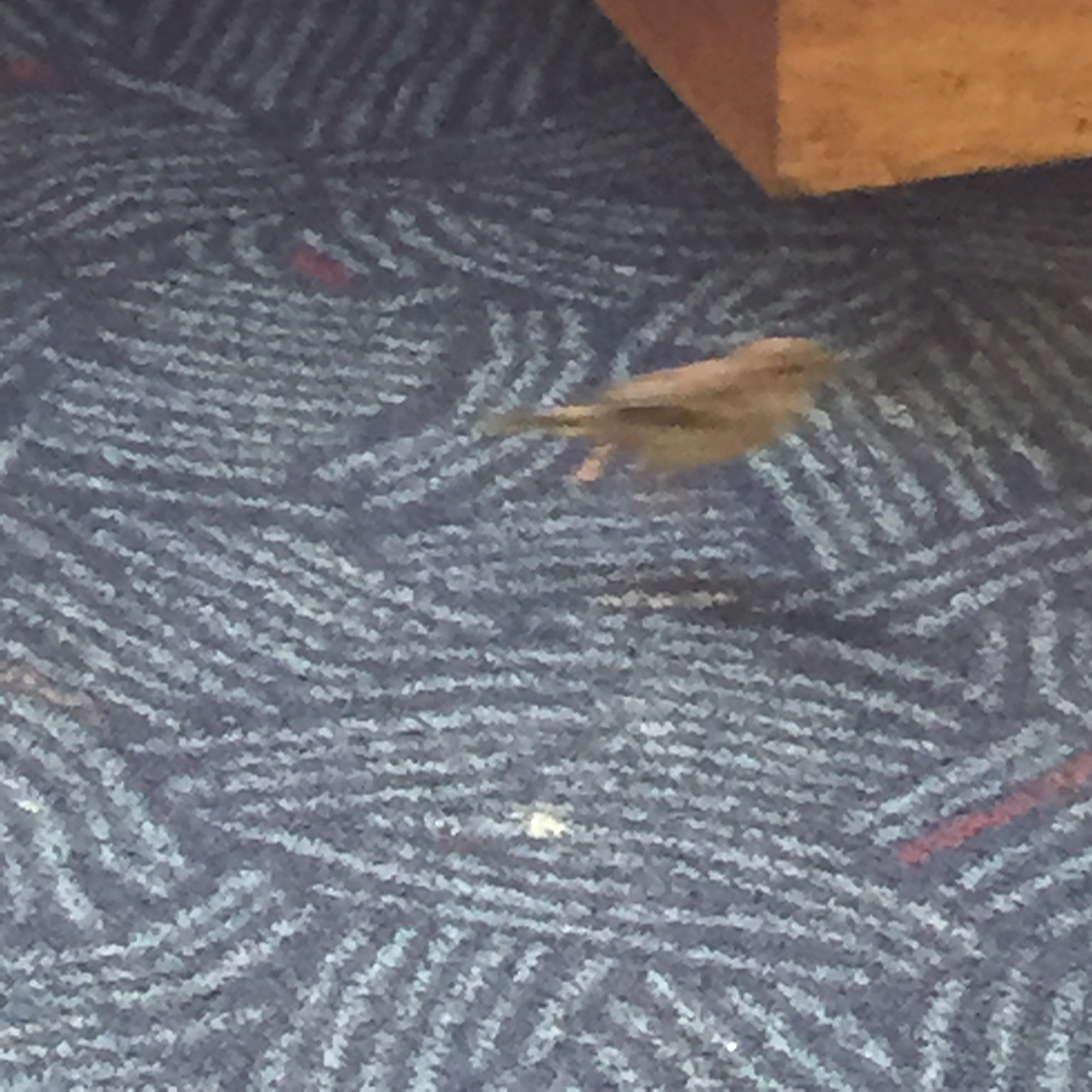
Mistake number 4: Refusing to set aside trivial preferences. We all have experienced family feuds, perhaps not the deadly ones between families, but the ones inside a family – Aunt Tillie won’t be in the same room with Uncle Marco because he made some disparaging, not-funny joke about her potato salad in 1987. Okay here’s one… I’m writing this inside the terminal of the Milwaukee airport (that’s another story) at a table next to a wonderful Colectivo Coffee lounge, and three sparrows just hopped by on the carpeting next to me looking for crumbs from my table. I’m used to this at the Terrace of the University of Wisconsin Memorial Union, but inside the terminal? I know people who would be horrified and would move. I think they’re cute, and I don’t plan on moving. Here’s one of my friends on the carpeting next to me.


IMG_1571


Perhaps it would help if we could actually distinguish the trivial from the monumental. We’ve all had plenty of practice. I once thought in second grade that having a box of 24 crayons in a class where everyone had a box of 48 was a monumental disaster. Now we all know better …. ooooh, was that a Mercedes 17000 XL that just drove by my eight-year-old Honda? You get the idea.

The more I think about this, the more I am convinced that almost everything is trivial. A car model shouldn’t matter. Whether or not the car runs – that’s at least important. If you live downtown in a city with good public transportation, a car may not matter at all. Whether you write on a three-year-old iPad or the newest laptop doesn’t matter. Whether or not you are writing – that matters. Bathroom style – doesn’t matter. Toilet that flushes – that matters. If you look around, you can make your own list.

Cicero’s point is that the relationships we have and the faux pas and trivial events that we allow to affect them should be set aside for more important issues, such as the depth of the relationship. Some day I should blog about the trail of faux pax I have made that caused Ann to roll her eyes. It would be a long list. We’re still happily married. She understands trivia, and I’m learning.

Human Mistake Number 5 – Neglecting development and refinement of the mind. Face it, we live inside our minds, and our bodies are smaller than our minds. I’ve listened to some people whose minds seem to be unweeded gardens. I don’t listen to them for long. I’ve listened to other people whose minds seem to fill the room. Their positive energy, love of life, interest in people and ideas, knowledge of history, and wide experiences make it worthwhile to be with them – along for the ride on this little blue planet.

I’m working on developing myself and recommend it. During any given week, I’m reading some classic that has stood the test of time (currently Antony and Cleopatra), some non-fiction (currently Nepo’s Finding Inner Courage), daily Bible chapters and something else spiritual (currently re-reading Joel Goldsmith’s The Infinite Way), my hobby (currently Ernest Schweibert’s book on stream nymphs – um, of the insect variety), and something modern (currently Donna Leon’s mystery series set in Venice).

I quit watching the news on TV when I concluded it was mostly bad, mostly about incidents of violence, and according to recent studies – mostly untrue. I’m talking about a range of 45% to 83% untrue, depending on the network. I look at headlines online and avoid reading any articles that are negative, attacks on individuals, or sensational. I know next to nothing about current Hollywood and network stars, and I’m almost proud of it. Katy who? There are a few thoughtful writers I trust but do not always agree with. I will read almost anything by Malcolm Gladwell, David Brooks, Paul Krugman, Anne Lamott, John Nichols, Maureen Dowd, Daniel Pink, or Ray Kurzweil. I watch TED talks online while I walk on a treadmill every weekday. I realized that I was terrible at reading music, so I bought a series of instructional DVD’s on learning the piano, so now I’m studying it, not just playing it.


I challenge you to do likewise, whatever developing yourself means to you. I recommend avoiding anything on TV, the net, or papers that induces fear in you, or worse – anger. Anger is poison. The Hunger Games, Game of War, and 50 Shades of Grey are infections. Read Cicero instead. Play chess. Play with your kids and grandkids. It’s amazing what you can learn from them.


Cicero’s Last Continuing Mistake – and Probably the Most Important – Attempting to convince others to believe and live as we do.


I recently read an eye-opening book by Parker Palmer called Healing the Heart of America. He cites studies in which people show a marked tendency to watch only programs that already fit their world political view, and when confronted with facts or events that contradict that view, they only become more set in that view and look for support elsewhere. Facts become meaningless if they do not support their view. This closed-mindedness is often coupled with a fruitless propensity to try to change everyone else’s point of view. I believe his studies are true. The implication for me is a resolve to avoid pointless arguments on politics, religion, or science, especially on Facebook. Instead, I only want to comment in the interest of truth with “That’s not true. Here’s a reliable source.” I may post something surprising without comment in the interest of truth, but even there, I’ve had to follow up with a modification or correction when I learned something additional. I’ve not had any total retractions that I can remember. I am shocked at how easily people repost the most outrageous, scandalous charges without looking anywhere to see if any of it was true. Then I realize there was a time when I was that guy. I don’t go there anymore. It’s like stepping into a tar pit. Tar pits are full of dead dinosaurs, so unable to understand anything different that they got stuck where they were and died. Don’t die in a tar pit. Go along for the ride with me on this little blue planet. Bring a towel and don’t panic. Oh, look, there’s a trout stream in a meadow. You don’t need to find a better universe next door; it’s right here. Let’s go.


Husbands, Listen to Your Wives

This is a blog about awareness, one of the steps along the path to Enlightenment, which I don’t understand, and it’s probably not a path anyway, and if you have to write or think about it, you don’t have it, just like trying to explain jazz to someone who’s not a musician. You get the idea. Anyway, I think awareness must eventually come from lessons learned. Sometimes I think the concept of reincarnation was invented to encourage people like me who learn in fits and starts. A “start” is equivalent to one year, and a “fit” takes 50 years – minimum.


A few days ago, I went to Whole Foods, a fine organic local market, which our daughter jokingly refers to as “Whole Paycheck,” only it’s not really a joke, and I got behind a woman about my age who was using her shorty cart like a walker, and she was in the middle of the doorway to pick up and examine a heart-shaped box of holiday chocolates or mints or something which she had no intention of buying. I started singing “Dum, de, dum,” jazz style in frustration. I probably should have prayed or done some kind of mini-meditation – slow breath, one, two, focus, ahh, inner peace, yes, I am so aware of what’s around me and – Geez, is that woman going to look at those chocolates all morning? I need some lettuce and a pomegranate for my wife – come on, Lady. Then I realized this was just another classic demonstration of the differences between men and women. Shopping to her means gathering information, picking up and examining everything that might be of remote interest, today or in five years – before choosing things on her list and a few other things of some inexplicable appeal. I am the hunter – go to the produce section to get organic lettuce, onions, and a pomegranate for my wife and get on with my life, which this week includes a lot of college basketball and looking at where future football stars will go to college after national signing day. Come on, Lady.

Stay with me; this is still a blog about awareness. After I got the lettuce and pomegranate, I dodged two tackles, juked a linebacker, spun through the clutches of a safety, and made it to the goal line. I spiked the lettuce, some onions, a pomegranate, and tub of organic cottage cheese on the rolling counter to check out. A young woman with a ring in her nose (apparently a requirement for working at Whole Foods in Madison) started to check my things, and then paused.

“Um, I’m sorry, sir, but one of these onions you chose has some mush or rot or something on the bottom. Do you want to get another one?”

Bam. Awareness. Wow, she noticed that rot through the plastic bag I put them in. Why didn’t I check out all of the onions I picked up like the lady in front of me?

“No,” I said, “Just give me the other two.”

“Okay.” She started over, but another pause came.

“I’m sorry,” she said with great patience, almost pity for me, “This cottage cheese has been opened by someone. Look. Both the lid and the foil seal have been opened. Who knows how long ago. Do you want to get another one?”

“Yes,” I said and rushed off through more linebackers and safeties to get a sealed tub, for once acting like careful woman more aware than I. Lesson learned. Hunters have no business in grocery stores. They belong in woods and trout streams unless they can learn to listen and be a little more observant.

Now, about listening to one’s wife….

Because my wife spent several weeks on the couch with her foot up on pillows after some surgery to remove a bone spur from her foot, I’ve been running more errands than usual. I’ve learned to take two lists, one list of the things we need, and one list of womanly instructions. Here’s what they look like, side by side.

“Freezer bags – Don’t get the cheap ones. They have only one seal and are so thin they rip easily. Because the brand-named ones are more expensive, they’re at eye-level before you get to paper goods.

Lemons – The “Dirty Dozen” list says these need to be organic.

Onions – The “Dirty Dozen” list says these don’t need to be organic. Get the sweet ones, not the red or or little spuddy ones. Vidalias aren’t worth it, because most of those labeled as Vidalia onions aren’t really from Vidalia. I read all about it.

Apples – These must be organic, preferably Honeycrisp, but not if they’re $3.99 a pound. Gala apples are okay if they’re $2.99 a pound. They’re on the other side of the display bins towards the broccoli. Use your own judgment. (Men: this is a trap. Do not use your own judgment when buying apples. Buy the Honeycrisp and tell her they were on sale for $2.99 a pound. Then rip up or lose the receipt. She’ll excuse your being a man and losing the receipt, but not buying Honeycrisp apples at $3.99 a pound, even though that’s what she really wants and paying an extra $.25 an apple is no big deal to a man.)

Rotisserie chicken – Because it’s Tuesday, they’re $2.00 off. There is grease on the bottom, so put the plastic container inside a plastic bag that you can get at the end of the aisle near the frozen fish. Don’t spill the grease on anything else. Ask to have it bagged separately. I want to make soup broth out of the carcass.”

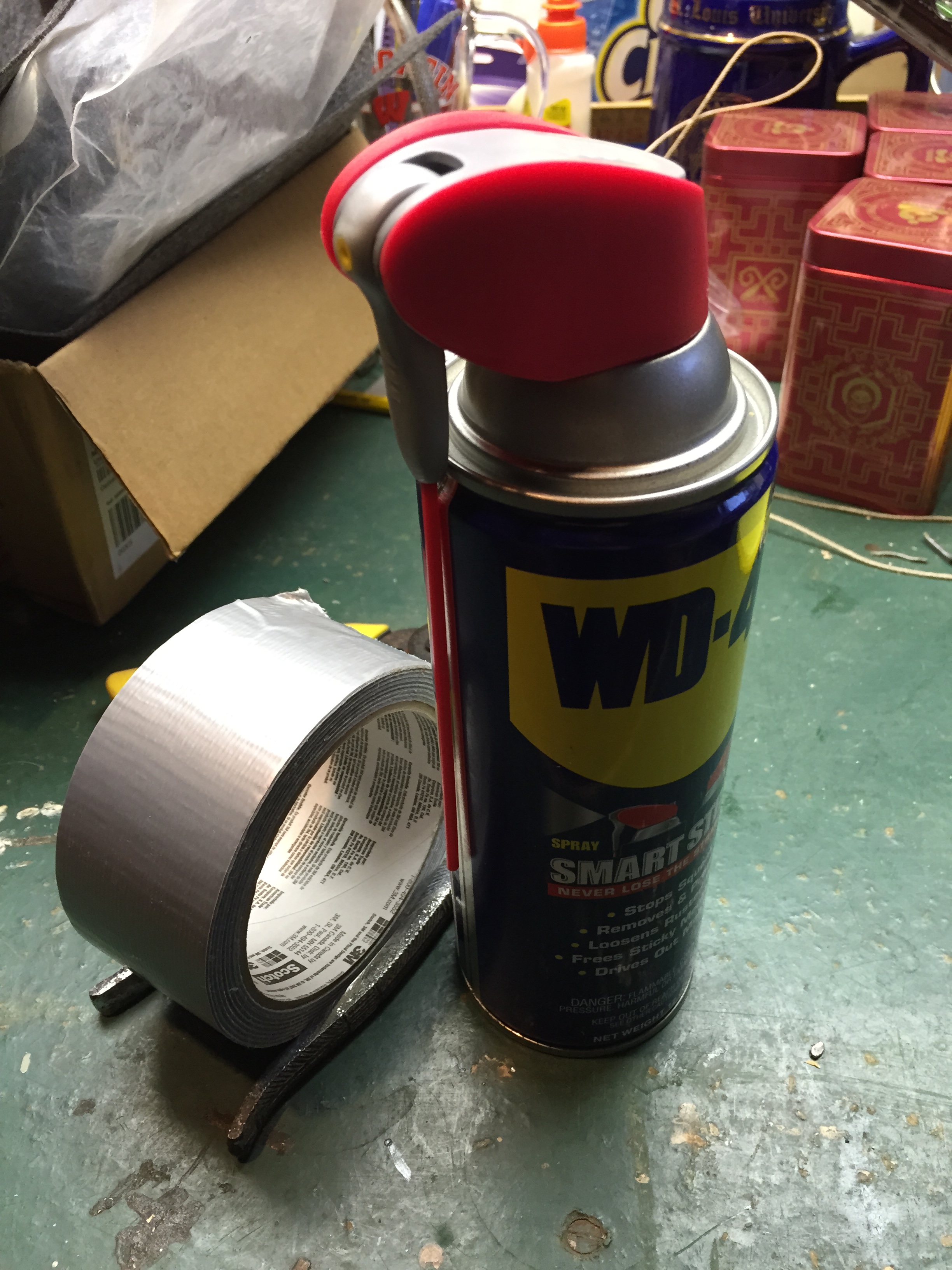
And so it goes. There is a place in a woman’s brain where she remembers stuff like this. That place in a man’s brain is filled with motor oil and WD-40.

In case any readers are women with brains like my wife, here’s what WD-40 looks like. It fixes everything that should move or pivot without squeaking. For everything that should not move, there is duct tape. Do not be fooled by the brand “Duck Tape,” which is marketed to fool women who don’t also know about WD-40 and men who are CEO’s and don’t know about either duct tape or WD-40.

IMG_1557


While the girl was checking out the onions and rotisserie chicken, I got a text from my wife, which read: When we re-packed the Christmas stuff in boxes, I noticed that many were popping open. We need more duct tape, not the mailing tape you used that ripped the boxes and then dried out.

Another lesson learned. Marry a woman who knows what duct tape is.

Shopping is one place where a woman’s expertise intersects with a man’s ignorance. A final case in point. Several months ago we bought a Wisconsin Badgers watch on sale as a Christmas present for our son, a UW grad. “It’s pretty big for a watch,” my wife said. “He likes watches, but his other ones are not that big. Save the receipt.” Fast forward to Christmas morning when I noticed the look on my son’s face when he opened the box with the watch. Later I went through a file of hundreds of receipts and could not find the one for the watch. The occasion prompted my reciting the three most important words in the English language….

“Right again, Ann.”

Men, listen to your wives when you’re shopping. However, it’s not all bad, being a man. I now have a Wisconsin Badgers watch, which I have convinced myself that I like a lot.

Be Right or Be Kind?

Hibernal cover

Special: You now can download Hibernal, my literary suspense after Shakespeare’s classic A Winter’s Tale or your Kindle or Kindle app through Amazon for only $2.99. If you like intrigue, the trials and triumphs of a good love story, humor, and fascinating characters, it’s worth a click. You can search Hibernal on Amazon or copy and paste this in your browser:

The paperback is available as well through Amazon.


I have an app that lists major events on this day throughout history. It is a rather disturbing app. There were a few good things that happened as I write today – Washington’s inauguration, the end of the persecution of Christians by Diocletian in 311, and a few things that depend on your perspective, such as the completion of the Louisiana Purchase, which doubled the size of the United States. However, that event was not good if you were a Native American and your land was sold by the French, who did not own it, to the new Americans, who would take it over and boot you out. The disturbing part of the daily record app is the list of deadly battles, executions, and disasters. Casey Jones wrecked his train and died today because he was behind schedule and sped to catch up. (I assume he was not texting his girlfriend.) Emperor Licinus defeated Maximinus. Edmund do la Pole, Yorkist pretender to the throne, was executed by Henry VIII. The Camp Grant massacre took place in Arizona in 1871. The list goes on, but you get the idea. The trail of blood is unnerving.


Even alternative histories, such as Howard Zinn’s A People’s History of the United States, which promises to avoid defining history as a successive description of wars, battles, executions, and massacres perpetrated by cities, states, nations, religions, and individuals, is mostly a depressing description of attacks on minorities, unions, and ad hoc leaders of the common people, with a very few successes noted, mostly with heavy costs exacted from marchers, organizations or the powerless. I recommend it if you can stomach depressing history. The trail of blood is unnerving.

51qcAhimiVL._SL160_PIsitb-sticker-arrow-dp,TopRight,12,-18_SH30_OU01_AA160_


As with most of my entries, I seek to improve life and be positive, if not inspirational, by changing perspectives. Sometimes that is difficult to do. To anyone who reads this, I hope you may find a change in perspective. I have no intention of rewriting history, but I want to see the present differently so that I may live differently. I seek a better life in fact.


So how can I do that? What I see in my app that lists events in history is that almost all of the deaths and disasters were preceded by judgments based on labels, most of which demonized some opponent and made it legal, if not “necessary,” to kill that person or movement. The result is another unnerving trail of blood.


Two other books are relevant here, it seems to me.


41EOlL+w6KL._SL160_PIsitb-sticker-arrow-dp,TopRight,12,-18_SH30_OU01_AA160_


Malcolm Gladwell’s Blink is a study of how we make judgments, more often than not, in the blink of an eye. Those judgments are based on minute observations, perhaps intuition, a gut feeling, or a vibration that is not logical or explainable. Usually, those judgments serve us well as we navigate life’s dangers – but not always. The issue here and the perspective I wish to change in myself is not a refusal to make such automatic judgments, but rather, to change how I act or don’t act on those labels and judgments.


For example, in our current political climate, the labels Democrat and Republican have become meaningless to me; neither represents me; neither is good or bad in themselves, and using either label as a rallying point or pejorative will not succeed in improving our country. The same can be said of Conservative and Liberal. Their inconsistencies, differences between what each says and what each does, and their alienating tendencies to create Us vs. Them will not serve our country well. For a long time, I believed in Pogo’s ironic statement “We have met the enemy and he is us,” but I have come to believe that making anyone an enemy, including ourselves, will doom us to failure. If we remain a house divided, we will not stand, at least not much longer. As a first step, I commit myself as a citizen and writer to quit using labels that might alienate those whose cooperation I need. I need people to disagree with me so that I may see differently. I must disagree or agree with ideas; I do harm by attacking the person. I do harm by labeling, even in applying a label to myself.


I may be most wrong in the things about which I am most certain, and history, the real history and not the editorilizing written in books, will most likely show me how wrong I am. That lesson may take years. History is VERY slow, often not becoming evident until another generation comes along. Absolute righteousness leads to disaster, as if did for the perpetrators of the Inquisition, the “missionaries” to Native Americans, anti-communists in Viet Nam, the WMD apologists in Iraq, the British rulers in India, and more recently, fracking oil companies in North America. The fact that they are/were so certain of their capabilities and rightness sends up red flags to me.


This does not mean that I must be kind to everyone, everywhere. Psychopaths, who have proven their danger like Osama Bin Laden, are not to be greeted with a friendly hello; they must be stopped. The same is true of child molesters, drunk drivers, and abusers. In daily life, I don’t meet many psychopaths, those so without empathy that the pain of others is irrelevant to them, so I try to be kind to almost everyone.


The second book that I recommend as relevant here is Jonathan Haidt’s The Righteous Mind.


41h9b+YMawL._SL160_PIsitb-sticker-arrow-dp,TopRight,12,-18_SH30_OU01_AA160_


It is an analysis of quite a few psychological studies of how people make judgments or take positions. Its thesis, which I have come to observe in my own behavior and dealings with others, is that people generally decide on issues based on preconceived notions, intuition, loyalty to a group, or the instantaneous leaning Gladwell wrote about in Blink. Reason is most often used later to justify a position we have already taken. Facts, examples, and statistics that contradict us only make us more entrenched in the position we hold. Again, it takes time for a lot of people, myself included, to admit they are wrong. The irony is that the more certain someone is that he is right, the more likely that he is wrong, and the longer it will take for that person to realize it. For the interim, be kind. For the times I am wrong, kindness will ensure that I don’t make things worse. If I am right, kindness will convince my friends that I am right long before facts, data, examples of statistics will. In fact, kindness is most often like jeans, best worn almost anywhere. On the few occasions where I can’t wear jeans, I defer to my wife or daughter, whose fashion sense is far more insightful than my own. I need them to disagree with me. The times when I insisted on my own right fashion sense – well, embarrassment is not always a beautiful thing.


Another irony here is that those who most necessarily ought to be kind – powerful and rich individuals, churches, families, schools, hospitals, and governments – are not that kind to people. I will know when we are making progress after I see that an app listing great acts of kindness for any day in history shows up in AppsGoneFree. I will know we have become enlightened when I see corporations and institutions practicing kindness as its standard operating procedure. Can you imagine what a day that would be? I might even go back to shopping at Walmart, the psychopath of corporations. Oops, that’s not very kind. I’m going to rewrite that sentence and then delete it, and instead write something nice.

Here it is – Walmart is a very efficient corporation that offers low prices to those who cannot afford better.


I still won’t shop there if I can avoid it. I care more about local stores and health care for struggling workers. They deserve my kindness more than the Wall billionaires.


When you read this blog, please remember with empathy that my purpose is to stimulate thought and be positive. If you leave a comment, whether you are right or not, be kind.

On Being Late and an Indictment of Spring

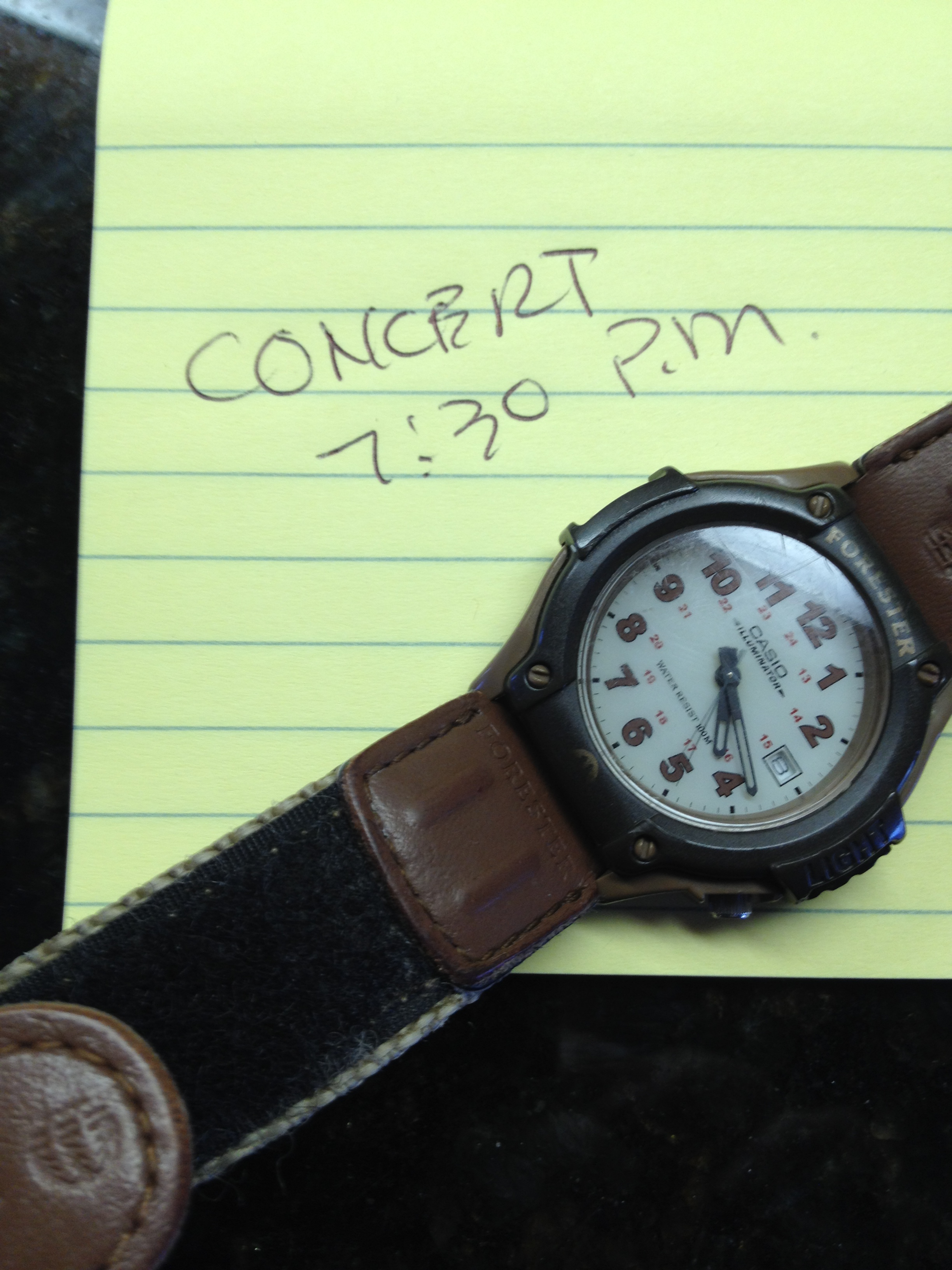
I know that time is just a construct, a made up system of seconds, minutes, and moments (In Old English, a moment was officially 1.5 seconds, or the time allowed for a husband to tell his wife she looks beautiful in that wimple), but I really don’t like being late. I think it stems from the time when I was an awkward sophomore who missed the team bus for a basketball game and got there only by the kindness of parents of a GIRL in my class (Ewww!) who waited for me and drove me there.  It was a very long ride in which each moment was a minute and a half long, and after that, not a good game.


The issue of lateness is complicated by the number of young children you have so that your lateness grows geometrically by the number of toddlers you are trying to get ready. One child equals one half hour late. My parents had six children, and I don’t know how they got anywhere.


Over the years, I’ve learned something important. Lateness is not a problem; it is an opportunity.  A case in point….

photo 2-1

Plenty of time!

Friday night we had tickets with friends to a Madison Symphony Orchestra concert at the Overture Center with an entirely Beethoven program, including two piano concertos. We invited our friends to crock pot chili before the concert, and had such a good time that we left for the concert only twenty minutes before the start. Ordinarily we might have made it, but this time we crawled through traffic caused by two other events in or near the Overture Center, a lane closure, and construction.  By the time we reached the balcony seating, the doors were closed, and we were forced to stand and watch all four movements of Beethoven’s first symphony on a monitor in a lobby outside the hall. In my foolish younger days, I would have fussed and fumed, said something sarcastic to my wife, stressed out my friends, and made missing Beethoven’s first symphony an issue.  Such a reaction would have been bad for our friends, my wife, and me. We hurt ourselves and others far too often.


Instead, I listened to the music, watched the maestro on the monitor, and read the program notes. Ludwig’s first symphony was written while still under the strong influence and form taught to him and Mozart by their mentor, “Papa Haydn.” Now I am more interested in Haydn and I want to listen to Mozart’s early symphonies and compare them to Beethoven’s. We were admitted after the first symphony and got to enjoy both piano concertos with Yefim Bronfman as the pianist and later, Beethoven’s Prometheus. It is interesting that most often when we are on time, I don’t have time to read the program notes before the house lights dim and the Concertmaster walks onstage. How ironic it is that being very early or very late can both be advantageous.


I would like to apply this same lesson to the weather and the late arrival of spring after a nasty winter that began November first, sank to near zero temperatures every night with two snowfalls every week and no January thaw to give us a break. I cannot.  This winter makes me fuss and fume, say sarcastic things to my wife, grump at my friends, and generally wear my depression like a scratchy wool scarf around my own neck. Mother Nature is not Beethoven and her lateness is simply intolerable.  Besides, there are no program notes to read, and if spring doesn’t get here soon so I can get out on a trout stream, I may do something really radical like write a blog about the weather.  Last night I read a joke about God telling St. Peter that He thought it was a good idea to give Wisconsin amazingly beautiful lakes and streams, forests, rolling hills, fertile fields, and bounteous flora and fauna. St. Peter said, “Wouldn’t other parts of the world get jealous?” God answered, “Wait till you see the winters I give them.”

photo 2

Yes, the drifts are still three feet high.

Unfortunately, I have friends who can easily remind me of the Facebook postings I made last summer sitting on the Terrace at the Student Union looking over the sailboats and beautiful sunset on the lake and eating Babcock Hall ice cream. I can hear them mumbling that I’m getting my just deserts. (That was an accidental pun, so I’m not claiming any points.)


There is a point here. The weather is not about the weather. Being late to a concert is not about the concert, nor about being late. It is about – everything is about – how we react to whatever we experience. It reminds me of a Robert Frost poem I sometimes memorized with my classes…


Tree at my window, window tree,

My sash is lowered when night comes on;

But let there never be curtain drawn

Between you and me.


Vague dream-head lifted out of the ground,

And thing next most diffuse to cloud,

Not all your light tongues talking aloud

Could be profound.


But tree, I have seen you taken and tossed,

And if you have seen me when I slept,

You have seen me when I was taken and swept

And all but lost.


That day she put our heads together,

Fate had her imagination about her,

Your head so much concerned with outer,

Mine with inner, weather.


Yes, your head so much concerned with outer, mine with inner weather. There is truth there, the importance of our inner weather. We create our own low pressure, our own ice storms, our own lakeside sunsets with a scoop of Babcock Hall ice cream. Mine is butter pecan. You choose your own.


Peace

April 23, is generally regarded as Shakespeare’s most likely birthday, so it would be appropriate to begin with one of his quotations.

“Expectation is the root of all heartache.”

Some think he never said that, since scholars can’t find it in his plays, but that doesn’t matter if the plays were all written by Edward de Vere anyway. Who knows?

The complement to this is the title of the Dickens novel, Great Expectations. As I’ve written before, if something is true, I believe its complement is also true. I love paradoxes. As a retired teacher, I know the power of expectations in a classroom, where behavior and learning are so certainly a function of expectations. A teacher who expects little from his students will most certainly get it. It seems to me that in professional relationships, like those in teaching, which over time become personal, great expectations matter. That may be largely due to an unspoken statement akin to, “I have great confidence in you. You can do this difficult thing.”

Great expectations on a personal level, however, may be sure to bring disappointment. Wives and husbands could keep counselors employed for generations on this source of difficulty, never mind issues of debt, affairs, or addictions. I wonder how many times such sessions began with “I thought he was…” or “She should ….”, “Why doesn’t he …” or “If only she would ….” This doesn’t mean married people should have no expectations of each other. Common courtesy, loyalty, a willingness to help, a willingness to listen, a place of emotional safety, and shared long-term goals are things that matter. No marriage should be in trouble, though, because of the replacement of toilet paper, the position of a toilet seat, or a woman’s underthings drying on any available horizontal pole or doorknob. (I’m not saying my wife does this, mind you.)

Expectations are an intensity multiplier. Take the Super Bowl, for example. It’s still fun for me to watch a championship game played at the highest level, even if I’m not a fan of either team. I will always favor one side a little, but if my team loses, I’m not going to go out into the streets to overturn cars, set trash cans on fire, or break windows. If my team wins, I’m not going to go out into the streets to overturn cars, etc. If I really am a fan (short for “fanatic”) of a team, I may experience highs and lows that come from each individual play and range from extreme anger (that ref called WHAT?) to extreme elation, (Take THAT, in your face, you jerk!) Such extremes may be tolerable, perhaps even preferable for those who enjoy a sport, one of our substitutes for outright war, but I don’t recommend it as a way to live one’s life.

In the 60’s we youth (yes, there was such a time) used to tell each other, “Peace and love,” which kids of the 80’s turned into “Peace out.” It was the primary way many of us fought the Viet Nam war. There is something to be said for that attitude. Emotional highs and lows are not nearly as healthy as a whole series of little highs. If you don’t expect your wife to fill up the car with gas, but she does, what a nice present that is. If a husband isn’t expected to clean the bathroom, but he does, what a nice present that is. The point is that expectations always carry judgment, and it’s so much healthier to simply observe what is, rather than judge what ought to be but is not.

This is one of the primary ways in which a person lives a life in peace. Because I cannot control other people, games, the weather (ah yes, the weather lately), the timeliness of other people’s arrival, traffic, the news, politics, where birds deposit excretions, which direction the wind is blowing, or what someone just said to me, the solution is not rage, disappointment in expectations, or depression. To misquote Shakespeare or Edward de Vere, “All the world’s a TV show.” If you don’t like what you see, don’t throw the candy dish at the screen or yell at your kids, change the channel. Observe with interest, and if you don’t like what you see, look at something else. You have the TV clicker for your life. It’s in your pocket right now. Peace out, everyone.

Busts, Death, Toilet Seats, Life, Irony, Apples, Stones, and Eden

So I’m sitting in the Arcadia Bookstore in Spring Green, Wisconsin, with my daughter, our keyboards clicking like self-running machines, and then I can’t write anymore. How do you write in a bookstore/lunchroom with a bust of Shakespeare on the top of a bookshelf staring down at you? I could quote him, I suppose, to get him off my back, but then he would just frown and say, “Plagiarism is not writing,” and I would answer, “You plagiarized everyone, including your friend Marlowe,” and he would answer, “Yes, but I did it so well, so much better than the original.”

As if I or anyone today could do that, even with the modern aid of high octane caffeine streaming through my veins like a torrent of contradictions from “To be or not to be…”

I don’t believe we can write if we’re trying to outdo someone, even if we’re only trying to outdo ourselves. Since I’m currently writing to entertain rather than inspire, I see that it’s time for a joke, or at least a modicum of irony. So I just went to the men’s room after a nut brown ale, some chili and a cup of coffee and found the ultimate women’s revenge, here in this bookstore/lunchroom run by women. It was a spotlessly clean men’s room, with a toilet lid that would not stay up. It’s one thing for them to complain about putting the seat down, but to go this far, to install a seat that will not stay up – that’s just too strategic, especially in a room women will not use. It seems like one of the women had a slightly too-large smile for me when I walked past the counter. The bust of Shakespeare is not amused.

Now I look past my dauighter and I see an ironic metaphor for our country – stacks of books with No Easy Day, the Navy SEAL’s account of the killing of Bin Laden, next to another volume entitled, The New Deal, a study of FDR’s plan to save the country. Death or life, which will you read?

Writing is “righting,” an attempt to make life better, or at least to shine a light on something wormy and so to make it shrivel and die. Writing is building something with words, a city or a life. The words are humble things, like the stones that become a cathedral. All life is metaphoric if one looks at it closely enough. It is so much more than the thing itself. An apple is more than an apple; it is a logo, a variable of gravity, a temptation that boots our parents out of Eden. An apple is more because our thinking makes it so. The apple does not matter. It could have been a walnut, a potato, or a plum. What matters is not the color, shape or taste, but rather, the fact that it fell and someone noticed it and saw there was meaning there.

Writing is that meaning, the moment someone picks up a stone, an apple, or a plum, studies it for a moment, and then smiles. “What?” says a friend, who is not a writer and does not hold the apple like truth-in-hand.

Will Shakespeare, you need not smile at me like that. I have held an apple in my hand and smiled at it when I saw that it was alive, teeming in its redness, redolent with sweet juice, firm as flesh, and holding in secret a truth we can hardly imagine. What is that secret? All things fall, and the falling is a beautiful thing to those who understand it. The falling makes an apple so much more than an apple. A fallen apple is one of us.

I am a writer. When you fall, I will bear witness. When I fall, someone else will witness. It is a beautiful thing.

Just for the record, I do not recommend taking too much caffeine in very good coffee after a bowl of white bean chili and a nut brown ale, even if Shakespeare smiles down upon it. It means that you will write about busts, toilet seats, life, death, apples, irony, stones and Eden. Yes, Will is definitely smiling at me.

Where Happiness Comes From

It’s not really a secret, except to those poor souls who are not happy. Having seen the documentary “Happy” and tested its thesis, I can say that it’s exactly right, and I highly recommend it. If you haven’t seen this movie, get to it as soon as possible.

Once you have the basics covered, say $50,000.00 worth in the United States currently for house, food, basic medical care, wearable clothes and some fun money, people who make twice that, three times that, or twenty times that amount, are no happier according to every survey and measure available. It’s also true that many people can be happy on making less that $50,000, as long as their basic needs are met. The Jaguar XKE (do they still make that hot ride?) won’t do it. The trip to Hawaii won’t do it, at least not beyond the actual time spent there. Drugs won’t do it. If marriage alone did it, there wouldn’t be any divorces. Sex won’t do it, although I must admit, my wife has a kiss that, um, well, nevermind, there may be an exception to what I’m about to suggest.

First, a clarification. Grammatically, we have it all wrong. Happiness is not really a noun; it’s a verb. “To be happy,” doesn’t work because that is passive. “To happy” would be the correct form. So what does one do “to happy?”

It’s not necessarily easy for most of us, but it is simple. Adopt everything and everyone. Adopt the local barber so he becomes your uncle. No one can tell better stories than Uncle Jack the barber on Old University. Adopt a local coffee shop like The Froth House near us (where I am as I write this), and be sure you know the names of the baristas. (Thank you, Ginger. How is Kelly doing?) I read in college that Daniel DeFoe of Gulliver’s Travels fame, not only adopted a local pub and had dibs on “his booth,” but also had his own friendly waiter named Payne and was truly saddened when the waiter succumbed to the plague. Until death, they were happy because of the relationship.

Adopt the places where you belong, a restaurant, a pizza place, a library. Keep going to those places until you belong. Adopt the people who work there and find out about their children, husbands, vacations, and worries. Adopt a local hardware store and find out who knows the most about plumbing, dimmers, and ant killers. Adopt all of the neighborhood kids, especially at Halloween, during the summer, and at graduation. If your neighbor has a dog as nice as Lukas, the collie next door to us, be sure you have a box of dog biscuits near the back door. It’s not only fun for Lukas; it’s good for you. Adopt a local baseball team, a football team and a basketball team if they are available, especially if one of them is semi-pro. Jane, a fellow teacher for many years, adopted struggling players for the Kane County Cougars near Chicago and took one in as a roomie every year. Jane and her husband became adoptive parents and the team’s best fans. They belonged. She and her husband often went to spring training, but even more important, they kept in contact with “their boys” for many years whether the players made it to The Bigs or not. Jane’s eyes lit up in delight whenever she talked about her boys.

Adopt a TV series, an author who writes a series, preferably something not about vampires. Wizards are okay. Adopt a band, especially one most people don’t know about. If you don’t know of such a band, ask a young person, preferably one you’ve already adopted. Adopt a trout stream. Adopt plants. You can name them if you want and talk to them. They can’t hear you except for perhaps mild vibrations, but talking to them can be good for you, as long as you also talk to people. Adopt a musical instrument. Adopt a blogger or two. Adopt the elderly, especially if they are in your neighborhood and too feeble to shovel snow. It’s actually become something of a rivalry in our neighborhood to see who can get out first to shovel the walk and driveway of the very elderly couple on our block. Adopt a charity, a university, and a favorite chair.

You already know the point. Happiness is not based on prestige, class, or what you own. It is based on deepening relationships where you live and where you go. When you hear the echoes of John Lennon in “Love is all there is,” this what he means: you love and are loved by creating meaningful relationships.

This is also where it gets tricky, or at least interesting. Owning something is not the same as developing a relationship. That’s why buying that Jag XKE that you admire so much may seem to make you happy, but only until its first scratch, while having a kind of loyal relationship and appreciation for an old 1957 Chevy may make you quite happy. You “happy” it. Happiness is never owned; it is created, usually slowly, deeply, and personally.

This is also one of the blessings of happiness. It does not depend on the other thing or person. That’s why a car can’t make you happy, but you can happy it. That’s why crabby Mrs. Longnose on the corner can’t make you happy since you never hear a kind word from her, but you can “happy” her, and will be amazed at the results of your conscious, repeated and infuriating kindnesses. Do you really want to get back at her? Kindness is the sweetest revenge. It’s not really revenge, but that needy part of your brain will be filled with the resulting dopamine molecules anyway. If nothing else, you will confuse her, and that’s not all bad.

You don’t have to take my word for it. You can see happiness in action. Simply go to bethesourceproject.com. There it is. It’s a blog worth adopting.